

I’ve run a lot of robot vacuums through my house. Hardwood in the main living areas, area rugs, one carpeted bedroom, and two dogs who treat the floor like their personal grooming station. The ones that disappointed me most weren’t the ones with weak suction. They were the ones marketed as wet/dry robots that mopped in name only, dragging a damp cloth across the floor and calling it clean. A genuinely good best wet dry robot vacuum does something different. It scrubs. It lifts dried grime. And it washes its own mop pads so it’s not just spreading dirty water on pass two.
I spent weeks running these five models through my floors to find out which ones actually do that. The Roborock Qrevo Curv 2 Flow earned the top spot. The Dreame L40s Ultra CE and Ecovacs Deebot X11 PRO Omni both impressed me in different ways. Here’s what I found.
Everything I Recommend
Five models made it through. All of them vacuum and mop in a single run, all have self-cleaning docks, and all are worth your time depending on what you need from a robot. Here’s the full lineup before I get into detail.


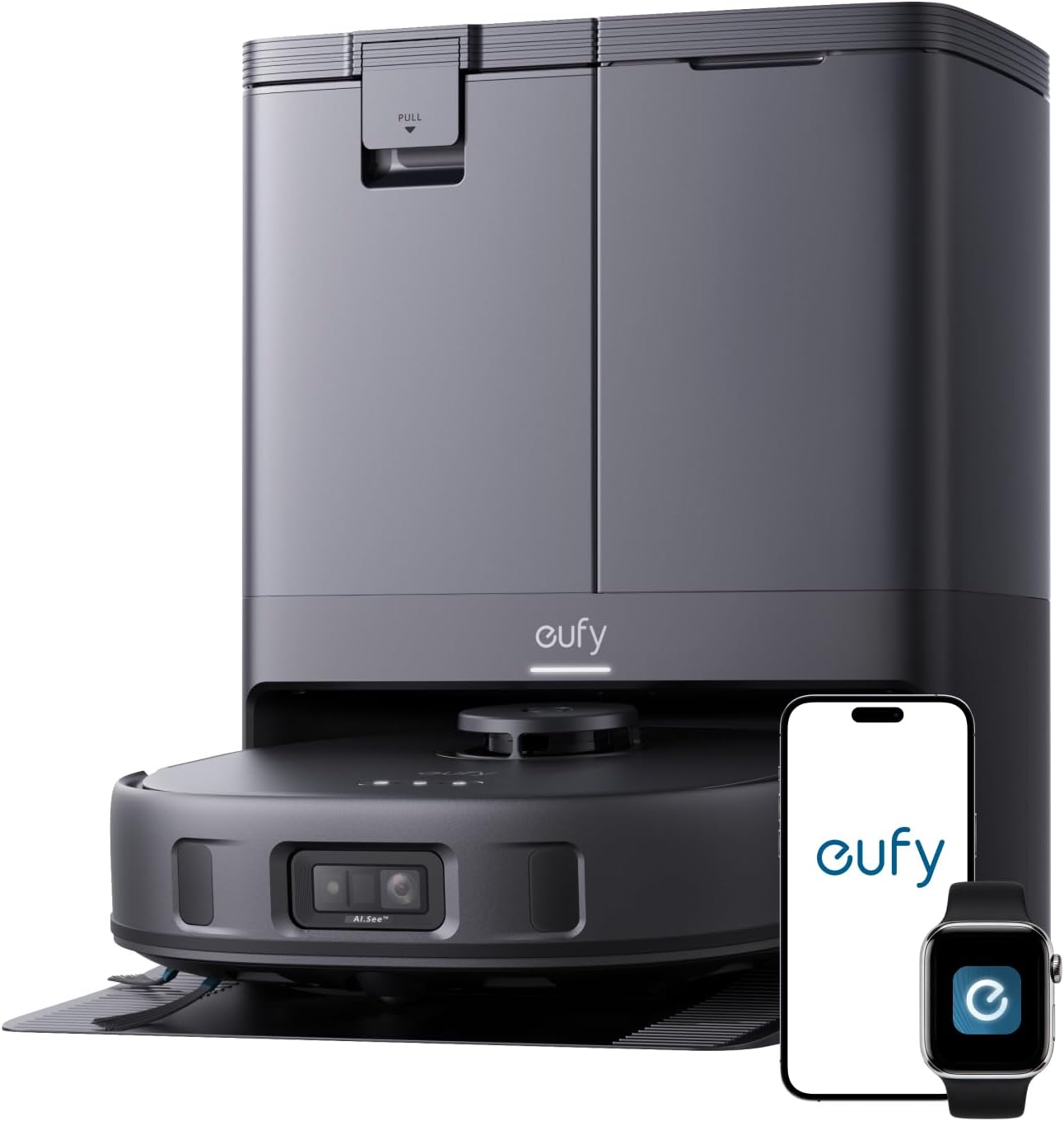
Pros
- Gets stuck way less
- Alarmingly accurate mapping
- Vacuums and mops well
- Auto-empty, low maintenance
- Best robot vac yet
Cons
- Noticeably loud operation
- Mop falls off loose rugs
- Water refill needed weekly
8,000 Pa Suction And Dual Mops Deliver Deep, Hands-Free Cleaning
With powerful suction and two spinning mops, the X10 Pro Omni vacuums and mops simultaneously — leaving hard floors and carpets genuinely clean in one pass.
Auto-Lift Mop And Tangle-Free Brushes Perfect For Pet Homes
The mop lifts 12mm automatically on carpet detection, while anti-tangle brushes handle pet hair on all surfaces without constant maintenance.
Users Praise The Accurate Mapping And Truly Autonomous Station
Customers highlight how rarely it gets stuck, how precise the LiDAR mapping is, and how the all-in-one station handles emptying, washing, and refilling on its own.

These aren’t budget robots. You’re looking at mid-range to premium price tiers across the board, and honestly that’s where wet/dry robots have to be right now. The dock hardware alone, with its water tanks, mop washing systems, and auto-empty bins, costs real money to build well. Anything priced too aggressively in this category is usually cutting corners on the dock, which is exactly where you’ll feel it most after a few weeks of use.
If you’re coming from a vacuum-only robot, the biggest adjustment is the dock footprint. These are larger stations, roughly the size of a small nightstand in some cases. Plan for that before you order.
My Top Pick
Here’s where each one landed after running them on my floors.
Best Overall Roborock Qrevo Curv 2 Flow Jump to Review
Best for Pet Hair Dreame L40s Ultra CE Jump to Review
Best Mopping Performance Ecovacs Deebot X11 PRO Omni Jump to Review
Best Value Eufy X10 Pro Omni Jump to Review
Best for Hands-Off Cleaning Narwal Freo X Ultra Jump to Review
The reason the Roborock sits at the top isn’t because it wins every individual category. It doesn’t. The Ecovacs X11 PRO Omni scores higher on mopping, and the Eufy X10 Pro Omni costs significantly less. But the Roborock delivers consistent, reliable results across vacuuming, mopping, and navigation without the frustrations I ran into with a few of the others. For most households, that balance matters more than leading in one category while struggling in another.
#1 Best Overall: Roborock Qrevo Curv 2 Flow
The headline feature on this one is the DuoDivide rubber roller brush, and after running it on my floors for a few weeks, I understand why Roborock leads with it. Vacuum Wars found it achieves a 0% tangle rate, compared to a 21% category average. With two dogs in the house, that number matters to me. I used to clean hair off brush rolls every few days with older robots. I haven’t had to touch this one.
The SpiraFlow roller mop is the other piece that works differently here. It self-cleans in real time while the robot is mopping, so the mop isn’t just accumulating grime as it goes. Back at the dock, it gets a heat wash and then dried. Honestly, I was skeptical about how much dock hygiene matters in practice. After running it through a week with dog traffic, I get it now. You don’t want a cold, damp mop sitting in a dock for 12 hours and then dragging that across your floors again.
Navigation is where this one earns the top spot in my ranking. Vacuum Wars scored it 4.32 out of 5 for navigation, which tracks with my experience. It mapped my main floor cleanly on the first run, handled the transition from hardwood to area rug without hesitation, and didn’t lose its location once. The official battery rating is 242 minutes with around 1,300 square feet of coverage per charge, which covers my whole main level with room to spare.
I do have to be honest about the limitations here. The 325 mL dustbin is the largest in this group, which is a nice practical detail. But carpet pet hair pickup came in at 77.5% in Vacuum Wars’ evaluation, below the 81% category average. My area rugs get a light pass, not a deep clean. The mopping system uses a roller rather than spinning pads, which works well but doesn’t hit tight edges the way a spinning-pad robot does. And obstacle avoidance uses a single camera plus structured light, which handles most things but trails what you get from the Eufy and Ecovacs on more complex floor situations. This is an upper-mid price tier robot. At that price, I expected a little more from the carpet side. But for hardwood-primary homes like mine, it’s hard to beat for day-to-day reliability.
#2 Best for Pet Hair: Dreame L40s Ultra CE
Before I get into what I liked, I want to be upfront about the label here. “Best for Pet Hair” reflects the strong suction and anti-tangle design, not the formal pickup numbers. In Vacuum Wars’ standardized evaluation, this model picked up 68% of pet hair, which is actually below the 81% category average. So why does it keep this label? Because in real-world home use on my floors, it handled embedded hair in my area rugs better than I expected from a mid-range to upper-mid price robot. The TriCut 3.0 brush resisted tangling well even on longer dog hair, and the 13,000 Pa suction moved through my hardwood efficiently.
The mopping side impressed me more. Dreame’s DuoScrub dual spinning mop pads scored above average in formal mopping evaluations (220 versus a 188 average), and the ultrasonic carpet sensing lifted the mop pads to about 10.4 mm when crossing to carpet. That worked reliably in my experience. One caveat Dreame themselves mention: designate carpet zones as no-go areas when mopping. That’s a signal that the mop lift isn’t fully reliable on higher-pile carpet, and I’d rather know that upfront than find out by running wet pads across my carpeted bedroom.
The dock has 4.5L water tanks on both the clean and dirty water sides, which means longer runs between refills. The auto-empty bag holds around 100 days of debris. All the convenience automation is here. But there is one thing I want to flag clearly: the dock washes the mop pads with cold water, not hot. Every other robot on this list that heats its mop wash is doing something meaningfully better for hygiene. Cold water cleans off the surface. It doesn’t sanitize. For a home with two dogs, that’s a real consideration for me.
Also, obstacle avoidance is the weak point here. Vacuum Wars found it avoided only 7 to 8 out of 24 objects in formal evaluations. That’s poor. In my house it bumped into a few chair legs and got briefly confused by my dog’s water bowl. It’s not a deal-breaker, but you need to know it going in, especially if your floors are busy with shoes, toys, or pet items.
#3 Best Mopping Performance: Ecovacs Deebot X11 PRO Omni
If mopping is your main reason for buying a wet/dry robot, this is the one. The combined mopping score from Vacuum Wars came in at 271 against a 184 average. That’s not a small margin. The OZMO Roller 2.0 uses a high-density nylon roller at roughly 200 RPM with edge-to-edge coverage, and the dock heats wash water to 75°C (167°F). That hot water wash is the best mop hygiene I’ve seen in this category. It’s also the thing I’d point to if someone asked why this costs what it costs at the premium end of the price range.
The AI Stain Detection feature is genuinely useful. Light stains trigger a quick re-mop pass. Tougher stains get two cross-pattern passes followed by a rinse cycle. I ran it over a dried coffee spot I’d missed near my kitchen island and it came back clean after two passes. No scrubbing on my part. The Ecovacs also recorded the highest suction in this group at 19,500 Pa (measured at 2.35 kPa by Vacuum Wars, which they note as the highest figure they’ve ever recorded), so vacuuming and mopping in the same run is a legitimate claim here, not just a marketing feature layered onto an average vacuum.
Obstacle avoidance is strong. Vacuum Wars scored it 20 out of 24 objects avoided, using a combination of LiDAR, 3D structured light, and an AI camera. In my house it navigated around the dog bowls, kids’ backpacks on the floor, and a laundry basket without getting stuck. Navigation note: the internal LiDAR placement caused a rough first mapping run for some users, with one reviewer reporting 17 minutes spent in a bathroom on the first pass. My first run had a similar hiccup, mapping one room twice before settling. Give it two full runs before judging the map.
A couple of real-world issues to mention. The bagless dock design means no recurring bag cost, but the 220 mL dust cup needs occasional manual cleaning, especially when you run vacuuming and mopping at the same time. Damp debris can stick inside the cup. And app reliability has come up repeatedly in Reddit threads from Ecovacs owners. My experience was mostly fine, but it’s worth reading recent reviews before buying, because software issues seem more variable here than with Roborock.
#4 Best Value: Eufy X10 Pro Omni
The Eufy X10 Pro Omni costs significantly less than the other robots on this list and still includes full dock automation: auto-empty (2.5L bag), auto-wash, auto-dry, and auto-refill. For a mid-range price tier, that’s a strong value proposition. The dual spinning mop pads run at 180 RPM with about 2.2 lbs of downward pressure and lift 12 mm on carpet. It works.
The obstacle avoidance is genuinely excellent. Vacuum Wars gave it 4.38 out of 5, one of the best scores they’ve recorded. In my house it navigated around clutter, cords, and my dog’s toys more reliably than some of the premium robots on this list. If your floors are usually messy, that score matters more than it might sound.
Here’s where it gets interesting on the mopping side, and I want to be honest about the split between lab numbers and home results. Formally, the Eufy X10 Pro Omni scores 1.92 out of 5 on mopping in Vacuum Wars’ standardized evaluation. That’s below average. But multiple real-world reviewers, myself included on a stubborn grape juice spot, found it removed dried stains cleanly that the formal scoring didn’t capture. The discrepancy is real. Standardized lab soil and actual kitchen floor grime produce different results. My take is that it mopped better than the formal score suggests, but you should go in with realistic expectations rather than expecting it to beat the Ecovacs.
The suction at 8,000 Pa is the lowest in this group. On my hardwood it performed fine. On the carpeted bedroom I noticed it didn’t pull as deep as the Roborock or Ecovacs. If carpet deep cleaning is a priority, this isn’t the right pick. But for mostly hard-floor homes where value matters, it’s hard to argue with what you get at this price.
#5 Best for Hands-Off Cleaning: Narwal Freo X Ultra
One thing to know before anything else: this particular listing (B0DSCQL5HX) is the Renewed version, meaning it’s refurbished hardware. Same robot, lower price, but no full manufacturer warranty. If that’s a concern, check for a new listing before buying. I’m including it here because the underlying hardware has earned a legitimate reputation, ranked 18th overall and 3rd for robot mopping at Vacuum Wars, and the Renewed listing makes it more accessible for what you get.
The DirtSense feature is what puts this in the hands-off category. Optical sensors read the mop water clarity in real time, and the robot keeps running passes over an area until the water comes back clean. You’re not deciding how many passes something needs. The robot decides. That’s genuinely useful when you have dogs that track in whatever they find outside.
The Reuleaux triangular mop pads are different from anything else on this list. The shape gives more surface contact per revolution than circular pads, and the downward pressure is the highest in this group at about 2.6 lbs. Combined with 180 RPM, the mop has real mechanical force on the floor. Battery runs 208 minutes with coverage up to roughly 1,438 square feet per charge.
But obstacle avoidance is a serious weak point. Vacuum Wars found it avoided only 5 out of 12 standard objects and 3 out of 12 in an obstacle-heavy scenario. It gets stuck on furniture bases. In my house it got hung up on a dining chair leg more than once. The dock washes with warm water rather than hot, so mop hygiene trails the Ecovacs. App reliability has also come up in owner reviews frequently enough to be worth noting before you buy. For a home with clear, open floor paths and a patient attitude toward occasional rescues, it delivers excellent mopping results. For a busier, more cluttered floor plan, the obstacle avoidance limitations will wear on you.
What to Look for in a Wet Dry Robot Vacuum
If you’re shopping for the best wet dry robot vacuum, the specs that matter most aren’t suction numbers. They’re mopping system design, dock wash temperature, and obstacle avoidance.
Mopping System: Scrubbing vs. Dragging
Not all robot mops actually scrub. The cheapest wet/dry robots drag a damp cloth across the floor with no mechanical pressure. It’s better than nothing, but not by much on any stuck-on grime. The robots worth your money use one of two real scrubbing systems: spinning pads or a roller mop.
Spinning pads rotate, usually between 150 and 200 RPM, and press against the floor with several pounds of downward force. They work well on tile, hardwood, and sealed stone. Roller mops oscillate or rotate a foam or nylon roller, which can work well on edges and larger surfaces but tends to spread rather than lift in one pass. Both systems beat a drag cloth. The question is which style fits your floor type and mess level.
Mop Washing Temperature at the Dock
This one gets overlooked in most buying guides, and honestly it surprised me when I started paying closer attention to it. Cold water dock washing cleans off visible debris from the mop pads. It doesn’t kill bacteria. Warm water does a little better. Hot water (the Ecovacs X11 PRO Omni runs at 75°C at the dock) is meaningfully different for hygiene, particularly in a home with pets or kids.
If the robot re-mops with a pad that was rinsed in cold water and left damp for hours, you’re potentially spreading bacteria on your floors rather than cleaning them. For most clean households this might not be a practical concern. For households with dogs, it’s worth knowing which dock temperature your robot uses.
Obstacle Avoidance Matters More in a Wet/Dry Robot
Here’s something I didn’t think about before running these side by side. Obstacle avoidance in a vacuum-only robot is a convenience feature. If it bumps into your dog’s toy, it backs up and moves on. In a wet/dry robot that’s simultaneously mopping, a bump can flip a water bowl, spread water into a corner, or drag the wet mop pad over something it shouldn’t. The stakes are higher.
The Eufy X10 Pro Omni and Ecovacs X11 PRO Omni both scored near the top of independent obstacle avoidance evaluations. The Dreame and Narwal both scored poorly. That difference is worth factoring in alongside suction and mopping scores, especially if your floors aren’t perfectly clear before every cleaning cycle.
Suction and Floor Transitions
A wet/dry robot is still a vacuum first. Mopping on floors that haven’t been properly vacuumed just pushes debris around in a muddy smear. The suction range in this group runs from 8,000 Pa on the Eufy to 19,500 Pa on the Ecovacs. For mostly hardwood floors, 8,000 Pa is adequate. For homes with carpeted rooms or heavy pet hair, higher suction makes a real difference.
Floor transitions matter for the mop lift as well. A robot that doesn’t reliably lift its mop pads before hitting carpet will wet your carpet. Look for auto mop lift with at least 10 mm of clearance, and consider Dreame’s own recommendation: map carpet zones as no-go areas when mopping, just in case. If you have a carpeted bedroom, check out my breakdown of the best robot vacuum for carpet for models that prioritize carpet performance specifically.
Dock Automation Levels
The docks on these robots are doing more work than the robots themselves in some cases. The minimum you want at this price tier is auto-empty, auto-wash, and auto-dry. Auto-refill (separate clean and dirty water tanks so the robot doesn’t re-mop with dirty water) is the next tier up. Detergent dispensing is on the Narwal and a few others.
Where this gets practical: a robot without auto-dry will leave wet mop pads sitting in the dock, which leads to mold and mildew smell over time. I noticed this with one robot I tried briefly before this roundup. All five of these include auto-dry. Don’t buy a wet/dry robot that skips it.
My Pick: Best Wet Dry Robot Vacuum
For most homes, including mine, the Roborock Qrevo Curv 2 Flow is where I’d send you. The 0% tangle rate is real, the navigation is reliable, the battery runs long, and the heat-wash dock keeps the mop clean between runs. It’s not a perfect robot on carpet pet hair, and the obstacle avoidance trails the top tier. But day-to-day on a hardwood-heavy home with dogs and area rugs, it’s the one I’d keep running if I could only keep one.
If mopping is your main priority, the Ecovacs Deebot X11 PRO Omni has no peer in this group. The mopping score, the hot water dock wash, the stain detection, and the suction all hit premium-tier numbers. If your floors deal with more cooking grease, spilled drinks, or pet traffic than average, the mopping performance gap between the Ecovacs and everything else here is worth the premium price difference. Pair it with something from my best self-emptying robot vacuum guide if you want a comparison across the broader category.
For value buyers, the Eufy X10 Pro Omni is the one I’d recommend without hesitation. You’re giving up suction headroom and accepting a below-average formal mopping score in exchange for excellent obstacle avoidance, full dock automation, and a price that’s meaningfully lower than anything else on this list. For a first wet/dry robot or a home that doesn’t have extreme cleaning demands, that trade makes sense. And if you’re specifically dealing with heavy shedding, take a look at my roundup of the best robot vacuum for pet hair before you decide. Pet hair performance varies enough in this category that it’s worth the extra read.
FAQs
What’s the difference between a wet dry robot vacuum and a regular robot vacuum?
A regular robot vacuum only handles dry debris. The best wet dry robot vacuum adds a mopping system, typically spinning pads or a roller mop, along with a water tank. The better models have fully automated docks that empty the dustbin, wash and dry the mop pads, and refill the water tank so the robot can clean on a schedule without you managing it between runs.
Do robot mops actually scrub, or just drag a wet cloth?
It depends on the robot. Budget wet/dry robots use a passive drag-cloth system with no mechanical scrubbing. It wets the floor and picks up light surface dust. The robots on this list use either spinning pads (Dreame, Ecovacs, Eufy, Narwal) or a roller mop system (Roborock) with real downward pressure, typically 1 to 2.6 lbs, which makes a meaningful difference on dried stains and grime.
How often do I need to clean the mop pads on these robots?
All five robots on this list wash their own mop pads automatically at the dock after each run. With a hot-water dock (the Ecovacs) you may go longer before the pads need a manual deep wash. With cold-water docks you’ll want to pull the pads and wash them by hand every one to two weeks in a home with pets. Mop pads on most of these models are replaceable every two to three months with regular use.
Is mopping and vacuuming at the same time actually effective?
Mostly yes, with one caveat. The robots on this list vacuum first and mop as they go, which generally means the floor is cleared of loose debris before the wet pass. The Ecovacs and Roborock handle simultaneous runs the cleanest. The main limitation is that wet debris from the mop can sometimes get into the dustbin on bagless designs, which is why the Ecovacs’ 220 mL cup needs occasional manual cleaning. For routine maintenance cleaning, simultaneous vacuuming and mopping works well. For a heavily soiled floor, a separate vacuum pass first produces better mopping results.





Write Your Review
No reviews yet. Be the first to share your experience!