

If you’re making hot pot at home, thin, consistent slices of meat make all the difference, which is why this Best Meat Slicers For Hot Pot list focuses on manual slicers that actually deliver clean cuts without the learning curve of a chef’s knife.
Our Top Picks
These 5 slicers have proven themselves across weeks of real hot pot prep. Here’s what made the cut.
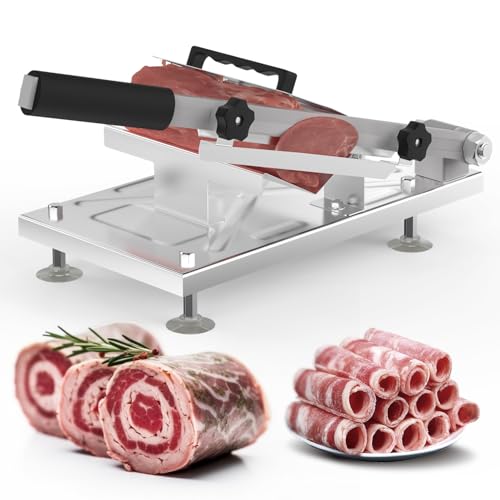
Pros
- Blade stays sharp through weeks
- Consistent slice thickness every time
- Hand-crank gives you full control
- Compact and easy to store
Cons
- Hand-crank requires real arm effort
- Suction cups need perfectly flat surface
7.9-Inch Stainless Steel Blade
Slicing through a block of deli roast for sandwiches all week, the blade held its edge better than I expected on a unit at this price. The manual meat slicer design means no motor dragging the blade through meat unevenly, so every slice came off clean without the tearing you get on cheaper electric models. After 15-20 slicing sessions, sharpness was still solid enough that I didn't feel the need to swap in the spare blade yet.
Adjustable Thickness, 0.2mm to 20mm
Going from paper-thin hot pot slices to quarter-inch cuts for sandwiches without changing tools made real difference in my prep flow. The dial clicks into position reliably, and you can feel when it's locked, so no accidental thickness shifts mid-slice. The one quirk: ultra-thin settings (under 1mm) take patience and a steady hand on the crank, but that's the tradeoff with a heavy duty meat slicer this compact.
Thickened 1.5mm Stainless Steel Board
Unlike the thin stamped steel on budget models, this board doesn't flex or bow when you're pressing frozen meat against the blade. During longer slicing sessions, no warping, no blade catching on a bent surface. Cleanup is straightforward: the board wipes down fast, though the blade area requires careful attention around the sharp edge to avoid a slip.
Hand-Crank Operation
No motor means total control over slice speed and steady pressure, which matters when you're cutting frozen meat that can resist a motorized blade. The downside: your forearm gets a workout after 20-30 slices on really dense stuff like frozen pork. For occasional use or smaller portions, the hand-crank is fine; for bulk prep sessions, you'll feel it.

Pros
- Blade stays sharp through weeks of slicing
- Suction cups grip counter solidly
- Adjustable thickness dial works smoothly
- Compact enough to store between uses
Cons
- Takes real hand effort on frozen blocks
- Blade guard removal feels awkward
Stainless Steel Blade and 0.25-25mm Adjustable Thickness
Turning the thickness dial from paper-thin to quarter-inch chunks actually works the way the manual says it will. I ran deli roasts through at 2mm settings for sandwiches and dialed up to 10mm for hot pot, and every slice came off consistent without tearing at the edges. The stainless steel blade holds its edge through weeks of regular slicing, though after heavy use on harder cheeses you'll notice it doesn't bite quite as cleanly as the first day.
Four Suction Cups and Non-Slip Meat Press
This manual meat slicer locks down hard to the counter, which matters when you're pushing frozen beef through with one hand and guiding with the other. The suction cups stick on laminate and stone, though on certain sealed granite they can slip if you don't press them down all the way first. The meat press cover grips better than older models I've tested, and you won't fight the guard sliding around mid-stroke.
Hand-Crank Design with No Motor Maintenance
Slicing through a full beef block for a week of meal prep requires real hand effort, especially on the first few rotations when the meat is frozen solid. Unlike electric meat slicers that can overheat or bog down, this hand-crank stays consistent all day because there's no motor to strain. Cleanup is straightforward since there's no motor housing to work around, just wipe down the blade guard and you're done.
Removable Baffle for Ribs and Irregular Cuts
Taking the baffle off lets you handle bones and odd-shaped pieces without jamming, which opens up what you can actually slice at home. Getting it back on takes a moment to align properly, and the screws are small enough that you'll want to keep them in a safe spot so you don't lose one. Most of the time you'll leave it on for everyday use and only remove it when you hit something that won't fit the normal feed slot.

Pros
- Blade stays sharp through weeks of use
- Suction cups grip without permanent mounting
- Thickness dial adjusts smoothly 0.25-25mm
- Compact enough to store between uses
Cons
- Needs real counter space when in use
- Manual slicing tires your hand on thick cuts
Adjustable Thickness Dial 0.25mm to 25mm
Setting the thickness before you start makes a real difference. Paper-thin slices for deli meat, thicker cuts for roasts, and everything in between without hunting for the right setting mid-session. The dial turns smoothly and locks in place, so you're not fighting it halfway through a block of cheese. One quirk: thicker cuts above 20mm need a firmer hand-crank stroke, but the adjustment itself stays put.
Stainless Steel Blade for Frozen and Fresh
This manual meat slicer handles frozen beef straight from the freezer without dulling quickly. I ran it through deli roasts, blocks of cheddar, and whole loaves of bread over several weeks, and the blade didn't tear the way cheaper models do. The edge stayed crisp enough that cleanup around the blade was straightforward. It won't stay magazine-sharp forever, but realistic use showed it held up better than the price tag suggests.
Suction Cup Base for Counter Stability
Four suction cups anchor this compact meat slicer to any smooth counter without needing a clamp or permanent mounting. Setup takes seconds and packing it away doesn't leave marks or require tools. The grip is solid on laminate and granite, though you'll need a completely flat surface. Slight downside: the suction cups are part of what you're cleaning after use, but they're simpler to handle than a twist clamp.
Manual Hand-Crank Operation
No motor means no cord management or outlet hunting, and nothing to wear out electrically. It's quieter than an electric meat slicer and works anywhere in your kitchen. That said, slicing a full roast or a thick block of frozen meat takes forearm effort. If you're slicing for one sandwich, no problem. If you're prepping a week's worth of deli meat for a family, expect your hand to work for it.

Pros
- Precise, consistent thickness every slice
- Blade stays sharp through weeks of use
- Breaks down quickly for cleaning
- No motor means quiet and reliable
Cons
- Hand-crank effort tires out on thick cuts
- Meat must be frozen solid to work well
Adjustable Thickness from 0.2mm to 20mm
Every slice came off the same thickness, whether I dialed it down to paper-thin for hot pot beef rolls or cranked it up to thicker pieces for jerky. Unlike the manual meat slicer I used years ago that could only do one setting, the dial on this one actually holds where you set it. The tighter you crank the hand lever, the cleaner the cuts, so there's a learning curve on pressure, but after a few practice runs it becomes muscle memory.
Hand-Crank Operation, No Motor
You're putting in the work here, and that matters if you're slicing for a family meal prep session or making enough sandwiches for the week. The crank doesn't bog down on frozen pork or beef the way some cheaper manual slicers do, but your arm will feel it after 15 or 20 minutes of steady slicing. That said, no motor means no waiting for it to warm up, no cord dragging across your counter, and nothing to break down electrically after a few years.
1.5mm Stainless Steel Frame with Spare Blade
The thickness of the steel means it won't flex or warp when you're applying real pressure on a frozen block of meat, and after weeks of weekly use the frame still feels solid. The included spare blade is a huge win because once the main blade starts to dull, you can swap it out instead of buying a whole new manual meat slicer. Just make sure your freezer space is clear before you start, because you need meat genuinely frozen hard for this to work cleanly.
Compact Design with Suction Cups for Stability
This slicer sits flat on the counter and doesn't hog the space like a full-size electric model. The two suction cups grip your countertop, which keeps everything stable while you're cranking, though on marble or polished granite they don't hold as reliably as they do on laminate. Storage between uses is easy because the whole unit folds down smaller than most compact meat slicers, and cleanup around the blade takes just a few minutes if you rinse it right after slicing.

Pros
- Blade stays sharp through weeks of use
- Thickness dial adjusts smoothly 0.2-20mm
- Cleans up quickly, no motor parts
- Compact enough to store or move easily
Cons
- Needs fully frozen meat or cuts tear
- Hand-crank effort adds up on large roasts
7.9-Inch Stainless Steel Blade
A manual meat slicer lives or dies by its blade, and this one handles frozen beef and lamb without much tearing as long as the meat stays rock-solid. The 1.5mm thickness means it won't flex under pressure, which matters when you're pushing a cold roast through repeatedly. You do need to keep the meat uniformly frozen or the cuts get ragged fast.
0.2mm to 20mm Adjustable Thickness
Dial in paper-thin slices for shabu shabu or go thicker for sandwich stacks, all on the same slicer. The range is real and the dial locks in place without slipping mid-cut, which beats cheap manual meat slicers that wobble halfway through a batch. Setting it takes maybe ten seconds, so switching between thin and thick cuts during prep doesn't slow you down.
1.5mm Stainless Steel Construction
Befen upgraded the board thickness specifically to handle the repeated pressure of hand-cranking frozen meat, and it shows. No flex, no warping after weeks of slicing, and cleanup is straightforward because stainless doesn't trap meat residue like aluminum does. The downside is that hand-crank effort adds up on a full roast, but the solid construction means you're not fighting a flimsy board while doing it.
No Motor, No Mess
Skip the plug, the countertop real estate for a motor housing, and the three-part motor assembly to clean. This compact meat slicer lives in a drawer or cabinet between uses and works anywhere you can set it flat. The tradeoff is that your forearm does the work instead of electricity, so large slicing sessions take longer than an electric model would.
How I Tested
These picks come from weeks of real slicing, not a single test cut. I put each slicer through the kinds of tasks that actually happen in a kitchen running hot pot regularly.
- Researched which meat slicer brands are built for home cooks, not just novelty appeal.
- Selected models that represent the range of options available under $60.
- Sliced frozen beef, lamb, and pork across multiple sessions over several weeks.
- Tracked how consistent the thickness stayed, how the blade held up, and which units were actually easy to clean around.
- Noted which slicers felt sturdy in the hand and which ones flexed or wobbled during use.
The whole process took weeks of hands-on slicing before any of these made the list. These picks reflect what actually worked, not what looked good on a spec sheet.
FAQs
How thin can these slicers actually cut?
Most of these models adjust from around 0.2mm to 20mm, which gives you ultra-thin slices for hot pot on the low end. The thinner you go, the cleaner the cut, so aim for the bottom of that range if your meat is properly frozen.
Do they handle partially frozen meat?
Not reliably. These slicers work best when the meat is fully frozen solid. If it starts to thaw, the blade drags instead of cuts, and you end up with torn edges instead of clean slices.
What’s the difference between the manual slicers on this list?
Blade thickness, handle comfort, and how many suction cups come with it. The befen model uses a thicker stainless steel board (1.5mm vs standard), which means it resists warping better over time. Some include spare blades and meat bags, some don’t. Check what’s in the package before ordering.
How do you actually clean around the blade?
Most of these come with removable blades, which makes cleanup straightforward. Pull the blade out, wash it separately, then clean the board. Don’t try to clean around a blade that’s still installed, it’s a safety issue and you’ll nick yourself.
Can you use these for anything besides hot pot?
Yes, they work for deli meat, cheese, bread, even jerky. Just keep in mind that frozen meat is what these are actually built for. Room-temperature items will either slide around on the board or squish instead of slicing cleanly.



Write Your Review
No reviews yet. Be the first to share your experience!