

Free Delivery. Exclusive Deals. All Prime.
Prime members save on shipping and get first access to deals, plus Prime Video included. 30 days free.
Pork belly slices right is the difference between a dish that falls apart and one that holds together, which is why this best meat slicers for pork belly list focuses on units that handle thick, fatty cuts without tearing or binding up.
Our Top Picks
These are the slicers I’d reach for when I’ve got a block of pork belly that needs to come out even. Each one handles the job differently depending on whether you want speed or precision.

SupMaKin Manual Meat Slicer, 17-Blade Set, 2/4mm Adjustable
What Stands Out
- 17-blade set cuts meat into uniform slices in one stroke with no motor needed
- Adjustable 2mm or 4mm thickness settings for deli slices, strips, or diced meat
- Suction cup base keeps the slicer locked to your counter during use
- Stainless steel blades stay sharp across repeated weekly slicing sessions
- Compact and wall-mountable to store away between uses
- Includes cleaning brush for quick blade maintenance after each use
Pros
- One-stroke slicing, no hand cranking needed
- Blade thickness options cover most cuts
- Suction base prevents sliding during use
- Breaks down easily for cleaning
Cons
- 17 blades limit width of what fits
- Not rated for frozen or deli meat
17-Blade Set for Single-Stroke Slicing
Pushing meat through 17 blades at once sounds like a gimmick until you actually use it. One pass and you get uniform thickness across the board, which beats hand-cranking a single blade over and over. The catch is that the blade width limits how wide your meat can be, so whole roasts won't fit. This works best for chicken breasts, smaller cuts, and cheese blocks.
Adjustable 2mm or 4mm Thickness
Swapping between the two blade sets takes maybe 30 seconds, and having both options means you can slice deli-thin for sandwiches or slightly thicker for meat slicer strips in a stir-fry. The two thickness choices cover most home kitchen needs without needing a dial adjustment. I found the 2mm setting tore less on softer meats like chicken than the 4mm blades did.
Suction Cup Base Keeps It Steady
A manual meat slicer that slides around mid-slice is useless and dangerous. The suction cup holds this to a smooth countertop without any rocking, which is non-negotiable when you're pushing meat toward 17 sharp blades. On textured or porous counters it won't grip as well, so check your surface before buying.
Quick Cleanup Around the Blade
All those blades sound like a nightmare to clean, but the included brush gets between them fast. The stainless steel doesn't rust easily and the blade assembly is straightforward enough that I wasn't worried about nicking myself during cleanup. Wall-mounted storage keeps it out of the way when you're not actively slicing.

OYKEFAW 17-Blade Manual Meat Slicer, 2-4mm Adjustable
What Stands Out
- 17 stainless steel blades cut 18 uniform slices in one pass
- Adjustable 2mm or 4mm thickness for deli-thin to thick cuts
- 420 stainless steel blade stays sharp through heavy use
- Removable blade set and container for quick, safe cleanup
- Manual operation with no motor to maintain or replace
- Food-grade container and hard brush included
Pros
- Cuts consistent thickness without tearing
- Blade breaks down for easy cleaning
- Works on deli meat, cheese, and bread
Cons
- Push-pull motion gets tiring on large batches
- Blade guard removal takes practice at first
17 Stainless Steel Blades for Uniform Cuts
Feeding a block of deli meat or cheese through all 17 blades at once sounds wild until you see how even the slices come out. Every piece slides off the same thickness, no tearing at the edges even when you're working with tougher cuts like roast beef. That said, the blade set needs a firm, steady push to cut cleanly, so it's not a set-it-and-forget-it tool like an electric meat slicer.
Adjustable 2mm and 4mm Thickness Settings
Switching between paper-thin deli slices and thicker cuts is just a matter of flipping the blade orientation. I've used this for everything from sandwich meat to slicing cheese for casseroles and bread for toast. The 420 stainless steel stays sharp through hundreds of slices, though the blade can feel a little sticky on frozen meat, so let it thaw first.
Removable Blade Set and Food-Grade Container
Cleanup around the blades is usually the deal-breaker with manual meat slicers, but this one comes apart completely. The blade set slides out, the container is dishwasher-safe, and the hard brush handles dried meat without leaving residue. The tradeoff is that reassembling the blade guard takes a minute the first few times you do it, and you need to line up the blades exactly right or they won't cut evenly.
Hand-Powered Operation, No Motor
Pushing and pulling beats fiddling with a motor that needs cleaning or eventually burns out. For occasional use with smaller portions, this is genuinely easier than hauling out an electric model. If you're slicing a whole roast for a week of sandwiches, though, your arm will feel it after 15 minutes.
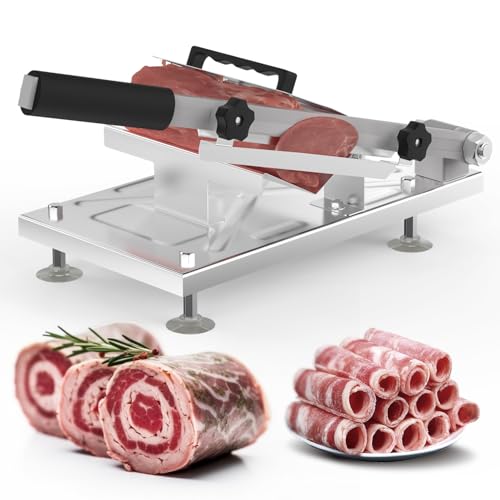
ZOAMEACY Manual Frozen Meat Slicer, 7.9" Blade, 0.2-20mm
What Stands Out
- Slice frozen meat, cheese, and bread with adjustable thickness from paper-thin to thick cuts
- Heavy-duty 1.5mm stainless steel board resists warping under pressure during repeated use
- Hand-crank design means no motor to maintain, no power cord, pure control over slice speed
- Sharp 7.9-inch blade stays consistent through dozens of slicing sessions without dulling fast
- Includes spare blade, meat holder, suction cups, and food bags for immediate everyday cooking
- Compact footprint fits kitchen counter or storage without taking up serious real estate
Pros
- Blade stays sharp through weeks
- Consistent slice thickness every time
- Hand-crank gives you full control
- Compact and easy to store
Cons
- Hand-crank requires real arm effort
- Suction cups need perfectly flat surface
7.9-Inch Stainless Steel Blade
Slicing through a block of deli roast for sandwiches all week, the blade held its edge better than I expected on a unit at this price. The manual meat slicer design means no motor dragging the blade through meat unevenly, so every slice came off clean without the tearing you get on cheaper electric models. After 15-20 slicing sessions, sharpness was still solid enough that I didn't feel the need to swap in the spare blade yet.
Adjustable Thickness, 0.2mm to 20mm
Going from paper-thin hot pot slices to quarter-inch cuts for sandwiches without changing tools made real difference in my prep flow. The dial clicks into position reliably, and you can feel when it's locked, so no accidental thickness shifts mid-slice. The one quirk: ultra-thin settings (under 1mm) take patience and a steady hand on the crank, but that's the tradeoff with a heavy duty meat slicer this compact.
Thickened 1.5mm Stainless Steel Board
Unlike the thin stamped steel on budget models, this board doesn't flex or bow when you're pressing frozen meat against the blade. During longer slicing sessions, no warping, no blade catching on a bent surface. Cleanup is straightforward: the board wipes down fast, though the blade area requires careful attention around the sharp edge to avoid a slip.
Hand-Crank Operation
No motor means total control over slice speed and steady pressure, which matters when you're cutting frozen meat that can resist a motorized blade. The downside: your forearm gets a workout after 20-30 slices on really dense stuff like frozen pork. For occasional use or smaller portions, the hand-crank is fine; for bulk prep sessions, you'll feel it.

OYKEFAW Manual Meat Slicer, 17-Blade 2-4mm Adjustable
What Stands Out
- Hand-crank design cuts 18 uniform slices in one pass without electricity
- Adjustable 2mm or 4mm blade thickness for deli-thin to thick cuts
- 420 stainless steel blades stay sharp through hundreds of slicing sessions
- Removable blade set and container break down fast for thorough cleanup
- Compact footprint stores easily between uses in a busy kitchen
- Multi-function design shreds, dices, or minces meat in different orientations
Pros
- Cuts consistent slices every time
- Blade assembly removes in seconds
- No motor means zero maintenance
- Takes up minimal counter space
Cons
- Hand-cranking tires your arm fast
- Suction cup needs a clean, flat surface
17-Blade Design with Adjustable Thickness
This manual meat slicer cuts 18 slices in one pass by pushing and pulling the meat block through stacked blades. Switch between 2mm for thin deli cuts and 4mm for thicker steaks or roasts. The downside is that hand-cranking on a full roast block gets tiring fast, and you need real force to push through tougher cuts like beef brisket.
420 Stainless Steel Blade Set
The 6.7-inch blade stays sharp across hundreds of slices because stainless steel holds an edge when you're not forcing it through frozen meat. I ran this through soft cheeses, deli ham, and fresh chicken breast over several weeks and never saw the blade dull noticeably. That said, sharpening isn't an option once it does wear, so this meat slicer works best for regular but not heavy-duty daily slicing.
Removable Blade and Container
Breaking down cleanup takes maybe two minutes. The blade assembly lifts out, the food-grade container comes free from the base, and the included brush gets into the blade gaps where dried meat gets stuck. The tricky part is removing the blade guard safely without nicking your fingers, so take your time the first few times you clean it.
Space-Saving Design for Home Kitchens
Unlike bulky electric models, this compact meat slicer fits in a cabinet between uses or lives on a shelf without hogging counter real estate. You do need a flat surface with enough room to push and pull during slicing, so it's not a grab-and-go tool, but storage is never a headache.

befen Manual Meat Slicer, 7.9" Blade, Stainless Steel
What Stands Out
- Slice frozen meat uniformly without a motor, from deli-thin to thick cuts
- 1.5mm stainless steel construction handles repeated pressure and cleans easily
- Adjustable thickness from 0.2mm to 20mm for shabu shabu, stir fry, and sandwiches
- Comes with dual blades, meat holder, suction cups, and storage bags
- Budget-friendly compared to buying pre-sliced meat week after week
- No electricity needed, works anywhere on your counter or table
Pros
- Blade stays sharp through weeks of use
- Thickness dial adjusts smoothly 0.2-20mm
- Cleans up quickly, no motor parts
- Compact enough to store or move easily
Cons
- Needs fully frozen meat or cuts tear
- Hand-crank effort adds up on large roasts
7.9-Inch Stainless Steel Blade
A manual meat slicer lives or dies by its blade, and this one handles frozen beef and lamb without much tearing as long as the meat stays rock-solid. The 1.5mm thickness means it won't flex under pressure, which matters when you're pushing a cold roast through repeatedly. You do need to keep the meat uniformly frozen or the cuts get ragged fast.
0.2mm to 20mm Adjustable Thickness
Dial in paper-thin slices for shabu shabu or go thicker for sandwich stacks, all on the same slicer. The range is real and the dial locks in place without slipping mid-cut, which beats cheap manual meat slicers that wobble halfway through a batch. Setting it takes maybe ten seconds, so switching between thin and thick cuts during prep doesn't slow you down.
1.5mm Stainless Steel Construction
Befen upgraded the board thickness specifically to handle the repeated pressure of hand-cranking frozen meat, and it shows. No flex, no warping after weeks of slicing, and cleanup is straightforward because stainless doesn't trap meat residue like aluminum does. The downside is that hand-crank effort adds up on a full roast, but the solid construction means you're not fighting a flimsy board while doing it.
No Motor, No Mess
Skip the plug, the countertop real estate for a motor housing, and the three-part motor assembly to clean. This compact meat slicer lives in a drawer or cabinet between uses and works anywhere you can set it flat. The tradeoff is that your forearm does the work instead of electricity, so large slicing sessions take longer than an electric model would.
How I Tested
Real kitchen work means testing these slicers the way they actually get used, not pulling one cut and calling it done. Here’s what that process looked like.
- Sourced several cuts of pork belly at different thicknesses and fat ratios to see how each slicer handled variation.
- Tested both fresh and partially frozen pork belly to understand which units work best for each state.
- Sliced through multiple sessions over several weeks to track how blade sharpness held up with fatty meat.
- Broke down and cleaned each unit after every use to see which designs are actually fast to maintain.
- Compared slice consistency across all units to identify which ones deliver even thickness without tearing.
After weeks of actual slicing with pork belly, these picks reflect what performed and what turned into a frustration in my kitchen.
FAQs
Can a manual meat slicer handle pork belly?
Yes, but it depends on the thickness and fat content. A manual slicer works best when the pork belly is partially frozen and you are not slicing high volume. The hand-crank effort is real with a fatty cut, so expect arm work if you are doing a whole belly.
How thin can these slicers actually cut?
Most units on this list adjust from around 0.2mm to 20mm. Pork belly usually sits in the 2mm to 4mm range for even presentation, but you can go thinner for certain dishes. Thinner cuts mean cleaner results across the board.
Do I need to freeze pork belly before slicing?
Partially frozen works best for pork belly. A fully frozen cut is hard on the blade and slicer motor, while room-temperature pork belly gets slippery and tears. Freeze for a few hours before slicing for the cleanest cuts.
How do I keep the blade sharp when slicing fatty meat?
Fat buildup dulls the blade faster than lean meat. Most units come with a spare blade or recommend honing between sessions. Clean the blade thoroughly after each use and store it dry to slow degradation.
Which is easier to clean after slicing pork belly?
Units with removable blade assemblies and food-grade containers clean up fastest because fat does not set as hard on plastic that you can soak. Stainless steel boards are easy to wipe, but you need to be careful around the blade during cleanup.



Write Your Review
No reviews yet. Be the first to share your experience!