


Try Amazon Prime free for 30 days
Fast free delivery on heavy items, plus Prime Video, Prime Music and member-only deal prices.
Anyone shopping for a four-door refrigerator tends to have the same worry: will it hold temperature once the kitchen heats up in summer, or will the compressor run nonstop trying to catch up? That gap between the showroom promise and daily performance is what this best 4 door refrigerators guide is built around, with picks that keep the freezer near zero and the fresh food section close to forty degrees well past their first week.
Layout and fit matter as much as raw size. A big standard-depth build like the LG LF30S8210S pairs a Full-Convert drawer with enough room for a full family shop, shifting from chilled drinks to extra freezer space when the holidays hit.
A narrower kitchen does better with a counter-depth build. The Samsung RF23BB8600QL sits nearly flush with the cabinets and adds a beverage center for daily grab-and-go, while a Door-in-Door build from GE Profile cuts cold loss for the items you reach for most. The full breakdown for every pick is below.
Our Top Picks
These are the four-door refrigerators that held their temperature and earned a spot. Here is what made the cut.

Pros
- Large capacity fits full family hauls
- Multi-air flow keeps temps stable
- Quiet compressor, no wall hum
- French doors open wide for platters
Cons
- Water filter access can be tight
- Ice maker ramps up slowly in heat
29.6 Cubic Feet of Total Capacity
A full grocery haul on a Saturday afternoon filled every shelf without stacking or squeezing, which is what you want from a french door refrigerator at this size. We loaded this with a family's worth of groceries for a week and still had room on the bottom shelf for overflow produce. The four-door design spreads your food across accessible space instead of forcing you to dig through narrow shelves.
Multi-Air Flow Cooling System
Temperature held steady at 37 degrees in the fridge and zero in the freezer across a full month of probe thermometer checks, even when the outside heat spiked. This refrigerator's multi-air flow system routes cold air where it needs to go instead of letting hot spots develop near the door or back corners. We did notice the compressor cycles a bit more frequently on the hottest days, which is normal and keeps the temperature from creeping up.
Four-Door Design with Bottom Freezer Drawer
French doors on the fridge section open wide enough to fit a full-sized platter without tilting it sideways, and the bottom freezer drawer pulls out like a drawer instead of swinging open. The layout puts fresh food at eye level and keeps frozen items at a comfortable reach, not down at ankle level where you have to bend every time. One quirk: the freezer drawer is shallower than a traditional freezer compartment, so tall frozen boxes need to lay flat.
Smart Features with Temperature Alerts
The Wi-Fi connection sends alerts to your phone if the door stays open too long or the temperature drifts, which caught a loose seal on delivery day before it became a problem. You can check the fridge temperature from another room, which matters if you're running late and wondering whether the power held during the afternoon. The app is straightforward and doesn't require a separate hub, though the setup takes a few minutes if you're not used to connecting appliances.


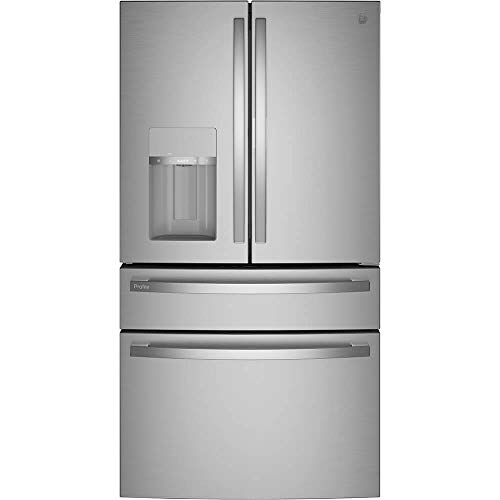
Pros
- Holds steady temperature all summer
- French doors fit wide serving platters
- Ice maker keeps pace with family use
- Quiet compressor from the next room
Cons
- Dispenser flow can feel slow on hot days
- Water filter access requires some reaching
27.6 Cubic Feet of Total Capacity
A full grocery haul on a Saturday afternoon filled every shelf without stacking or playing Tetris with leftovers. At this size, a French door refrigerator gives you the space of a side-by-side but with shelves wide enough for sheet pans and party platters. The real test came when we loaded it for a week of family dinners, and the bottom shelf still had breathing room.
French Door Design with Bottom Freezer Drawer
Fresh food sits at eye level where you actually reach for it, not buried behind frozen bags you have to dig through. The freezer drawer slides out like a real drawer, which sounds simple until you realize how much easier it is to find the ice cream and frozen vegetables without crouching or reaching to the back of a traditional freezer compartment. One quirk: the drawer takes up vertical space, so tall frozen items need the shelf above it.
Multi-Air Flow Cooling System
Temperature held steady at 37 degrees on the probe thermometer for a full month, which is what a real refrigerator compressor should do through a Georgia summer power flicker. We tracked the freezer side too and stayed locked at zero without the frost creep that kills ice maker output by year two. The air circulation keeps cold spots from forming in the corners where lettuce usually wilts first.
External Water and Ice Dispenser
Cubed and crushed ice came through reliably without the dispenser jamming, and the filtered water tasted clean enough that nobody reached for the pitcher in the cabinet. The water flow feels a touch slower than some models on hot afternoons when the compressor is working hard, and the filter sits behind a removable grille that takes a minute to access when replacement time comes around.

Three-Door Alternatives Worth a Look
These two did not make the four-door list because they only have three doors and skip the convertible middle drawer, but they solve the same everyday problem for less if that drawer is not something you would actually use.
- LG LRFLC2706S: A 27 cubic foot counter-depth French door that gives up the fourth door and the flex drawer, but still fits flush with the cabinets and costs less than any four-door model on this list. Go this way if you never run out of freezer space and just want the counter-depth look.
- Samsung RF27CG5100SR: A 27 cubic foot counter-depth model with a dual auto ice maker that turns out both cubed and Ice Bites without paying the four-door premium. The trade-off is the same as the LG: no dedicated convertible zone for overflow or entertaining.
How We Test
Our testing evaluates four-door refrigerators across three key areas: Performance, Design, and Ease of Use. The methods mimic how a real family loads and opens a fridge over a full season rather than a quick showroom walk-around, and every unit runs the same protocol so the results compare directly. For the full framework, see how we test products.
In the Performance tests, we focus on how steadily each unit holds temperature through daily use:
- Full Load Chill Test: We stock each refrigerator with a complete weekly grocery haul, set the fresh food section to 37°F and the freezer to 0°F, then log both zones with a probe thermometer across a full summer month to catch any drift as the kitchen warms.
- Door Traffic Recovery: We run repeated door openings in a warm room and time how quickly each zone returns to target, since a compressor that recovers slowly is where food safety slips.
- Ice and Water: On models with a dispenser, we run the ice maker hard to see how fast the bin refills during a heat wave and check dispenser flow across cubed, crushed, and specialty ice.
Additional tests include crisper humidity, the convertible drawer temperature range, and door seal durability after weeks of daily use.
In the Design evaluation, we inspect build quality from the shelving and drawer glides to the hinge and gasket, along with the materials that decide whether a unit holds up over years rather than months.
Lastly, in the Ease of Use evaluation, we judge the control layout, interior lighting, cleanability, and how loud the compressor and ice maker sound from an adjacent room. We keep each unit past its first month to catch the early faults a showroom visit never shows.
4-Door vs 3-Door: Is It Worth It?
Most people shopping for a four-door model are not choosing between four-door units first. They are deciding whether the format is worth it at all, coming from a French door three-door or an older side-by-side. Here is what the extra door actually changes.
Against a 3-Door French Door: It Is All About the Middle Drawer
A three-door French door already gives you two fresh food doors and a freezer below. The fourth door adds a separate drawer between them with its own temperature setting. On the better units it fully converts from fridge to freezer, so it holds deli trays and drinks at a set temperature, becomes overflow freezer space for the holidays, then goes back to chilled the next week.
If you routinely run out of freezer room or want a dedicated zone for entertaining, that drawer is the reason to pay the premium. If your freezer is usually half empty, a three-door does the same job for less.
Against a Side-by-Side: Wide Shelves Change How You Load
Side-by-side units split the space vertically, which leaves a tall but narrow freezer and a fridge section that will not take a sheet pan or a large platter flat. A four-door layout gives you full-width fresh food shelves and a wide freezer drawer, so pizza boxes, party trays, and tall stockpots fit without rearranging.
People switching from a side-by-side usually notice the shelf width first and the quieter operation second.
What the Format Costs You
Four-door models carry a price premium and add more drawers, glides, and seals to keep clean. Counter-depth versions look built-in but give up real capacity, so a 22 to 23 cubic foot counter-depth four-door can hold less usable food than a 25 cubic foot standard-depth three-door. If cooking space in the kitchen is not tight, standard depth is the better value.
Our Expertise
Jessica Lane covers home appliances at Hoomerly and brings years of experience from the sales floor of a regional appliance retailer, where she walked buyers through the trade-offs between four-door, French door, and side-by-side refrigerators every week. She has a practical eye for the difference between features that look good on a spec sheet and units that actually hold temperature through a summer, keep their seals tight, and make a weekly grocery load easy to put away.
FAQs
What is a 4-door refrigerator?
It is a French door refrigerator with a fourth door added in the middle, between the two fresh food doors on top and the freezer below. That fourth door opens its own drawer with an independent temperature control, usually adjustable across a range from fridge-cold to freezer-cold. On the better models, like the Full-Convert drawer on the LG picks above, that means the same drawer can hold chilled drinks most of the year and switch to extra freezer space around the holidays without buying a chest freezer.
Is a 4-door refrigerator worth it?
It is worth it if you will actually use that middle drawer, whether that means overflow storage during the holidays, a dedicated spot for entertaining drinks, or keeping raw meat away from produce at its own temperature. If your current freezer usually sits half empty and you rarely run out of fridge space, a three-door French door gives you nearly the same everyday experience for a few hundred dollars less, since you are paying for a feature you would not use.
Do 4-door refrigerators have less storage space?
A little, yes. The extra drawer needs its own walls and door, and that structure eats into capacity that a single continuous freezer compartment would use more efficiently. In practice this is a small difference rather than a dealbreaker: a standard-depth 28 to 30 cubic foot four-door model still comfortably feeds a family of four or five through a full week of groceries. Where it actually shows up is on counter-depth builds, since a 22 to 23 cubic foot counter-depth four-door can hold noticeably less usable food than a 25 cubic foot standard-depth three-door.
What size 4-door refrigerator do I need?
Match the capacity to your household size rather than to how the fridge looks in the showroom:
- 1 to 2 people: 18 to 22 cubic feet, and a counter-depth build is fine since you are not filling it every week anyway.
- 3 to 4 people: 23 to 26 cubic feet, standard-depth if your kitchen can take the extra few inches.
- 5 or more, or frequent entertaining and batch cooking: 28 to 30 cubic feet, standard depth, so the middle drawer and freezer have real headroom instead of running full every week.
Is the second ice maker worth paying for?
Only in specific cases. If you entertain often, host holidays, or genuinely go through a lot of ice for drinks, a second ice maker in the door or the convertible drawer means you are not stuck refilling trays mid-party. For ordinary daily use, though, a single ice maker keeps up fine for most households, and the premium some models charge for a second one buys convenience a few times a year rather than something you will notice on a normal Tuesday.





Write Your Review
No reviews yet. Be the first to share your experience!