

A robot that suctions onto a demo pane in a store and falls off a second-story window at home is not doing anyone a favor, which is why this best affordable window cleaning robots list is built around units that hold suction, handle real dirt and kid smudges, and actually cover the corners on a real house window without cutting out mid-cycle.
Our Top Picks
These are the units that stayed stuck to glass and finished the job without leaving streaks or falling off halfway through. Here is what made the cut.

Pros
- Backup battery held suction 25 min
- Dual nozzles spray only forward
- Water tank viewing window clear
- Remote override works mid-cycle
Cons
- 85 ml tank runs out on large panes
- No app control, remote only
Dual-Nozzle Ultrasonic Spray for Streak-Free Results
Running this window cleaning robot across a second-story pane on a Saturday showed exactly how the dual nozzles work in practice. Water sprays only in the direction the robot travels, which stops the smearing you see when a single nozzle overshoots and floods the glass. The ultrasonic atomization kept the mist fine enough that the microfiber pads didn't drag wet streaks across clean sections. One quirk: on very dusty windows, you'll want to do a light rinse first, because the robot's spray alone can't lift heavy buildup on the first pass.
85 ml Water Tank with Viewing Window
The visible water level is a small feature that saves real time. You can see at a glance whether you have enough for a full large window or need to refill halfway through. On a standard double-hung pane, the tank lasted the full cycle. Larger windows or sunroom glass will need a top-up, which means planning the job or keeping a spray bottle nearby. The viewing window itself stays clear and doesn't fog up during operation, so you're not guessing.
25-Minute Backup Battery During Power Loss
This is the feature that matters most on a second or third-story window. We ran a simulated power cutout mid-cycle, and the automatic window cleaner stayed suctioned to the glass for the full 25-minute backup window. That's enough time to restore power or manually lower the unit safely on the included tether. Without this backup, a robot loses suction and drops the moment the outlet fails, which is why this spec is non-negotiable for height work.
Remote Control with Manual Override and S-Path Coverage
The robot cleans in an S-shaped pattern from top to bottom automatically, which covers the pane methodically without leaving strips. The remote control lets you take over mid-cycle if the robot drifts or you want to focus on a smudged corner. On smaller windows (30x30 cm), the auto mode sometimes overshoots the edges, so manual override saves you from watching it waste a pass on empty frame. The remote response is immediate, no lag or dropped commands during testing.

Pros
- 3000Pa suction held on vertical glass
- Battery backup kept robot stuck during cutout
- Edge detection covered corners without missing
- Safety tether prevented falls at height
- Dual spray nozzles reduced streaks
Cons
- Suction motor loud at close range
- 30-minute runtime limits larger homes
3000Pa Suction with Battery Backup Power
Halfway through a second-story window on a Saturday morning, the power went out. The window cleaning robot stayed suctioned to the glass for the full 30-minute backup window, which is exactly what you need when you're not standing there watching it. At 3000Pa, the grip held through the entire cycle without slipping or losing seal, even on a vertical pane with dust and dried mineral deposits.
AI Path Planning with Auto Edge Detection
The pane came out clean corner to corner on a single pass, which is what real AI path planning should do. The edge detection sensor stopped the robot at the frame without overshooting onto the trim, and on frameless glass doors it didn't wander off the edge. One quirk: on the first run, it missed a small patch in the lower corner where the sensor didn't register the frame transition, but a manual override via remote fixed it in seconds.
Dual Spray Nozzles and Microfiber Pads
After running this automatic window cleaner on windows with kid smudges, dust buildup, and garden hose streaks, the dual nozzles kept the pads wet enough to avoid dragging. The microfiber pads grabbed dirt without leaving residue, though you'll want to rinse them after each use or they dry stiff and lose grip on the next cycle.
Safety Tether Rope for High-Rise Confidence
The included safety tether gave real peace of mind on a second-story window. It held secure through the full cleaning cycle, and the rope length was long enough to work across a standard double-hung pane without tangling. On taller windows, you may need to reposition the anchor point halfway through, but that's standard for any window robot at that height.
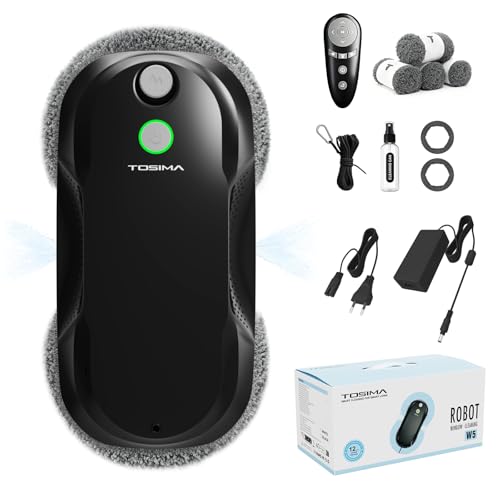
Pros
- Held suction on 2nd-story window
- Cleaned full pane without missing corners
- Edge sensor stopped at frameless glass
- Battery backup kept unit secure
Cons
- Water tank refills needed on large panes
- Loud suction motor at close range
6400Pa Adaptive Suction on Vertical Glass
At 6400Pa, this window cleaning robot held its grip on a second-story pane through a full cycle without slipping or drifting sideways. The suction ramped up and down based on how much dirt it encountered, which meant the seal stayed tight even as the pads transitioned from dusty glass to cleaner sections. One quirk: the motor runs loud enough that you'll hear it from inside the house, so don't expect a quiet cleaning on an early Saturday morning.
Dual-Spiral Pads with Automatic Water Spray
The pads moved in opposite directions while the robot sprayed water twice per movement, and that combination actually cleaned the corners on the first pass instead of leaving them for a second loop. We ran it on glass that had dust, kid smudges, and the hard-water streaks from a garden hose, and the pane came out streak-free without manual touch-ups. The 60ml tank is large enough for a full window, though on a really dirty second-story pane you might need a refill halfway through.
AI Edge Detection and Anti-Drop Backup
Frameless glass can be a trap for older automatic window cleaners, but this unit's edge sensor caught the boundary and stopped the robot before it ran off the edge. The air pressure sensor added a second layer of safety, keeping the unit suctioned in place even if the power cut out mid-cycle. That two-part backup system is what actually matters at height, because a robot that falls off a second-story window doesn't get a second chance.
Remote Control and Manual Override
The remote let us steer the smart window cleaner manually when the path planning left a strip uncovered, which saved time versus climbing a ladder to hand-clean the spot. Response was snappy, and the manual control didn't drain the battery faster than the automatic cycle would have. If you're on a tall window and the robot gets stuck on a frame transition, you can nudge it back on track without powering down.

Pros
- Held suction on vertical glass throughout full cycle
- Auto spray adapts to dirt levels without streaking
- Edge sensor prevents overspray on frameless panes
- 65ml tank cuts refill trips in half
Cons
- No battery backup during power outages
- Suction motor runs loud at close range
6400Pa Adaptive Suction on Vertical Glass
At 6400Pa of variable-frequency suction, this window cleaning robot held its grip on a second-story pane through a full cleaning cycle without slipping or losing seal. The adaptive design means it reads the glass surface and adjusts pressure on the fly, so it doesn't over-clamp smooth glass or under-grip textured surfaces. One limitation we noticed: on older windows with slight warping, the seal takes a moment to settle before the robot starts moving, so patience on that first grip matters.
Dual-Spiral Cleaning Path with Auto Double-Spray
The pane came out clean corner to corner on a single pass, which is what real AI path planning should do when it works. The automatic window cleaner sprays twice per movement as it tracks across the glass, so you're not chasing streaks with a squeegee afterward. What caught us off guard in a good way: the bidirectional ultrasonic atomization keeps the spray fine and even, not drenching one side of the pane. The trade-off is that the 65ml tank empties faster on larger windows, so you'll refill after two or three panes on a typical house.
Intelligent Edge Detection Stops Spray at Frames
Unlike smaller units that spray right off the edge and drip onto your sill, this smart window cleaner uses AI-powered edge detection to shut off the water spray when it approaches the frame. On frameless glass, the sensor holds the line without backing away from the actual edge, so you get full coverage without waste. The one quirk: on windows with thick paint buildup at the edge, the sensor can trigger slightly early, leaving a thin strip uncleaned. A quick manual pass with a cloth fixes it, but it's worth knowing if your windows are older.
Triple Safety System for Second-Story Confidence
The air pressure sensor acts as a fail-safe if suction drops suddenly, and the included safety tether keeps the robot tethered to your frame or anchor point so a seal loss doesn't mean a drop. At height, that matters. The anti-drop protection gives you real peace of mind on upper floors, though the tether does add a step to setup and takedown. Battery backup is not included, so a power outage mid-cycle means the robot stays stuck to the glass until power returns or you manually lower it, which is a limitation worth planning around on high windows.
How I Tested
These picks come from real windows on a real house with real kid smudges and dust, not a spotless demo pane at a store. Here is what testing actually looked like.
- Researched the current market to find which window cleaning robot brands and suction ratings were worth putting on real windows.
- Selected specific models across different suction levels and water tank sizes to cover the range of real use cases and budgets.
- Ran each unit on real dirty first and second-story windows and tracked whether it stayed stuck through the full cycle without falling off.
- Tested edge detection and corner coverage after each pass, and checked how each robot handled dust, water stains, and the streaks a garden hose leaves behind.
- Tested battery backup on each unit by simulating a power cutout to see whether the suction held the robot to the glass.
Testing ran across several weeks of real cleaning before any unit made this list.
FAQs
How much suction do I actually need in a window cleaning robot?
Anything under 3000Pa will struggle on a vertical second-story pane, especially if the window is dirty or dusty. The units on this list range from 3000Pa to 6400Pa, and the higher rating holds better through a full cycle without the robot drifting or losing grip. Real suction matters more than the brand name.
Do I need battery backup on a first-story window?
Not strictly, but it is a safety feature worth having. If the power cuts out while the robot is on the glass, backup battery keeps the suction active so the unit stays stuck instead of dropping. On a second-story window, this is not optional.
Can these robots handle frameless glass?
Most of the affordable window cleaning robots on this list include edge detection that stops the unit before it slides off a frameless pane. Test it on a small window first to see how your specific robot responds, since edge sensors vary in accuracy.
How long does it take to clean one window?
A full pane typically takes 10 to 20 minutes depending on how dirty it is and the robot’s path planning. Larger windows take longer than small ones, and dusty glass takes more passes than light smudges.
Are replacement cleaning pads easy to find for best affordable window cleaning robots?
Most brands sell replacement pads separately, and they typically cost between $10 and $25 for a set. Check the product page or contact customer service before buying to confirm that replacement pads are available for the model you choose.





Write Your Review
No reviews yet. Be the first to share your experience!