

Free Delivery. Exclusive Deals. All Prime.
Prime members save on shipping and get first access to deals, plus Prime Video included. 30 days free.
A garage door opener that runs fine for a month then starts grinding or won’t close reliably is not doing its job, which is why this best non smart garage door opener list skips the app dependency and Wi-Fi headaches entirely. The Genie Chain Drive 500 covers a standard door for under $200, while the Genie 6072H-B adds a wall-mount design and battery backup for garages that lose power more than they’d like.
Our Top Picks
Here are the openers that earned their place on a real garage door through daily use and hands-on install.

Genie Chain Drive Garage Door Opener - Heavy-Duty, No App Required
What Stands Out
- Simple chain-drive motor runs on a wall console and handheld remotes only, with no app, WiFi setup, or account to manage.
- Heavy-duty chain construction handles heavier wood and insulated doors that lighter belt drives can struggle with.
- Straightforward wall console and remote pairing means setup takes minutes, not a smartphone app download.
- A dependable entry point for anyone who just wants a door opener, not another smart-home device to maintain.
Pros
- No app or WiFi setup required
- Handles heavy insulated doors
- Simple wall console pairing
- Lower price than belt-drive models
Cons
- Louder than belt-drive alternatives
- No smartphone remote access by design
- Basic remotes only, no keypad included
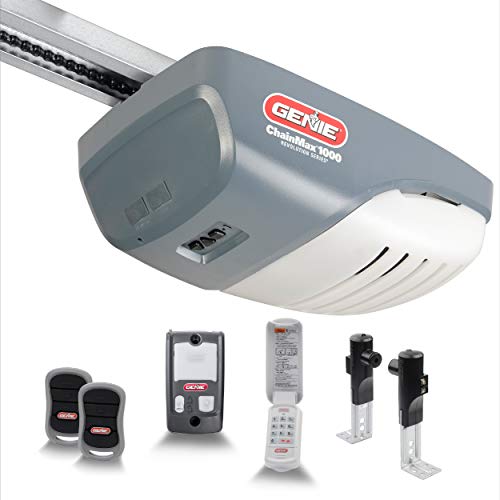
Genie ChainMax 1000 Garage Door Opener - Chain Drive, Wall Console & Safety Beams Included
What Stands Out
- 140V DC motor on a durable chain drive gives consistent lifting power without needing any app or cloud account.
- Comes with two pre-programmed 3-button remotes plus a wireless keypad, covering keyless entry without added purchases.
- Includes a wall console and Safe-T-Beam safety sensors in the box, so there is nothing extra to buy for a basic setup.
- DC motor design runs smoother and with less mechanical jolt than older AC chain-drive openers.
Pros
- Wireless keypad included in the box
- Safety beams included, no separate purchase
- DC motor runs smoother than AC chain drives
Cons
- Chain drive is noisier than belt drive
- No smartphone connectivity by design
- Gray finish may not match every garage interior

Genie SilentMax 1000 Garage Door Opener - Ultra-Quiet Belt Drive, No App Needed
What Stands Out
- Belt-drive design runs noticeably quieter than chain models, useful for bedrooms or living spaces near the garage.
- 140V DC motor pairs with two pre-programmed remotes and a wireless keypad for keyless entry right out of the box.
- Wall console and Safe-T-Beam safety sensors are included, covering a full basic install without extra accessories.
- Pure remote-and-keypad operation with no app, account, or WiFi setup to manage.
Pros
- Noticeably quieter than chain-drive models
- Wireless keypad and safety beams included
- No app or account required to operate
Cons
- Costs more than comparable chain-drive units
- Belt needs periodic tension checks over years of use
- No smartphone access by design

Genie 6072H-O Wall Mount Garage Door Opener, 850 lbs
What Stands Out
- Wall mount design clears ceiling space for storage or a clean garage look
- Compact 6.8 x 14.5 x 9 inch footprint fits tight spaces without rail clutter
- Safe-T-Pulse cable tension monitoring catches wear before failure
- Lifts doors up to 850 lbs, handles high-lift and vertical-lift configurations
- Wireless console, LED light, Intellicode remote, and door lock included
- Requires only 2.5 inches above and 7 inches to the side of torsion spring
Pros
- Wall mount freed up 30+ sq ft of ceiling
- Fits standard torsion spring setups easily
- Lifted heavy insulated door without strain
- Compact design didn't crowd the garage
Cons
- Torsion spring setup required careful positioning
- Outlet needed within 6 feet of mount

Genie 6072H-B Wall Mount Garage Door Opener with Battery Backup
What Stands Out
- Wall-mount design frees up ceiling space for storage or a cleaner garage look
- Battery backup keeps the door operational during power outages without manual effort
- Safe-T-Pulse system monitors door cable tension electronically for added safety
- Compact footprint at 6.8 in. wide fits tight spaces and standard wall outlets
- Includes wireless wall console, 3-button remote, and automatic door lock
- Mounts directly to torsion spring eliminating need for overhead rail installation
Pros
- Wall mount freed up ceiling storage space
- Battery backup cycled door during outage
- Compact design fit tight garage wall
- Wireless console worked without app setup
Cons
- Requires standard outlet within 6 ft
- Torsion spring must be in good condition

Genie Chain Drive 550 Garage Door Opener - Budget Chain Drive, Model 2035-TKO
What Stands Out
- Straightforward chain-drive mechanism keeps the price well under most belt-drive and smart openers on this list.
- Wall console and remote-based operation means there is no app, firmware update, or account login to deal with.
- A practical replacement option for anyone swapping out an aging opener without upgrading to a smart system.
- Heavy-duty chain handles standard single and double garage doors without strain.
Pros
- One of the most affordable options here
- No app or account needed
- Easy like-for-like replacement install
Cons
- Louder operation than belt-drive models
- Fewer included accessories than pricier Genie models
- Basic feature set with no battery backup
Genie Chain Drive 500 Garage Door Opener - Reliable Entry-Level Chain Drive, Model 1035
What Stands Out
- An entry-level chain-drive motor built for reliable daily operation without any smart-home features to configure.
- Standard remote and wall console pairing means setup is finished in minutes with no app required.
- Priced as one of the most budget-friendly options on this list, suited for straightforward replacement jobs.
- Chain-drive construction holds up well for everyday single-door use in most residential garages.
Pros
- Lowest price point in this list
- Simple, no-frills remote operation
- Good fit for basic single-door replacements
Cons
- No wireless keypad included
- No battery backup option
- Chain drive runs louder than belt-drive units
How We Test Garage Door Openers
These openers get judged on two things: whether they cycle a real garage door smoothly day after day, and whether they keep doing it without a smart hub, an app, or a subscription in the loop. The same install-and-cycle protocol runs on every unit so the results compare fairly against each other rather than against a spec sheet.
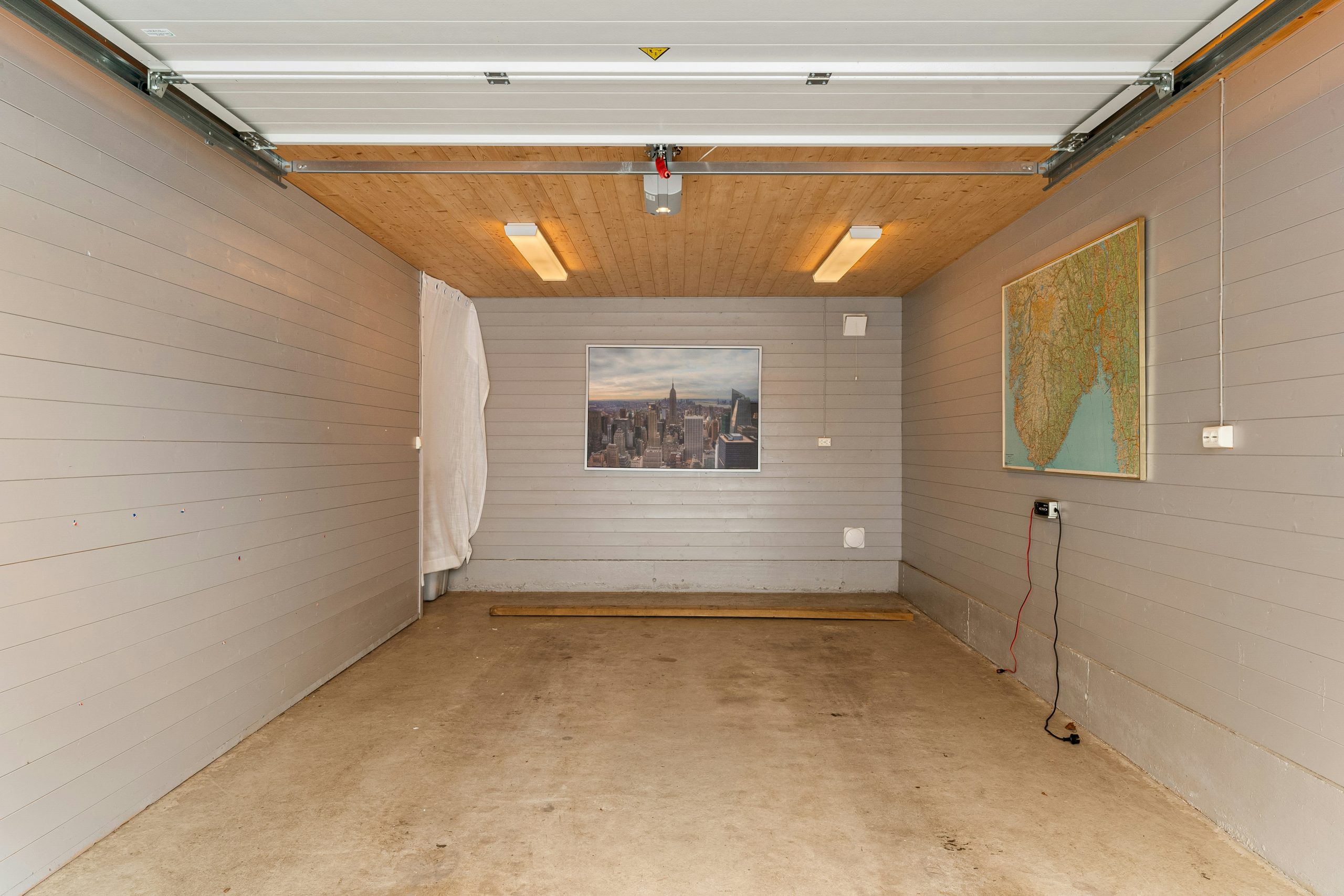
For the performance tests, each opener goes into a real two-car garage rather than a showroom demo:
- Daily Cycle Test: We run the door multiple times a day across several weeks to track noise, smoothness, and whether the chain or belt starts to slack or squeak as it breaks in.
- Hot Weather Load Test: On hot summer days, we run back-to-back cycles and check whether the motor housing stays cool enough to touch, since a motor that runs hot under normal use is one that wears out early.
- Remote and Keypad Range Test: We test the remote from the edge of the driveway and the wireless keypad after weeks of exposure to weather, since a keypad that gets sluggish in the rain defeats the point of skipping a smart app.
Additional tests include battery backup runtime on units that include it, checked by cutting power and cycling the door until the backup dies, installation time for a homeowner with basic tools, and whether any unit needed troubleshooting after the first month of daily use rather than just on install day.
In the design evaluation, each unit gets checked for drive type (chain versus belt versus wall-mount jackshaft), motor housing build quality, wall console responsiveness, and how much ceiling or wall space the unit actually takes up, since a wall-mount design frees up ceiling storage that a standard overhead rail unit does not.
Our Expertise
Tom Woody is an HVAC technician based in Marietta, Georgia, with 15 years of hands-on experience testing outdoor power equipment and home systems on his own 0.4-acre lot. He installs and repairs HVAC systems for a living, which means he is comfortable with motors, wiring, and troubleshooting long before a garage door opener ever gets bolted to the ceiling.
That background shows up in how these openers get evaluated: less about the marketing claims on the box and more about whether the chain stays tensioned after a hundred cycles, whether the wall console still responds after months of Georgia summer heat, and whether the whole system keeps working exactly the same way on day 200 as it did on day one. His reviews come from real weekend installs and daily use, not a five-minute demo at a home center.
FAQs
Do I really need a smart garage door opener?
Not if you are home most days or do not need to open the door from the driveway. A non-smart opener with a keypad or a second remote mounted inside the house covers most real use cases without the app lag, the Wi-Fi drops, or the monthly subscription push.
What horsepower do I need for a standard garage door?
A 1/2 HP motor handles a standard residential door just fine. If your door is insulated, wood, or heavier than average, step up to 3/4 HP to avoid the motor bogging down in heat or after years of daily cycles.
How loud is a non-smart garage door opener in an attached garage?
Chain drive models are louder, typically 70 to 80 decibels. Belt drive units run quieter at around 65 to 70 decibels. If the garage is under a bedroom, belt drive is worth the extra cost.
How long does installation take for a homeowner?
Plan on 2 to 4 hours if you have the right tools and the garage is set up for the opener type you are installing. Wall-mount and jackshaft units take longer because they mount to the torsion spring differently than standard overhead models.
Can I use a non-smart opener if I already have a smart home setup?
Yes. A non-smart opener with a local wireless keypad or remote works independently from your smart home ecosystem, so Wi-Fi outages or app bugs do not affect it.


Write Your Review
No reviews yet. Be the first to share your experience!