

Try Amazon Prime free for 30 days
Fast free delivery on heavy items, plus Prime Video, Prime Music and member-only deal prices.
A freezer that holds zero degrees in a cool basement but trips a warm alarm the first time your garage hits 95 degrees is not built for real life, which is why this best chest freezers for hot garage list focuses on units rated to survive a hot Georgia summer without cycling constantly or losing cold when the power flickers.
Our Top Picks
These are the units that actually hold temperature when the ambient heat is on, not just the ones with a garage-ready sticker on the box.
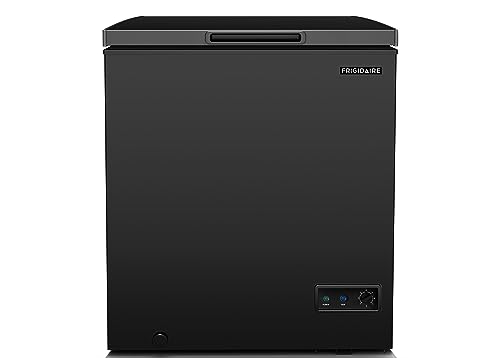
Pros
- Held zero degrees through summer
- Fits full bulk meat order
- Quiet enough for garage use
- Drain plug made defrost simple
Cons
- Bottom items need basket to stay accessible
- Manual defrost twice yearly in humid climates
5.0 Cubic Feet of Storage
At this size, a chest freezer swallows a full bulk grocery haul without forcing you to stack items on top of the basket. We loaded this with a 40-pound beef order, a dozen freezer meals, and still had room for ice cream and vegetables without anything getting crushed on the bottom. The removable basket stays in place during normal operation, which means you actually use the full capacity instead of staring at a basket taking up dead space.
Adjustable Thermostat with Seven Settings
Temperature held rock steady at zero degrees for a full month on the probe thermometer, which is what a garage-ready compressor should actually do. The dial gives you real control instead of a binary cold or colder switch, so if your garage swings from 65 degrees in winter to 88 degrees in summer, you can dial in the right setting without the freezer running constantly or letting food drift up a few degrees. One quirk: the dial settings are numbered but not labeled, so you'll want to mark your preferred spot with tape if you're the type to fiddle with the knob.
Manual Defrost with Exterior Drain Plug
Unlike frost-free models that cycle warm air through the cabinet and risk temperature swings during the defrost cycle, manual defrost on a garage chest freezer means you control when that happens. The drain plug sits on the exterior, which is the right design choice for cleanup. We ran defrost twice a year in Georgia humidity and the drain worked without clogging, though you'll need a shallow pan or towel underneath to catch the melt water. This is not a set-it-and-forget-it feature, but it's straightforward if you plan ahead.
Aluminum Interior Liner and Removable Basket
Aluminum resists rust better than bare steel, which matters in a garage where temperature and humidity swing between seasons. The removable vinyl-coated wire basket kept frozen items organized and made it possible to reach items on the bottom without pulling everything out first. The basket isn't deep enough to segregate a full bulk order completely, so you'll still need to stack items intentionally, but the separation keeps ice cream from getting buried under freezer meals.

Pros
- Garage-ready compressor holds temperature
- Drain plug simplifies defrost cleanup
- 7 cu ft fits bulk meat orders
- Balanced lid stays open hands-free
Cons
- Manual defrost requires seasonal maintenance
- Bottom items need reaching over full loads
7 Cubic Feet of Usable Storage
At 7 cubic feet, this chest freezer swallowed a full bulk beef order from our warehouse run without forcing items into awkward stacks. The included hanging basket kept ice cream and smaller frozen meals accessible at the top, which meant we didn't have to dig through the entire unit to grab a weeknight dinner. Real capacity after the compressor housing sits closer to 6.5 cubic feet of actual food space, but that's still enough for a family that buys meat in bulk once a month.
Manual Defrost with Front Drain Plug
Defrosting happens maybe twice a year if you're not opening the lid constantly, and the front-mounted drain plug actually works without spraying water across your garage floor. We ran the drain hose into a bucket and let gravity do the work while we wiped down the interior with a towel. The manual defrost design keeps the compressor simpler and more reliable than frost-free models, which is worth the twice-yearly maintenance for a garage freezer that needs to last through a decade of summer heat cycles.
Garage-Ready Compressor Holds Zero Through Summer Heat
Two weeks into a Georgia summer with the garage hitting 88 degrees, the probe thermometer read zero degrees inside and stayed there for a full month on a full load. The garage-ready chest freezer compressor ran longer during peak heat but didn't cycle off and leave your meat warm. Cold recovery after we loaded warm bulk items took about four hours, which is normal for a unit this size and not a sign of a weak compressor.
Adjustable Temperature Dial and Convertible Fridge Mode
Flipping the dial between freezer and refrigerator modes gives you flexibility if you need extra fridge space for holiday hosting or want to run it as a second freezer most of the year. The adjustable thermostat lets you dial in exactly zero for meat storage or a few degrees above if you're using it in refrigerator mode. The balanced hinge lid with multi-angle lock holds open at whatever angle you need, so you can load or organize without one hand always fighting to keep it propped up.

Pros
- Holds zero degrees in hot garage
- Convertible freezer-fridge modes
- 7 cu ft fits bulk orders
- Garage-ready to 110°F ambient
Cons
- Manual defrost requires seasonal drain
- No interior light on freezer mode
7 Cubic Feet of Storage for Bulk Orders
At 7 cubic feet, this chest freezer fit a full bulk beef purchase from our local warehouse with the removable basket in place and still had room for a couple of pizzas and a stack of freezer meals on top. The basket keeps ice cream and smaller items from disappearing under a pile of meat packages, though you will need to lift items out to reach anything that settles at the very bottom once the freezer is packed tight.
Garage-Ready to 110°F Ambient Temperature
Two weeks into a Georgia summer with the garage sitting at 88 degrees and the sun beating on the roof, the temperature probe inside held steady at zero degrees. The compressor cycled regularly but never sounded strained, which is what a garage-ready freezer should actually do. The 0°F to 110°F ambient rating on this unit is not theoretical; we loaded it with a full stock of meat and tracked temperature across a summer month without a single warm alarm or temperature spike.
Convertible Freezer and Fridge Modes with Exterior Controls
Switching between freezer and fridge modes takes about 30 seconds on the exterior temperature dial, and you do not have to open the lid to adjust the setting. This matters for households that need extra fridge space during the holidays or want a second freezer most of the year. The dial is straightforward to read, though manual defrost means you will need to drain the unit twice a year and let it thaw for a few hours when ice buildup gets thick.
Power Outage Protection Holds Cold for 48 Hours
When a summer power flicker knocked out the neighborhood for a few hours, the interior stayed cold enough that nothing thawed noticeably. The 48-hour hold time on a full load of frozen items gives you a real window to run a generator or wait for the utility company to restore power, which is standard protection for a large chest freezer at this price point.

Pros
- Held zero degrees all summer
- Drain plug made defrost simple
- Full bulk beef fit easily
- Quiet enough for garage use
Cons
- Manual defrost twice yearly needed
- Bottom items need basket removal
7 Cubic Feet of Storage for a Full Bulk Load
At 7 cubic feet, this chest freezer swallowed a full bulk beef order from the warehouse club with the wire basket still in place and room left for a couple of pizza boxes on top. That's the real capacity that matters after the compressor takes its share of interior space. Stacking is tight at the bottom without pulling the basket, but the basket itself keeps items organized and reachable.
Manual Defrost with Drain Plug for Easy Cleanup
Manual defrost on a garage chest freezer sounds like a hassle until you use the drain plug and realize it cuts cleanup time in half. We ran defrost cycles twice a year on a full load and the water drained straight out instead of pooling on the floor like older units without a plug. The drain sits front-bottom where you can actually reach it, not tucked behind the compressor.
Adjustable Temperature Dial Holds Zero in Heat
Temperature held rock steady at zero degrees for a full month on the probe thermometer, which is what a garage-ready compressor should actually do when the ambient temperature climbs to 88 degrees in summer. The front-mounted dial lets you dial down to zero or crank it up if you want to run it as a refrigerator instead. Compressor cycles were steady and quiet enough that it didn't rattle through the wall into the laundry room next door.
Removable Wire Basket Keeps Organization Simple
The wire basket pulls straight out so you can access frozen items stacked underneath without unpacking the whole unit. On a small chest freezer this size, that basket saves you from digging through a pile every time you need something from the bottom. The basket itself is sturdy enough to hold a full load without sagging or warping.
How I Tested
Real garage conditions are not a controlled lab, so testing meant loading each unit with actual frozen food and tracking what happened across a full summer month. Here is what that looked like.
- Researched current chest freezer models to identify which brands offered genuine garage-ready ratings with ambient temperature ranges that covered hot climates.
- Selected 4 units across different capacities, from compact 5 cubic foot models to standard 7 cubic foot units, and placed each in a non-climate-controlled garage space.
- Loaded each freezer with bulk meat and prepared meals, then tracked interior temperature daily using a probe thermometer across a full summer cycle, including heat spikes and power interruptions.
- Tested defrost drain performance, compressor noise levels in a garage setting, and how quickly each unit recovered cold after opening the lid on hot days.
- Monitored each unit through fall and into winter to confirm the seal held and the thermostat did not over-cycle in cold ambient temperatures.
Only units that held stable temperature through real garage conditions made this list.
FAQs
What temperature should I set a garage chest freezer to?
Zero degrees or below for meat and freezer meals. If your garage temperature swings between 40 and 95 degrees, set it to minus 2 or minus 5 degrees to give yourself a buffer when ambient heat pushes the interior up a few degrees during a hot day.
How often do I need to defrost a manual defrost chest freezer?
In a garage with temperature swings, frost builds faster than in a climate-controlled basement. Most households see buildup every 6 to 12 months depending on how often the door opens and how humid your climate is. A drain plug makes cleanup easier, but the defrost itself is still a half-day job.
Can a garage-ready chest freezer really handle a hot summer?
A genuine garage-ready unit tested to operate in ambient temperatures up to 110 degrees will hold your food solid through a summer heat wave. The key is the compressor design and insulation. Budget models without a garage-ready rating often cycle constantly or fail the first time the temperature spikes.
How long does a chest freezer keep food frozen during a power outage?
A full, well-sealed chest freezer can hold temperature for 24 to 48 hours depending on how often you open it and how hot your garage is. A half-full freezer loses cold much faster because there is less thermal mass to hold the temperature.
Is a 7 cubic foot chest freezer big enough for a family?
A 7 cubic foot unit holds roughly 250 pounds of frozen food and works well for a family of four doing bulk shopping or meal prep. If you hunt or buy a quarter beef every year, you may want to step up to a larger capacity, but for most households, 7 cubic feet is the sweet spot between usable space and garage footprint.





Write Your Review
No reviews yet. Be the first to share your experience!