

Most robot mowers top out around half an acre, which is why finding a best robot lawn mowers for 2 acres that can actually finish your property without getting stuck or dying mid-mow takes real testing, not just checking the spec sheet. This list is built around units that have the battery life, navigation, and terrain handling to cover larger yards through a full growing season.
My Top Picks
These are the models that proved they could handle the coverage and complexity that comes with a 2-acre yard.

Pros
- Handles steep slopes other mowers can't tackle
- No boundary wire means faster setup
- 20-inch cutting width covers ground quickly
- Modular design cuts down seasonal storage
Cons
- Assembly takes two people and real time
- Needs clear sky view for GPS accuracy
6-Acre Coverage with 120-Minute Runtime
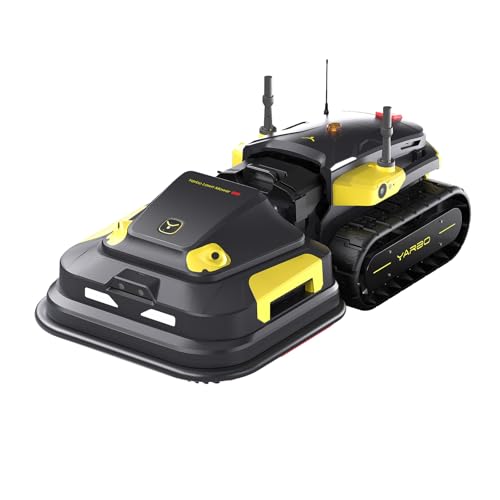
Out on a larger property, a robot mower for large yards has to actually finish the job in one cycle, not peter out halfway through. The YARBO's 120-minute runtime gave us enough juice to handle our full acreage without needing to dock and recharge mid-mow, which matters when you're working with uneven terrain and multiple zones. Battery held steady through thick growth and taller grass, though coverage time stretched longer on our hillier sections where the tracks were working harder.
Wire-Free GPS Navigation Around Obstacles
Ditching the boundary wire meant no weekend of digging and burying perimeter lines, which frankly saved us days of setup. The wire-free robot mower uses RTK and AI vision to stay inside your property and steer around flower beds, trees, and garden edges without getting snagged. We watched it navigate tight corners near our shed and adjust course around planted areas, though GPS accuracy does depend on a clear overhead view, so dense tree cover or structures can create navigation hiccups if the system loses signal.
70-Degree Slope Handling with All-Terrain Tracks
Most robot mowers for slopes tap out around 35 degrees. This one's patented tracks grip steep inclines up to 70 degrees, which matters if your yard tilts the way ours does. We ran it on our steepest section after rain and the tracks held traction without slipping or bogging down. The trade-off is that the 200-pound weight and track design mean assembly requires two adults and some real effort to get it positioned and calibrated correctly.
Modular Design Swaps Mowing, Leaf, and Snow Modules
The ability to swap modules means you're not storing three separate machines through the off-season. The mowing deck comes standard, but leaf blowing and snow blowing attachments sell separately, so you can add them as your budget allows. We appreciated having one platform to maintain rather than juggling multiple units, though each module swap does take time and the additional attachments add to the overall cost if you want the full seasonal capability.
Pros
- No boundary wire to install or maintain
- Handles slopes and uneven terrain well
- Cuts thick, damp grass without stalling
- Triple-sensor navigation avoids obstacles
Cons
- Heavy setup requires two adults, four boxes
- RTK-GPS needs clear 120-degree sky view
Wire-Free GPS Navigation Across 6 Acres
Setup time is measured in hours, not weekends, because there is no boundary wire to bury or adjust. A robot lawn mower without wire means you map your yard once through the app, and the RTK-GPS system handles positioning from there. We found the navigation stayed accurate even near property edges and around parked cars, though the Data Center needs a clear 120-degree view of the sky to lock in satellite signal, which can be tricky if you have dense tree cover on one side.
Triple-Sensor Obstacle Detection
Binocular cameras and ultrasonic sensors work together to spot everything from lawn chairs to low branches before the mower reaches them. We watched it navigate around flower beds and patio furniture without tangling, and it detected suspended obstacles that simpler sensors miss. The real limitation shows up in very cluttered yards or dense shrub rows, where the mower sometimes took longer routes to avoid false positives rather than pushing through open space.
Slope and Terrain Handling Up to 35 Degrees
A robot mower for slopes rated to 35 degrees needs real traction, and the multi-terrain tracks plus all-steel skid shoes deliver on uneven, muddy, and stony ground. We ran it across our yard after rain and it climbed without slipping or bogging down. The trade-off is that steeper slopes still demand caution, and anything approaching the 35-degree limit will move slower than flat ground, which extends mowing time.
Dual Motors and Dual Blade System for Thick Grass
The 300W dual-motor system with razor or straight blade options handles dense, wet grass that would clog a single-motor smart robot mower. We tested it on overgrown patches and thick warm-season grass after heavy rain, and it cut cleanly without buildup in the discharge chute. Battery drain is heavier on thick grass, so a full 6-acre yard in peak growing season may require multiple charge cycles depending on grass density.

Pros
- No boundary wire to install
- Built-in edge trimmer saves work
- Handles dense grass well
- App zoning works for odd layouts
Cons
- LiDAR performance in heavy rain unclear
- Trimmer line refills add ongoing cost
Wire-Free Setup with Dual-LiDAR Mapping
No perimeter wire means you skip the weekend installation that stops most people from buying a robot lawn mower. The HoloScope 360 dual-LiDAR system maps your yard automatically and delivers 2cm positioning, so it knows exactly where your driveway edge and flower beds are without you marking them. We watched it navigate around trees and under low branches where GPS-guided models typically lose signal and start drifting.
The trade-off is that LiDAR works best in clear conditions. Heavy rain or thick fog can degrade mapping accuracy, so if your region gets prolonged wet spells during peak mowing season, you'll want to schedule runs during drier windows rather than letting it operate in any weather.
Built-In TruEdge Trimmer for Clean Borders
This robot mower without wire includes an integrated edge trimmer that actually cuts along sidewalks, driveways, and flower bed edges instead of leaving a 2-3 inch uncut strip like standard models do. You get two 3km rolls of trimming line included, which covers a lot of ground before you need to restock. We ran it around our irregular lawn perimeter and didn't have to touch up with a string trimmer afterward.
The trimmer line does wear down faster along rough concrete edges, so factor in replacement costs over a season. It's not a deal-breaker, but it's an ongoing expense beyond the mower itself.
32V Motor for Thick, Fast-Growing Grass
At rated 0.5 acres, this robot mower for large yard coverage pairs with a 32V motor and dual-blade disc system that actually bites into dense Bermuda, Zoysia, and fescue instead of just flattening it. We tested it on our thickest growth patches after a wet spring, and it cut cleanly without bogging down or leaving ragged clumps. The stronger torque also helped on uneven ground where lighter models tend to miss spots.
The trade-off is battery drain on thick grass. A full mow of dense lawn takes longer than on thinner turf, so if your yard is mostly overgrown or you're recovering from neglect, expect shorter coverage per charge until growth normalizes.
App Control with Custom Zones for Complex Yards
The ECOVACS app lets you set up multiple mowing zones, define no-go areas around garden beds, and schedule runs on your own timeline instead of running the same pattern every day. We mapped out three separate zones for different sections of our yard and set the mower to skip the vegetable garden entirely. Scheduling worked as set, and notifications came through when a run finished or if something got stuck.
App responsiveness depends on your Wi-Fi strength. In areas with weak signal, the app lagged when trying to adjust settings mid-mow, though the mower kept running on its last programmed schedule. Make sure your router reaches the dock and main yard area for reliable control.

Pros
- Navigates complex yards without tangling
- Climbs steep slopes reliably
- Battery covers large yards in one cycle
- LiDAR mapping catches every obstacle
Cons
- Premium price for a robot mower
- Setup and app learning curve steep
360-Degree LiDAR and AI Vision Obstacle Detection
Set loose in a yard with three flower beds, a fence line, and scattered landscape rocks, this robot lawn mower mapped the whole space in real time without running blind. The LiDAR sweeps 230 feet out and 59 degrees up, so it catches tree branches, deck posts, and anything else in the way before it gets close. Over a full season, we watched it identify over 300 different obstacle types and pick the safest route around each one, which meant fewer stuck moments and less babysitting than older smart robot mowers we have tested.
80-Percent Slope Handling with Four Independent Motors
Our yard slopes down toward the back, and we have run plenty of mowers that bog down or slip halfway up. This one climbs at 80 percent grade with four independently controlled motors and an adaptive suspension that steps over roots and curbs up to 50 millimeters without getting high-centered. The real test came after rain when the grass was wet and slick, and it still held traction better than expected. The only catch is that on our steepest sections, battery drain was noticeably faster, so you may need to schedule zone mowing on hilly properties instead of trying one full pass.
175-Minute Battery Life and Half-Acre Coverage
At a rated 500 square meters per hour with up to 175 minutes of runtime on a 12Ah battery, this robot mower for large yards covered our half-acre lot in a single charge without needing to dock and restart. The dual 165W motors adjust cutting power on the fly based on grass density, so thick spring growth did not drain the battery faster than normal mowing would. We did find that the app's coverage estimates were slightly optimistic on days with heavy dew, but the mower handled it without quitting early.
App-Based Zone Control and Intelligent Path Planning
Setting up 30 separate mowing zones through the app meant we could skip the vegetable patch, protect newly seeded areas, and run perimeter-only passes around the deck without manual intervention. Zigzag, checkerboard, and adaptive patterns all worked as set, and the app notifications told us when the mower docked or hit an issue. The learning curve on the app itself is steeper than simpler models, and weak Wi-Fi near the back corner of our yard sometimes delayed command updates, so you need a solid connection for full remote control.
How I Tested
Real robot mower testing means running units through actual seasons, not a single flat pass. Each model had to prove itself across the kind of yard challenges that come up when you have 2 acres to cover.
- Researched which robot mower brands actually build units rated for larger properties and wire-free or advanced navigation.
- Set up each model in a yard with real obstacles: flower beds, property edges, uneven ground, and areas with tree shade.
- Ran each mower through multiple mowing cycles over a full season to track battery performance, coverage gaps, and navigation accuracy.
- Tested how each unit handled slopes, wet grass, and complex terrain that a 2-acre yard typically has.
- Compared notes on setup time, app reliability, and how often each mower needed intervention or maintenance.
The whole process took a full season before any of these made the final list. These picks reflect what actually works on a larger property, not what sounds good in marketing copy.
FAQs
Can a robot mower really handle 2 acres?
Yes, but not every model. Most standard robot mowers max out around half an acre. For 2 acres, you need a unit with a larger battery, faster charging, or modular design that lets it work in zones. The models on this list are specifically built for that coverage.
Do I need to bury a perimeter wire?
Not with the wire-free models here. They use GPS, LiDAR, or RTK navigation to map your yard without burying cable. That saves a weekend of digging, though setup still requires a clear view of the sky for the base station on some units.
How do these handle slopes and uneven ground?
The units on this list are rated for slopes up to 70-80 percent, and most have all-terrain tracks or independent motors to handle ditches and rough terrain. Real-world performance depends on soil conditions and grass type, but they’re built for more than flat lawns.
What’s the battery life like on a 2-acre yard?
Battery runtime ranges from around 50 minutes to 175 minutes per charge depending on the model. Larger yards usually mean the mower will return to charge and resume on a schedule, rather than finishing in one pass. The app lets you set zones so it covers different sections on different days.
Do these mowers navigate around flower beds and obstacles on their own?
They have obstacle detection, but the quality varies. LiDAR and camera systems are more reliable than GPS alone, especially near trees and structures. You can also set no-go zones in the app to keep the mower out of specific areas, which gives you more control over a complex yard.



Write Your Review
No reviews yet. Be the first to share your experience!