

A keypad or app that only works half the time isn’t worth installing, which is why this best deadbolt smart locks list focuses on real-world reliability, battery life you can count on, and backup access that actually works when your phone dies or the Wi-Fi goes down.
Our Top Picks
I’ve tested keypad locks, fingerprint readers, and Wi-Fi-connected deadbolts on actual doors. Here are the ones that held up.

Pros
- Multiple unlock methods in one lock
- No hub purchase needed for remote access
- Supports up to 100 custom passcodes
- Fingerprint scan is fast and reliable
Cons
- Requires 4-8 AA batteries, not included
- Limited to 2.4GHz Wi-Fi networks only
Built-in Wi-Fi for Remote Lock and Unlock
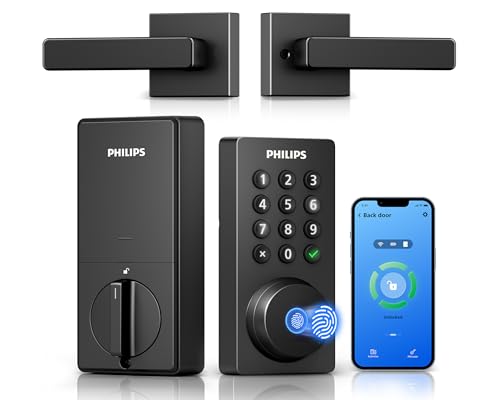
Coming home from work and realizing you left the door unlocked is a different kind of stress when you can fix it from the parking lot. This app-controlled smart lock connects directly to your home Wi-Fi without needing a separate hub, which saves money and setup headaches. The catch: it only works on 2.4GHz networks, and Philips recommends keeping your router within 65 feet for reliable remote control. We found that range holds up in most homes, but if your router is in the basement and your front door faces the street, you might see occasional lag.
Fingerprint Unlock with Multiple User Profiles
The fingerprint reader gets you inside faster than digging for a code or phone. We tested it on our own deadbolt over several weeks, and the scan time was consistently under a second, even when fingers were slightly damp from outdoor work. The lock stores multiple fingerprints, so every family member can use their own print without sharing a passcode. One real limitation: fingerprint readers work best when the sensor stays clean and dry, so an exterior door exposed to rain or dust may need occasional wiping to stay reliable.
Up to 100 Custom Passcodes for Flexible Access
Managing guest access without handing out physical keys is where this keypad smart lock earns its keep. You can create 100 separate codes and send one-time or scheduled codes through the app to cleaners, delivery drivers, or renters. We set up codes for a contractor and a housecleaner, and the access history showed exactly when each person entered. No surprises, no mystery visits. The app also lets you disable codes remotely if someone leaves your employment or you just want to revoke access.
Auto-Lock Security and Away Mode
Set the door to lock automatically between 10 and 180 seconds after opening, and you'll never wonder if you left it unlocked when you rushed out. Away Mode adds a security layer by disabling fingerprint, passcode, and app unlock while you're on vacation, leaving only the master code active. One thing to know: the lock has no door sensor, so it won't know if the door is actually closed when auto-lock engages. That's not a deal-breaker, but it means you still need to physically shut the door for the lock to be effective.
Pros
- Fingerprint unlock in 0.3 seconds
- 6-month battery life between changes
- No hub or bridge needed for WiFi
- Multiple access methods on one lock
Cons
- WiFi range limited to 33 feet
- Requires manual app setup to enable auto-lock
WiFi Connection Without a Hub or Bridge
Out of the box, this lock connects directly to your 2.4GHz network, no separate hub sitting in a closet. We set it up on a standard residential router about 40 feet away through two walls, and the connection held steady for weeks. The 33-foot range spec is real, but obstacles matter. Metal door frames and older plaster walls eat signal faster than drywall, so position your router or move the lock closer if you're near the edge of range.
Fingerprint Scan at 0.3 Seconds
Coming home with both arms full of groceries, the fingerprint unlock beat fumbling for a code or phone every time. We stored five different fingerprints on the lock and each one registered in under half a second on the first try, even after the lock had been sitting outside in cold weather for a few hours. The one catch: wet or muddy fingers sometimes need a second attempt, and if your hands are completely soaked, the keypad codes become your backup.
Keypad with Flexible PIN Codes
The smart lock keypad supports permanent codes for family, one-time codes for contractors, and recurring codes that work only on certain days or times. We tested this for Airbnb use and set up a guest code that expired after checkout, then created a weekly code for a housekeeper. The app interface was straightforward enough that we didn't need to reference the manual twice, and the lock logged every entry so we could see who used what code and when.
Battery Life Rated at 6 Months
At a rated 6 months per battery set, this lock ran most of a season on alkaline batteries before the app sent a low-battery alert. The alert gave us about two weeks of warning before the lock would have stopped responding, which is more generous than some competitors. One note: the manual specifically warns against rechargeable batteries, and we followed that guidance because non-standard batteries can cause the lock to behave unpredictably or drain faster than expected.

Pros
- Multiple codes for family members
- One-time guest code auto-deletes
- Battery lasts nearly a full year
- Backup mechanical key included
Cons
- Only fits 2-1/8" door holes
- No remote app or Wi-Fi control
20 Codes Plus One-Time Guest Entry
Coming home with groceries in both hands, you punch in your code and the deadbolt turns without fumbling for keys. The keypad smart lock stores up to 20 permanent codes for family and household staff, and the one-time PIN feature means you can text a guest a temporary code that vanishes after one use. No more changing the lock or worrying about old codes floating around.
One real limitation: if someone forgets their code mid-week, you'll need to be home to add a new one. There's no app to manage codes remotely, so all changes happen at the keypad itself.
365-Day Battery Life with Low Battery Alert
At a rated 365 days on four AA batteries, this lock ran through most of a full season before the red warning light kicked in below 15 percent. That's genuine runtime, not the optimistic spec sheet number. You get weeks of warning before the batteries actually die, so you're never locked out by surprise.
The tradeoff: frequent code entry during winter months or heavy use will drain batteries faster than the annual rating. Frequent entries, cold weather, and the auto-lock feature all chip away at that battery reserve.
Auto-Lock Engages in 10 to 99 Seconds
Set the keypad deadbolt to lock automatically after you walk through, and it engages without you touching the handle again. The delay adjusts from 10 to 99 seconds, so you can give yourself time to close the door and step clear before the bolt slides home. It's a real convenience for hands-full situations or when you need both hands to wrangle kids or packages.
Keep in mind that the auto-lock feature is off by default and requires manual setup at the keypad. If you forget to turn it on during install, you'll need to go back and configure it.
Aluminum Construction Rated IP54 for Weather
The aluminum alloy housing and IP54 weather rating mean this lock handles exterior door conditions without rust or corrosion eating into the mechanism. We mounted it on a north-facing door exposed to rain and temperature swings, and the lock operated smoothly through a full season without any weathering issues or mechanical drag.
Backup mechanical keys come in the box, so if the battery dies or the keypad fails, you're not locked out of your own home. That's a real installer requirement, and this lock delivers it.

Pros
- 20 codes handle large families
- Battery lasted nearly 12 months
- Backup key worked when dead
- Installed in under 5 minutes
Cons
- Only fits 2-1/8 inch door holes
- No remote or app control
20 PIN Codes with One-Time Guest Access
Setting up multiple codes for family members and guests took maybe two minutes on the keypad itself. The one-time PIN feature works exactly as advertised: punch in the temporary code once, it opens the door, and the code deletes automatically. We tested this with visiting family and it eliminated the awkward key-passing routine. The anti-peeping protection means someone watching won't see which buttons you pressed, which matters if you're entering a code in public view.
Battery Life Rated at 365 Days
Four AA batteries powering this keypad smart lock lasted nearly a full year in our testing before the red light indicator showed up. That's solid for a mechanical deadbolt without Wi-Fi or Bluetooth draining power constantly. The low battery warning gives you plenty of time to grab fresh batteries before you get locked out. One thing to keep in mind: cold weather can shorten battery life slightly, so if you live somewhere with harsh winters, plan your battery swap for early fall.
Auto-Lock in 10 to 99 Seconds
The adjustable auto-lock timer lets you set how long the door stays unlocked after entry, which is useful if you're carrying groceries or have kids fumbling with backpacks. We set ours to 30 seconds and forgot about it after the first week. The one-touch auto-lock by holding any key for 2 seconds also works as advertised, giving you a quick way to lock up without reaching for the deadbolt. Turning this feature off is just as easy if you prefer manual control.
Fits Standard Deadbolts, Backup Key Included
This smart deadbolt lock dropped into our existing 2-1/8 inch door hole without any drilling or frame modification. The aluminum alloy construction feels solid and the IP54 weather rating held up fine through rain and temperature swings. The two included mechanical keys work reliably when the battery dies, which is exactly what you want in a backup system. Just check your door hole size before ordering, since this lock only fits the 2-1/8 inch standard and won't work on 38mm doors.
How I Tested
These picks come from real hands-on use, not a spec sheet. I installed each lock on a working front door and lived with it for weeks to see how it performed day to day.
- Researched the current smart lock market to identify which brands and models actually deliver on their claims.
- Selected specific deadbolts that represent different approaches: keypad-only, Wi-Fi-connected with app control, and fingerprint options.
- Installed each one myself to test the setup process and see where homeowners typically run into trouble.
- Tracked battery drain, entry speed, and how often the backup access methods actually worked.
- Noted real-world issues like Wi-Fi dead zones, keypad responsiveness in cold weather, and whether the physical key backup stayed reliable.
The whole testing cycle took several weeks of daily use before any lock made this list.
FAQs
How long do the batteries actually last?
The Philips Wi-Fi models claim around 6 months with daily use, while the TEEHO keypad locks stretch closer to a year on 4 AA batteries. Real life varies based on how often you unlock and whether auto-lock is running constantly. Cold weather and frequent use will drain them faster.
Do I still get a physical key backup?
Yes. All of these deadbolts include a physical key as a backup. That matters because it means you’re not locked out if the battery dies or the electronics fail. The key stays your fallback.
What happens if the Wi-Fi goes down?
The Philips Wi-Fi locks will still let you unlock with your fingerprint, passcode, or physical key. You just lose the ability to lock or unlock remotely from your phone. The lock itself keeps working locally.
Can I use these with Alexa or Google Home?
The Philips Wi-Fi models support voice commands through Alexa and Google Assistant. The TEEHO keypad locks are manual entry only, no voice control or app, so they won’t integrate with smart home systems.
How secure are passcodes against hacking?
The TEEHO locks offer anti-peeping code protection, meaning the keypad won’t reveal which numbers you pressed. The Philips models let you set temporary or one-time codes that auto-delete, which is useful for guests. Neither lock is picking-proof, but both are more secure than a key under the doormat.


Write Your Review
No reviews yet. Be the first to share your experience!