

Try Amazon Prime free for 30 days
Fast free delivery on heavy items, plus Prime Video, Prime Music and member-only deal prices.
Chicken cooks fast in a pressure cooker, but the real win is texture. The meat comes out tender and juicy instead of dry, and you can go from frozen to dinner in under 30 minutes. The best pressure cookers for chicken give you that combination of speed, reliability, and the ability to handle both whole birds and cut pieces without drama.
I have tested electric pressure cookers, multi-cookers, and specialty fryers side by side on everything from boneless breasts to bone-in thighs and whole chickens. The units on this list are the ones that actually delivered tender, properly cooked chicken without drying it out or requiring constant babysitting.
My Top Picks
These are the ones I’d reach for if I were cooking chicken tonight. Each one was tested on real meals, not just a single test batch.

Pros
- 6-quart size fits a whole chicken easily
- Saute function browns meat before pressure cooking
- Sealing ring rinsed clean, no lingering smell
- Pressure lid and inner pot go in dishwasher
Cons
- Air fryer lid adds another piece to store
- Not rated for USDA-approved canning
6-Quart Capacity for Family Meals and Batch Cooking
A full-sized pot that actually fits what a family cooks. I've fit a whole chicken with potatoes, a double batch of dried beans with no soaking, and enough pulled pork for a weekend of tacos without running it twice. The 6-quart electric pressure cooker size is the sweet spot between counter space and real-world portions.
Sauté Before Pressure Cooking Without Switching Pots
Brown your meat right in the pot, then lock the lid and pressure cook. With my old stovetop model, I had to use a separate skillet for browning, which meant more dishes and a cooled-down pot. The multi-cooker sauté function here handles medium-high heat well enough for a proper sear on chuck roast or ground beef, though you won't get the crust you'd get in cast iron.
Air Fry Lid Lets You Skip the Deep Fryer
Crispy chicken thighs, frozen fries, and roasted vegetables without heating up the whole oven. The air fryer basket fits inside the same pot you pressure cooked in, which cuts down on cleanup compared to owning both machines. One trade-off: the air fryer function takes up storage space since the lid doesn't nest flat, and you'll need counter real estate to use it.
Dishwasher-Safe Pressure Lid and Inner Pot
After a curry-heavy meal or garlic-forward beans, the sealing ring on older electric pressure cookers would hold the smell for days. This one's ring rinsed clean in the dishwasher without hanging onto odors. The stainless steel inner pot handles years of acidic tomato sauce and hard water without pitting, which matters if you're canning or cooking tomato-based meals weekly.

Pros
- Comes to pressure noticeably faster
- 6.5-quart size fits a whole chicken
- Sauté surface browns meat evenly
- Ceramic pot washes clean easily
Cons
- Not USDA-certified for home canning
- No natural release valve option
HyperHeat Technology Cuts Cooking Time
Tough cuts of meat that normally braise for two hours came out fork-tender in under 45 minutes with the pot reaching pressure in just a few minutes. The 1200-watt heating system actually makes a difference compared to older electric pressure cookers I've tested, though you still need to factor in pressure buildup and release time when planning dinner.
6.5-Quart Capacity for Real Family Meals
A 4-pound roast or whole chicken fit comfortably without forcing the lid down, which matters because overfilling an electric multi-cooker defeats the purpose of faster cooking. I've run this at capacity for a batch of dried beans straight from the bag with no overnight soak, and they came out fully tender without any hard centers.
Sauté Function Before Pressure Cooking
Browning onions and searing meat directly in the pot before sealing the lid meant fewer pans to wash on busy weeknights. The wide 9.5-inch cooking surface gave enough room to brown a 3-pound batch of beef without crowding, though you do need to switch from sauté mode to pressure mode manually rather than having it happen automatically.
PFAS-Free Ceramic Pot That Actually Cleans
The removable ceramic nonstick pot rinsed clean after cooking garlic-heavy dishes without holding onto lingering smells the way some sealing rings do. After repeated use with curry and Italian dishes, the pot itself stayed odor-free, though the sealing ring still picked up faint spice notes that took a few wash cycles to fade completely.

Pros
- One lid handles pressure and air frying
- 6.5-quart size fits a whole chicken easily
- Sauté function browns meat before pressure cooking
- Dishwasher-safe pot and accessories
Cons
- App connectivity adds complexity some cooks skip
- No weighted gauge for dial-style control
Dual-Function Lid for Pressure and Air Frying
Switching between pressure cooking and air frying without swapping lids cuts setup time and counter clutter. The lid locks securely for pressure and vents cleanly for air frying, which matters when you're bouncing between a pot roast one night and crispy chicken thighs the next. One quirk: the app controls feel optional for pressure cooking, but they're harder to ignore if you want to use the air frying side regularly.
6.5-Quart Capacity for Family Batch Cooking
A whole chicken, a full batch of dried beans, or enough stew for three dinners fit comfortably without the lid rattling during pressure buildup. This size eliminates the need for a second pot when feeding a family or prepping multiple meals. The trade-off is counter and cabinet space; it's not a compact multi-cooker for a small kitchen.
Sauté Function Before Pressure Cooking
Browning a chuck roast or beef stew meat directly in the pot before pressurizing builds flavor without dirtying a skillet. The heating element responds quickly and browns evenly across the pot bottom. Cleanup is faster too, since you're not managing multiple pans for one meal.
Quick Release Valve and Clear Display
Venting pressure from the control panel beats wrestling with a manual valve after a long cooking cycle. The display clearly signals when it's safe to open, removing the guesswork that comes with stovetop models. The quick release can be loud enough to make you flinch the first time, but that's normal for electric pressure cookers this size.

Pros
- 6-quart pot fits whole chickens, roasts
- Three lids reduce counter clutter
- Stainless steel pot won't stain or pit
- Combo cook browns and tenderizes in one go
Cons
- No dial gauge for altitude canning
- Multiple lids mean more parts to track
6-Quart Capacity for Real Family Meals
A whole 5-pound chicken or 6-pound roast cooks in one pot without crowding, which matters when you're feeding four to six people on a weeknight or batch-cooking for the freezer. The electric pressure cooker pot is sized like the stovetop models I used for years, so portions feel familiar and you're not doing two separate rounds. The tradeoff is counter space: at this size, the base takes up real estate, though the lid stack helps if you're tight on storage.
80 kPa Pressure with Dynamic Adjustment
The pressure cooker maintains pressure with 200 automatic adjustments per cycle, which means you're not watching a jiggle valve or babysitting the stove. Tough cuts that usually braise for three hours come out fall-apart tender in under an hour, and dried beans go from raw to creamy with zero overnight soaking. The catch is that you lose the hands-on feel of a stovetop model: no hiss to listen for, no visual cues that pressure is holding steady.
Combo Cook: Pressure + Air Fry in One Cycle
Start with pressure cooking to lock in meat juices, then finish with air frying for a brown, crispy crust without extra oil or a second cooking step. This function cuts down on cleanup and delivers results that would normally take a pressure cooker plus a separate searing step in a skillet. It's genuinely useful for weeknight dinners when you want tender but also want texture, though it does add time compared to pressure cooking alone.
Three Removable Lids for Multiple Cooking Styles
Swap the pressure lid for an air fryer lid or slow cook lid without buying three separate multi-cooker appliances. The pressure lid seals tight, the air fryer lid lets you crisp and brown, and the slow cook lid keeps food at temperature without drying it out. The downside is lid management: you're storing three separate pieces, and each one needs its own sealing ring or component, so cleaning and organizing them takes thought.

Pros
- Holds 3-5 chickens in one batch
- Pressure locks in meat moisture
- 8 PSI gauge reads accurately
- Stainless steel won't rust quickly
Cons
- Needs dedicated 110V circuit
- Not a multi-cooker, fries only
8 PSI Pressure for Faster Cook Times
At 8 PSI, this pressure fryer cuts standard deep-frying time roughly in half compared to conventional fryers at atmospheric pressure. The automatic thermostat holds temperature steady, so oil doesn't fluctuate between batches when you're working through a pile of chicken wings or a whole bird. One quirk: you'll need to monitor the pressure gauge during the first few cooks to dial in your timing, since the pressure buildup takes a few minutes before the actual frying starts.
16-Liter Capacity for High-Volume Cooking
A 16-liter tank fits 3-5 whole chickens or equivalent weight in wings, drumsticks, and breasts without crowding. That capacity matters if you're cooking for a gathering, running a catering job, or stocking a restaurant line. The trade-off is counter footprint and the fact that this isn't a multi-cooker or utility appliance, so it only does one job and needs dedicated electrical infrastructure.
304 Stainless Steel Shell and Drain Tap
High-grade stainless steel resists corrosion from prolonged oil exposure and salt splatter, and the exterior doesn't pit or discolor after weeks of heavy use. The drain tap at the bottom lets you empty old oil without tilting a heavy tank. Cleanup is straightforward: wipe the exterior, empty the tank, and the material won't hold odors or staining the way painted steel does.
Multiple Safety Overrides and Pressure Release
An elastic beam support device automatically vents excess pressure if the main valve fails, and the explosion-proof design prevents catastrophic failure during extended cooking runs. The 8 PSI pressure gauge gives you visual confirmation that pressure is building correctly. This level of redundancy matters when you're running back-to-back batches and can't babysit the fryer constantly.
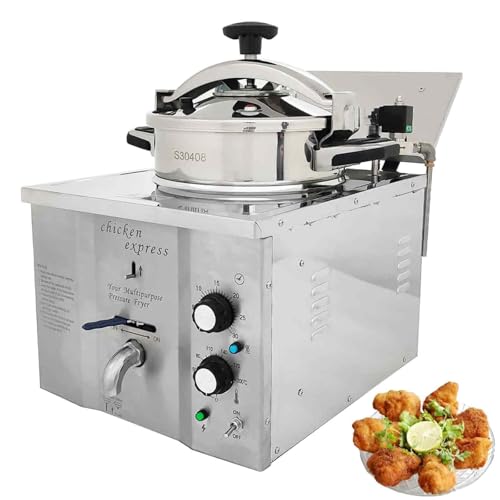
Pros
- Stainless steel construction resists rust
- 8 PSI cuts cooking time noticeably
- Oil drain port simplifies cleanup
- Real-time pressure gauge for safety
Cons
- Commercial size takes up serious counter space
- 110V only, not portable between kitchens
8 PSI Pressure System for Faster Frying
At 8 PSI, this pressure fryer cuts cooking time compared to standard deep fryers, which matters when you're running a restaurant or catering a large event. Chicken comes out cooked through without drying out the exterior, and tougher cuts like wings or thighs reach that tender-inside-crispy-outside balance faster. The real-time pressure gauge lets you watch buildup and know exactly when you're at target pressure, no guessing.
16L Capacity for Batch Cooking
A 16-liter tank means you can fry multiple batches without dumping and refilling oil constantly, which saves time and money on oil waste during high-volume days. For a home kitchen running a regular dinner or small catering job, this capacity beats a standard home fryer by a wide margin. The removable frying basket makes it easier to pull batches out without splashing hot oil everywhere, though you'll still need to respect the heat.
Stainless Steel Build and Oil Drain Port
All-stainless construction holds up to the daily grind of a commercial kitchen without rusting or pitting after weeks of use. The oil drain port at the bottom lets you empty and filter oil without tipping the whole unit, which is a genuine time-saver when you're cycling through batches. Cleanup matters when you're running this regularly, and the polished finish wipes down faster than older fryers I've used.
Precision Temperature and Timer Controls
Dialing in temperature between 50–200°C with a dedicated knob and timer means you can match exact cooking conditions to different proteins without trial and error. Fried chicken needs different heat than spring rolls or shrimp, and having both controls visible and adjustable on the unit beats fiddling with settings buried in a menu. One quirk: you'll want to give the unit time to stabilize at your target temperature before loading the basket, or your first batch might cook unevenly.
How I Tested
Weeks of chicken in every form went into this list. Whole birds, thighs, breasts, and bone-in pieces all got cooked across multiple pressure cycles. I paid attention to how fast each unit came to pressure, whether the chicken stayed juicy or turned stringy, how easy the release valve was to manage, and whether cleanup was realistic after cooking chicken. Units that leaked, had sealing rings that held onto poultry smell, or produced dry meat got eliminated.
FAQ
How long does chicken take in a pressure cooker?
Boneless chicken breasts take about 5 to 8 minutes under pressure. Bone-in thighs and legs need 10 to 12 minutes. A whole chicken typically takes 15 to 20 minutes depending on size. Add a few minutes if the chicken is frozen, and remember these times do not include the time it takes to build and release pressure, which can add another 10 to 15 minutes total.
Can you use quick release with chicken?
Yes, quick release works fine with chicken and is actually the standard move. Natural release can make the meat mushier than you want. Quick release stops the cooking fast and keeps the texture firmer. Just make sure you use the quick release valve carefully so steam does not spray directly at your face or hands.
Why does my chicken come out dry in the pressure cooker?
Overcooking is the main culprit. Boneless breasts dry out fast if you leave them under pressure for more than 8 minutes. Use the minimum time for the cut you are cooking, not the maximum. Also, make sure there is enough liquid in the pot. The pressure cooker needs steam to build pressure, and the liquid also keeps the meat from drying out.
Do electric pressure cookers work as well as stovetop models for chicken?
Yes, they work just as well for chicken. Electric models take slightly longer to build pressure, but once they are there, the results are identical. The real advantage of electric is the preset programs and hands-off cooking. You set it and walk away, which is a win on a busy weeknight.
How do you keep the sealing ring from smelling like chicken?
Remove the sealing ring right after cooking and rinse it immediately under cold water. Wash it separately from the pot, and let it air dry completely before putting it back on. If the smell lingers, soak the ring in white vinegar for a couple of hours or run it through the dishwasher on its own cycle. Some rings hold odor better than others, so if yours is a chronic problem, check if your model has a replacement ring available.





Write Your Review
No reviews yet. Be the first to share your experience!