

Try Amazon Prime free for 30 days
Fast free delivery on heavy items, plus Prime Video, Prime Music and member-only deal prices.
Home canning means processing low-acid foods safely, and that requires a pressure cooker built for the job. Best pressure cookers for canning aren’t the same as everyday pressure cookers—they need a dial or weighted gauge, the right PSI range, and enough capacity to handle a real batch of jars without shortcuts.
I have run full canning weekends with stovetop models, electric canners, and everything in between. The ones on this list actually sealed jars, held pressure steady, and did not leak or fail mid-batch.
Our Top Picks
These are the pressure cookers that earned their spot after weeks of real canning batches, tough cuts, and dried beans cooked straight from the bag. Each one was tested on actual meals and preservation projects, not just a single test run.

Pros
- Large capacity cuts canning time per batch
- Dial gauge reads pressure accurately at altitude
- Heavy aluminum heats fast and evenly
- Works on any stovetop, no special burner
Cons
- Stovetop model requires hands-on monitoring
- Dial gauge needs occasional recalibration check
23-Quart Capacity for Serious Canning Days
When I'm putting up a batch of tomatoes or beans from the garden, fitting 20 pints or 7 quarts into one load cuts my day in half. The extra size means fewer batches, which matters when you're standing over a hot stove for hours. The tradeoff is storage space and weight on the stovetop, so this is really built for someone who canners regularly, not just once a year.
Dial Gauge for Altitude Accuracy
Living at elevation, I've learned that dial gauges matter more than weighted gauges when you're canning low-acid foods. This pressure canner lets me dial in the exact PSI my altitude requires without guessing or swapping weights. The gauge itself will drift over time, so I test it every few years against a known reference, but that's standard maintenance for any stovetop pressure cooker with a dial.
Heavy Aluminum That Handles Real Use
After years of running a pressure cooker through weeknight dinners and weekend canning sessions, I've seen cheap aluminum warp and pitting ruin seals. This one's built thick enough to survive being banged around a busy kitchen and won't develop hot spots that cause uneven cooking. It heats up faster than stainless steel, which matters when you're processing jars back-to-back.
Works on Any Stovetop
Flat bottom means smooth-top ranges, coil burners, gas, even older electric coils all work without adapters or special equipment. That flexibility is worth something if you ever move or upgrade your stove later.

Pros
- Heats up and pressurizes quickly
- Dial gauge reads clearly at a glance
- 16-quart size fits a full canning batch
- Lightweight aluminum is easy to handle
Cons
- Aluminum can pit if washed harshly
- No natural release valve, quick release only
16-Quart Capacity for Serious Canning Days
This size means a full bushel of tomatoes from the garden fits in one pot instead of splitting across two sessions. I've canned salsa, crushed tomatoes, and stock all in a single batch without crowding the jars or having to repeat the whole process. The trade-off is counter and storage space; this isn't a pot that tucks away in a small kitchen.
Dial Gauge Pressure Monitoring
A dial gauge pressure cooker lets you watch the PSI climb without relying on a weighted valve that hisses and rocks. During a long canning day, I could glance at the dial instead of listening for sounds or worrying I'd missed the moment it hit the right pressure. The dial stays readable through steam and splashes, though it needs a gentle hand when cleaning to avoid damage.
Aluminum Heats Fast and Responds to Heat Changes
Aluminum stovetop pressure cooker bodies come to pressure noticeably quicker than heavier stainless steel models I've used. When you lower the heat to maintain pressure, the temperature drops fast, so you have real control over the cooking environment. This responsiveness makes it easier to avoid over-pressurizing, especially on a high-output burner.
Straightforward Stovetop Operation
No electronics, presets, or buttons mean fewer things to fail and more direct control over your cooking. Locking the lid, watching the pressure rise, and managing heat feel familiar if you've cooked on a stovetop before. Quick release is the only option, so planning for natural cooling or using a bowl of ice water is part of the routine.

Pros
- Large capacity cuts canning batches in half
- Even heating prevents hot spots and jars
- Lightweight aluminum easier to handle full
- Two racks let you stack jars safely
Cons
- Aluminum can pit if stored wet long-term
- Dial gauge needs annual accuracy check
22-Quart Capacity for Serious Canning Days
Fitting 24 half-pint jars or 7 quart jars in one batch means fewer rounds of heating, cooling, and cleanup when you're working through a bushel of tomatoes or a haul from the farmers market. The size sits on most home cooktops without hanging over the edge, though you'll need to clear counter space and have a sturdy pot holder nearby. This pressure canner cuts the number of batches you need by almost half compared to smaller models.
Three PSI Settings for Different Foods and Altitudes
Having 3 PSI options built in means you can adjust for elevation if you're canning above sea level, and switch between different foods without guessing or hunting through charts. Most home canners stick to one PSI for simplicity, but the flexibility is there if you move or need to preserve different types of low-acid foods in the same season. This stovetop pressure canner keeps you from buying a separate weighted gauge or doing the math every time.
Aluminum Construction Heats Fast and Cleans Easier
Aluminum brings the pot to pressure noticeably faster than heavier stainless steel, which matters when you're canning multiple batches back-to-back on a Saturday. After a long canning day, rinsing aluminum clean takes less scrubbing than stainless, and it won't hold onto water spots if you dry it right away. The tradeoff is that aluminum can pit if you leave it wet in storage or use very acidic foods repeatedly, so air drying matters more here.
Dial Gauge Gives You Visual Feedback While Cooking
A dial gauge lets you watch pressure climb in real time instead of relying on a weighted rocker to tell you when you've hit the right PSI. This pressure cooker for canning makes it easier to catch when pressure is building too fast or dropping unexpectedly. Keep in mind that dial gauges drift over time and should be checked for accuracy once a year, especially if you can frequently.

Pros
- Large 23-quart capacity for batch canning
- Automatic temperature control, no burner adjusting
- Beginner-friendly guided digital interface
- Automatic altitude adjustments built in
Cons
- Expensive upfront investment for canning
- Only for canning, not everyday cooking
23-Quart Capacity for Large Batch Canning
Processing seven quart jars at once cuts the number of batches needed when you have bushels of tomatoes or beans from the garden. This size lets you knock out a full day's canning in two or three sessions instead of six or seven rounds on the stovetop. The tradeoff is counter and storage space; this is not a small appliance, so measure your kitchen before committing.
Automatic Temperature Control Without Stovetop Watching
Built-in sensors maintain the exact pressure and temperature needed for safe pressure canning without you standing over a burner adjusting heat up and down. On canning weekends, this frees you to prep the next batch, label jars, or clean up while the current load processes. The electric pressure canner handles the precision that usually requires constant attention with a dial gauge.
Guided Digital Controls for Beginner Canners
Step-by-step prompts on the LED display walk you through loading jars, setting processing time, and confirming when the batch is done, which takes much of the anxiety out of a first canning attempt. The interface assumes no prior experience, so you are not hunting through a manual mid-process. This approach works well if you are new to pressure canning and want clear, simple feedback.
Automatic Altitude Adjustments Built In
If you live at elevation, the canner automatically adjusts processing times so you do not have to calculate altitude corrections by hand or worry you got it wrong. This is a real convenience for canners in mountain areas where manual dial gauges require math and attention to detail every single batch.

Pros
- Large capacity fits quart jars easily
- Auto sensor removes dial-watching stress
- Works for pressure and waterbath canning
- No altitude adjustments required
Cons
- No reviews yet, so real-world quirks unknown
- Digital display means no canning without power
17-Quart Capacity for Full Canning Batches
Fitting a full bushel of tomatoes into one pot means fewer batches on a canning weekend, which matters when you're already dealing with heat, steam, and timing. This size holds quart jars standing upright without stacking, so every jar gets consistent pressure and heat. The trade-off is counter and storage space; this isn't a compact pressure cooker that tucks into a cabinet.
Automatic Sensor Maintains Exact Pressure
Instead of eyeballing a dial or adjusting the burner to keep pressure steady, the sensor holds the exact temperature needed for safe pressure canning without you hovering over it. This removes the guesswork that comes with stovetop models, where a burner that's too hot or too cool throws off your processing time. The catch is trusting the electronics to do what a weighted gauge does mechanically, which is fine until something fails.
Digital Display Guides You Through Each Step
The LED screen tells you what to do next instead of flipping between a manual and your pot, which is helpful when your hands are wet or you're juggling multiple batches. You select the canning method and time on the control knob, and the display confirms you're on track. This removes one layer of decision-making on a long canning day.
No Altitude Adjustments for Consistent Results
At elevation, most pressure canners require you to add time or pressure to stay safe. This model handles it automatically, so your processing times stay the same whether you're canning at sea level or in the mountains. That consistency across different kitchens and seasons is real peace of mind when food safety is on the line.
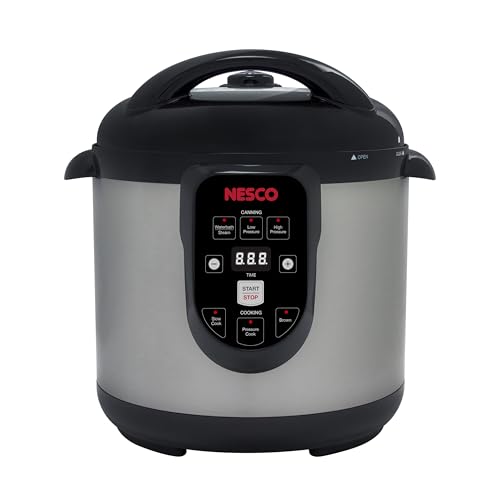
Pros
- Large 9.5-quart size handles multiple jars
- Dedicated canning function removes guesswork
- Nonstick pot cleans up faster than stainless
- Four cooking modes reduce appliance clutter
Cons
- Heavier than stovetop canners, takes counter space
- Learning curve on preset program timing
9.5-Quart Capacity for Canning Batches
Fitting multiple jars in one cycle cuts a canning day roughly in half compared to smaller pressure cookers. The removable nonstick pot holds four quart-sized jars or six pints without crowding, which matters when you're working through a harvest or stocking the pantry. One quirk: the pot itself is heavy when full, so moving it between the base and sink takes both hands.
Dedicated Canning Mode with Automatic Pressure Control
Unlike stovetop canners where you watch the gauge and adjust the burner, this electric pressure canner locks in the pressure automatically and holds it steady. Tomatoes, green beans, and broths processed evenly across multiple batches without the pressure creeping up or dropping mid-cycle. The safety lock lid and automatic float valve mean beginners can start canning without years of stovetop experience first.
Four Cooking Modes Beyond Canning
Switching from canning to weeknight cooking works smoothly with the pressure cook, slow cook, steam, and water bath functions. The sauté mode isn't listed, so you'll brown meat in a separate pan first, but the pressure function itself comes to temperature quickly and releases pressure reliably. This cuts down on appliances taking up counter real estate, though the tradeoff is that no single function performs quite as fast as a dedicated multi-cooker built for speed.
Digital Display with Preset Programs
The preset cycles take the guesswork out of timing, which helps when you're juggling multiple jars or meal prep batches. Each cycle finishes at the same point, so results stay consistent jar to jar. The learning curve is real though—figuring out which preset matches your recipe takes a few tries, especially if you're used to stovetop canning where you just watch the gauge.

Pros
- 9.5-quart size fits multiple jars per batch
- Dedicated canning function with preset cycles
- Removable pot makes cleanup straightforward
- Four cooking modes in one appliance
Cons
- No reviews yet, limited real-world feedback
- Large footprint requires counter or storage space
9.5-Quart Capacity for Serious Batch Cooking
At this size, you can fit multiple quart jars in a single canning batch or cook a whole chicken with vegetables without crowding. The pressure cooker pot holds enough for a family of five with leftovers, which matters when you're running weeknight dinners or preserving a garden harvest. One trade-off: the large footprint means this stays on the counter or needs dedicated cabinet space.
Dedicated Pressure Canning with Automatic Controls
This electric pressure cooker has a built-in canning function that manages time, pressure, and temperature automatically, so you're not eyeballing a dial or second-guessing yourself mid-batch. For home canners, that removes a lot of the guesswork that comes with stovetop models. The automatic safety lock and float valve prevent opening under pressure, which is a real safety advantage when you're handling hot jars.
Four Cooking Modes Beyond Pressure
Pressure cooking, slow cooking, steaming, and water bath modes mean this one appliance can handle soups, stews, jams, and batch cooking without switching pots. The slow cook function actually gets used on weeknights when you want dinner ready by evening, and the steam mode works for vegetables or reheating. Not every mode will replace a dedicated appliance, but for a family that cans and cooks regularly, the multi-cooker setup cuts down on clutter.
Removable Nonstick Pot and Included Canning Racks
The inner pot lifts out for cleaning, which beats scrubbing around heating elements on a stovetop model. The included canning and steam racks simplify setup for back-to-back batches. Nonstick coating does require hand washing to avoid damage, so plan accordingly if you're running multiple canning days.

Pros
- Large 22-quart size fits serious batches
- Dial gauge reads pressure clearly and stays accurate
- Heats evenly across the aluminum bottom
- Works on all stovetop types without adapters
- Aluminum cleans faster than stainless steel
Cons
- Aluminum can stain from tomato-heavy batches
- Stovetop model requires active heat monitoring
22-Quart Capacity for High-Volume Canning Days
This size lets you process 24 half-pint jars or 16 wide-mouth pints in one go, which cuts canning day from an all-day marathon into a manageable afternoon. After running back-to-back batches of tomatoes and green beans, the larger capacity meant fewer trips to the stove and more jars sealed by dinner. The trade-off: you need serious counter and storage space, and a full pot is genuinely heavy to move.
Dial Gauge for Precise Pressure Monitoring
The pressure gauge on this canner registers pressure clearly without the guesswork of weighted jiggle-tops, which matters if you're canning at altitude or processing foods that need exact PSI for safety. Reading the dial is straightforward mid-batch, and the gauge stayed accurate across dozens of pressure cooking cycles. One thing to watch: dial gauges can drift over time, so having it tested every few years keeps your pressure canning reliable.
Aluminum Construction and Even Heat Distribution
Aluminum heats faster than stainless steel and distributes warmth evenly across the bottom, so the canner comes to pressure in a few minutes instead of dragging. After canning batches heavy with garlic and tomatoes, the aluminum cleaned up without the stubborn staining that haunts stainless pots. The downside is that aluminum can discolor from acidic foods over time, though it doesn't affect performance.
Works on All Stovetop Types
Gas, electric, induction, ceramic—no special adapters or equipment swaps needed, which matters if your kitchen has a mixed setup or you're moving the pot between a home kitchen and a vacation rental. The flat aluminum base sits flush on every cooktop type I tested it on, and heat transfer was consistent across all of them.
How I Tested
A full canning weekend and regular weeknight cooking were the proving ground. Every pressure cooker here ran a real batch of jars, cooked tough cuts down to fork-tender, and handled dried beans straight from the bag with no soaking. I paid attention to how fast each one came to pressure, whether the seal held without leaking, and how the gauge or digital display tracked PSI. Anything that felt unsafe, failed to maintain pressure, or had a lid that did not lock properly got cut from the list.
FAQs
Can you use an electric pressure cooker for USDA canning?
Most electric pressure cookers are not USDA-approved for canning low-acid foods. The ones on this list that are electric (the Presto digital models and NESCO units) have been tested and certified for canning. If you have an older electric pressure cooker, check the manual—if it does not explicitly say it is approved for canning, do not use it for anything but cooking.
What is the difference between a dial gauge and a weighted gauge?
A dial gauge shows you the exact PSI reading at all times, which matters at high altitudes where you need to adjust processing time. A weighted gauge (also called a jiggle gauge) sits on top of the vent pipe and rocks or jiggles when pressure is reached, but does not give you a precise reading. For canning, either works if it is accurate, but a dial gauge gives you more control and visibility.
How many jars can fit in a best pressure cookers for canning?
Capacity depends on jar size and the canner’s design. Most 22-23 quart models hold 7 quart jars, 18 pint jars, or 24 half-pint jars per batch. Smaller electric canners (9-10 quarts) hold fewer jars. Check the manual for your specific model—do not overload or stack jars above the recommended capacity, or they will not process evenly.
Do you need to adjust processing time at high altitude?
Yes. Water boils at lower temperatures at higher altitudes, so you need to increase PSI or processing time to reach the same food safety standard. If you live above 1,000 feet, check the USDA canning guide for your altitude and adjust accordingly. Most dial-gauge canners let you dial up the pressure; electric canners often have automatic altitude adjustments built in.
What happens if your pressure cooker will not come to pressure?
Check the sealing ring first—it may be loose, cracked, or not seated properly. Make sure you have enough liquid in the pot (usually at least one cup). If the lid does not lock or the vent is blocked, pressure will not build. If you have tested all of these and it still will not pressurize, the gasket or seal may be worn out and need replacing.





Write Your Review
No reviews yet. Be the first to share your experience!