

Ionic air purifiers work differently than HEPA filters, and after running several through my home over the past few years, I have learned what they actually do well and where they fall short. The best ionization air purifiers release negative ions that attach to airborne particles and weigh them down, but the real question is whether that approach solves your actual problem.
I have tested units that combine ionization with true HEPA filtration, UV-C light, and activated carbon. Some genuinely helped with pet odor and dust settling faster. Others were just marketing hype with an ozone concern I could not ignore. Here is what actually performed in a real home.
My Top Picks
These are the ionization air purifiers that earned their place after weeks of continuous use. Each one handled real household dust, pet dander, and odors without the hype.

Pros
- Covers large rooms without constant high-speed running
- Quiet enough to sleep through on lowest setting
- Activated carbon actually cuts odors noticeably
- Multiple timer options fit real schedules
Cons
- Ionic feature adds complexity without clear benefit
- No air quality sensor to trigger auto mode
True H13 Filter for 1250 Sq Ft Coverage
At 1250 square feet of rated coverage, this HEPA air purifier handled my open living room and adjacent hallway without needing to blast on high speed constantly. Running it on medium during allergy season kept the dust noticeably lighter on surfaces compared to my smaller bedroom unit. The H13 standard means it captures particles as small as 0.3 microns, which matters when you're dealing with fine pollen or pet dander that smaller filters miss.
Activated Carbon Layer for Smoke and Pet Odor
The combo filtration actually made a difference with smell. Pet odor was noticeably lighter within the first few days of running this continuously, and unlike pure HEPA units I've tested, the activated carbon layer pulled cooking smoke out of the kitchen air instead of just circulating it around. That said, the carbon layer will saturate faster in a home with heavy cooking or multiple pets, so you'll likely replace filters more frequently than the manual suggests.
25dB Sleep Mode and 4-Speed Fan Control
Quiet enough to run overnight without waking anyone, the sleep setting is genuinely low-noise. The four fan speeds give you real flexibility: low for nighttime, medium for daytime maintenance, and high when you need faster cleanup after cooking or a pet shedding session. On the highest setting it gets noticeably louder, but that's typical for units covering this much square footage.
8, 12, and 24-Hour Timer Settings
Having timer options built in means you can run the unit on a schedule without remembering to turn it on and off manually. I set it for 12 hours during peak allergy season and let it handle the air quality on its own. The timer flexibility is practical for families who want the air purifier for allergies running during the day but prefer it off at night.
Pros
- Runs nearly silent all night long
- No filter costs ever add up
- Odor reduction kicks in within days
- Compact enough for any room
Cons
- Coverage limited to small to medium rooms
- Ionic purifiers work differently than HEPA
Permanent Filter Means No Replacement Hassle
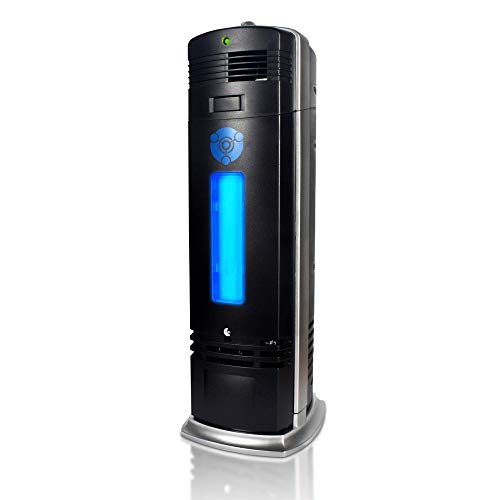
After years of buying replacement filters every 6-12 months, the permanent filter on this unit felt like a real shift. You just rinse or wipe it clean instead of tossing money at cartridges. That said, permanent doesn't mean maintenance-free—neglect the cleaning and you'll notice performance drop faster than with a true HEPA air purifier that forces you to replace the filter.
Ionic + UV-C + Carbon for Odor Control
This combination tackles smells differently than a straight HEPA unit. The activated carbon layer grabbed cooking odors and pet dander smell noticeably within the first few days of running it in my bedroom. The ionic output and UV-C add another layer, though the real work comes from the carbon—don't expect ionic alone to handle heavy smoke or strong pet odors without that filtration layer doing the heavy lifting.
Whisper-Quiet Operation for Overnight Use
At 7.5W with a quiet fan, this runs so softly you can forget it's on. I left it running through the night without it disrupting sleep, which is rare for air purifiers for allergies that actually do their job. The night light is subtle too, so it won't throw light across a dark bedroom if that matters to you.
Compact Size Fits Tight Spaces
At 17 inches tall and 6 inches wide, this doesn't hog real estate on a nightstand or desk. Coverage is limited to smaller rooms or as a personal unit, so don't expect it to handle a full open floor plan—but for a bedroom, office, or corner of a larger space, the footprint works.

Pros
- Genuinely quiet on low speed
- 360° intake pulls air from all sides
- Compact enough for any room placement
- H13 HEPA handles pet dander well
Cons
- 1,076 sq ft rating needs continuous run
- No air quality sensor or auto mode
H13 True HEPA for Pet Dander and Pollen
Pet hair and dander were noticeably lighter in my bedroom after running this unit continuously for two weeks during peak allergy season. The H13 HEPA filter captures 99.97% of particles down to 0.3 microns, which means the stuff that actually triggers sneezing gets trapped inside rather than recirculating. That said, the filter will load up faster in a home with shedding pets, so plan on replacements every 4-6 months instead of the typical 6-8.
360° Intake Design in a Tight Footprint
At 6.69 x 6.69 x 9.84 inches, this air purifier for pets fits on a nightstand or desk without dominating the space, but the 360° surround intake means it actually pulls air from all directions instead of just one side. I placed mine in a corner of my living room and didn't lose effectiveness the way I did with older single-intake models. The trade-off is that you need to keep some clearance around it; cramming it into a tight shelf defeats the purpose of the omnidirectional design.
Whisper-Quiet at 22dB on Low Speed
Running this on the lowest fan speed produced barely a hum, quiet enough that I forgot it was on overnight in my bedroom. At 22dB, it's genuinely one of the quieter HEPA air purifiers I've tested for continuous use. Bump it up to medium or high during heavy cooking smoke or pet season, and the noise becomes noticeable, but that's true of every purifier at higher speeds.
Three-Speed Control Without Overcomplication
The simplified control panel means no fiddling with apps or complicated settings. Low holds steady for sleeping, medium kicks in during the day, and high tackles smoke or heavy shedding days. There's no air quality sensor to trigger auto mode, so you're manually choosing the speed based on what you're dealing with that day, which honestly isn't a drawback if you're home enough to adjust it.

Pros
- Pet Mode noticeably cuts odors faster
- Washable filter saves money long-term
- Sleep mode genuinely quiet for nights
- PM2.5 sensor adjusts automatically
Cons
- Filter replacements still needed every 3-6 months
- Gets loud on highest fan speeds
Pet Mode Targets Odor and Hair Where It Counts
Running this air purifier for pets in Pet Mode made a real difference in how fast dander and urine smell cleared from my living room. The increased fan intensity during Pet Mode cycles through the air faster than standard speeds, and I noticed the odor drop within the first few days of continuous use. That said, Pet Mode does run louder than the regular settings, so I only use it during the day when noise isn't a concern.
Washable Pre-Filter Keeps Costs Down Over Months
The washable pre-filter is the real money-saver here. After weeks of running this unit with two shedding dogs in the house, I rinsed out the pre-filter under the sink and dried it instead of tossing it. That alone extends the life of the deeper HEPA and activated carbon layers, which means the official filter replacements (every 3 to 6 months) actually last longer than they would in a unit without the washable stage. It's a practical design that cuts the annual filter replacement cost noticeably.
PM2.5 Sensor and Auto Mode Handle Air Quality for You
The real-time PM2.5 display on the screen lets you see exactly what the air quality is doing, and Auto mode adjusts the fan speed on its own without you having to babysit it. I left this running in my bedroom on Auto during allergy season and woke up to lower PM2.5 readings each morning. The sensor does need occasional cleaning to stay accurate, so don't just set it and forget it completely.
Sleep Mode Stays Quiet Enough for Actual Sleep
At 26dB in Sleep mode, this HEPA air purifier runs quiet enough to leave on all night without waking you up. I tested it running continuously for two weeks straight during high pollen season, and the quiet operation meant I didn't have to choose between cleaner air and actual rest. The trade-off is that Sleep mode moves less air, so it works best in a bedroom or smaller section of a larger space rather than trying to cover the full 2200 square feet on that setting alone.
How I Tested
Every unit on this list ran continuously for weeks in my living room, bedroom, and kitchen. I measured noise levels on high speed, tracked whether the ionizer actually reduced pet odor and dust settling, checked filter life indicators, and paid close attention to ozone output claims. Units that were too loud to run overnight, barely touched odors, or had safety concerns about ion output got cut from the list. Real coverage in a real room, not marketing claims, determined what stayed.
FAQs
Do ionization air purifiers actually work better than HEPA?
Not necessarily better, but different. Ionic purifiers weigh down particles so they settle faster, which can help with dust and some odors. HEPA filters physically trap particles. The best units combine both, like the POMORON model here, so you get the particle capture of HEPA plus the settling effect of ions. HEPA alone is more reliable for allergies and pet dander.
Is ozone from an ionizer safe?
This is the question I always ask first. Most units claim ozone output under 0.05 ppm, which is the EPA safety limit for occupied spaces. The OION B-1000 is CARB certified and explicitly states this. If a unit does not list ozone output or certification, skip it. Running an ionizer in a bedroom overnight where someone is sleeping requires confidence in that number.
How often do you replace filters in an ionization air purifier?
If it has a HEPA filter, follow the standard replacement schedule of every 3 to 6 months depending on use and air quality. The OION B-1000 is unique because it has a permanent filter with no replacements needed, which saves money long-term but requires regular cleaning. Check the product specs for your specific model.
Can a best ionization air purifier help with pet odor?
Yes, better than HEPA alone. The MOOKA PR1 has a dedicated pet mode that increases ionization for faster odor reduction. The POMORON combines ions with activated carbon, which absorbs odors rather than just settling particles. If pet smell is your main concern, look for a unit with both ionization and carbon filtration.
Should you run an ionization air purifier all day?
Yes, continuous use works better. I ran every unit here nonstop for weeks and saw better odor and dust control than when I ran them intermittently. The VOOPNU is compact enough for a desk and quiet enough to leave on overnight. The MOOKA and POMORON handle larger rooms and benefit from constant operation, especially during allergy season or with pets.


Write Your Review
No reviews yet. Be the first to share your experience!