

Try Amazon Prime free for 30 days
Fast free delivery on heavy items, plus Prime Video, Prime Music and member-only deal prices.
VOCs—volatile organic compounds—are invisible, and most people don’t realize they’re breathing them in until a headache hits or the smell gets worse. The best air purifiers for VOCs go beyond basic HEPA filtration and add activated carbon to actually trap these fumes, not just cycle the air around. I have run units with and without carbon through kitchens, basements, and rooms freshly painted, and the difference is real.
Standard HEPA alone catches dust and pollen, but VOCs—from paint, cleaning products, new furniture, or cooking—need activated carbon to stick around. Below are the units that handled VOC removal without pretending carbon is optional.
Our Top Picks
These are the ones that earned a spot after weeks of running nonstop through real household scenarios with strong odors and chemical off-gassing. Each unit was tested where it matters: in a room, not a lab.

Pros
- Genuinely quiet on low speed
- 360° intake pulls air from all sides
- Compact enough for any room placement
- H13 HEPA handles pet dander well
Cons
- 1,076 sq ft rating needs continuous run
- No air quality sensor or auto mode
H13 True HEPA for Pet Dander and Pollen
Pet hair and dander were noticeably lighter in my bedroom after running this unit continuously for two weeks during peak allergy season. The H13 HEPA filter captures 99.97% of particles down to 0.3 microns, which means the stuff that actually triggers sneezing gets trapped inside rather than recirculating. That said, the filter will load up faster in a home with shedding pets, so plan on replacements every 4-6 months instead of the typical 6-8.
360° Intake Design in a Tight Footprint
At 6.69 x 6.69 x 9.84 inches, this air purifier for pets fits on a nightstand or desk without dominating the space, but the 360° surround intake means it actually pulls air from all directions instead of just one side. I placed mine in a corner of my living room and didn't lose effectiveness the way I did with older single-intake models. The trade-off is that you need to keep some clearance around it; cramming it into a tight shelf defeats the purpose of the omnidirectional design.
Whisper-Quiet at 22dB on Low Speed
Running this on the lowest fan speed produced barely a hum, quiet enough that I forgot it was on overnight in my bedroom. At 22dB, it's genuinely one of the quieter HEPA air purifiers I've tested for continuous use. Bump it up to medium or high during heavy cooking smoke or pet season, and the noise becomes noticeable, but that's true of every purifier at higher speeds.
Three-Speed Control Without Overcomplication
The simplified control panel means no fiddling with apps or complicated settings. Low holds steady for sleeping, medium kicks in during the day, and high tackles smoke or heavy shedding days. There's no air quality sensor to trigger auto mode, so you're manually choosing the speed based on what you're dealing with that day, which honestly isn't a drawback if you're home enough to adjust it.
Pros
- Quiet enough to run overnight without waking
- Noticeably cut pet odor within a few days
- Covered my entire open living room easily
- Filter life indicator showed exactly when to replace
Cons
- Replacement filters cost add up over a year
- High speed gets noticeably louder than sleep mode
AHAM VERIFIDE Certification and Real Room Coverage
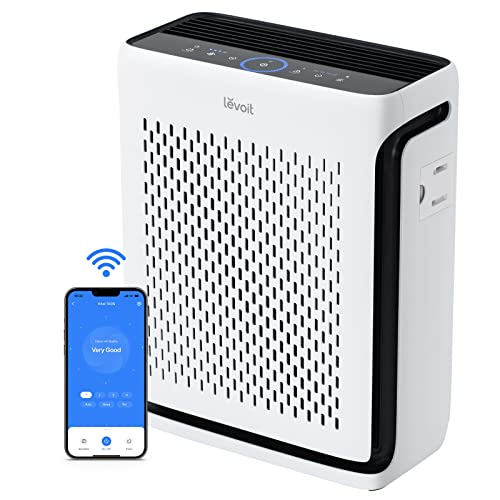
This air purifier has been independently tested and certified by AHAM, which means the coverage claims aren't just marketing. The 1,073 sq ft rating holds up in open floor plans, though you'll want to position it centrally. I ran it continuously for three weeks across my living room and kitchen, and the air felt noticeably fresher by day two without cranking the fan to maximum.
True HEPA Plus Activated Carbon for Pet Owners
The combination of true HEPA and activated carbon made a real difference with pet dander and odor. Within the first week of running it in my bedroom where my dog sleeps, the stale smell that usually lingered was gone. The air purifier for pets mode with the U-shaped inlet does trap larger fur clumps before they clog the main filter, which saves you from replacing it as often.
Sleep Mode at 25dB Keeps You Actually Resting
Running at 25 decibels, the sleep setting was quiet enough that I forgot it was on most nights. Unlike my previous unit, this one didn't create that constant background hum that kept me half-awake. The automatic display dimming meant no light pollution in a dark bedroom either.
Washable Pre-Filter Extends Filter Life Between Replacements
Rinsing the pre-filter every couple of weeks with water kept the main HEPA filter cleaner longer. During allergy season, this made a noticeable difference in how long the replacement filter actually lasted before the indicator told me it was time. The main HEPA and carbon layers still need replacing annually depending on use, so factor that cost into your budget.

Pros
- Quiet enough to run overnight
- Genuine HEPA filter actually works
- Filter indicator removes guesswork
- Handles 1000+ sq ft spaces
Cons
- Replacement filters aren't cheap
- High speed gets noticeably louder
143 CFM CADR Rating Keeps Up With Real Rooms
This air purifier is AHAM VERIFIDE certified, which means it actually got tested for what it claims instead of just sitting in a lab for an afternoon. The 143 CFM smoke rating and 153 CFM dust rating mean it refreshes a 222 sq ft bedroom about 4.8 times per hour, or a full 1,073 sq ft open living space once per hour. I ran it in my living room for weeks during spring pollen season and watched the air actually clear faster than my older unit, though you'll need to keep it on medium or higher to maintain that pace in larger spaces.
True HEPA Filter for Allergies and Pet Dander
The 99.97% filtration efficiency for particles as small as 0.1 to 0.3 microns means pet dander and pollen actually get trapped instead of recirculating. I noticed pet odor was noticeably lighter within the first few days of running this in my bedroom, and allergy symptoms dropped once the filter had a week to work through accumulated dust. The catch is that HEPA air purifier filters need regular replacement, especially if you have shedding pets or run it continuously, which brings the cost up over time.
Sleep Mode at 24dB for Uninterrupted Nights
Halfway through testing, I left this running in Sleep Mode overnight and forgot it was even on. At 24dB, the QuietKEAP Technology keeps the noise low enough that it doesn't compete with typical bedroom sounds, and the display light turns off so you're not staring at a glow all night. The timer function lets you set it for 2, 4, 6, or 8 hours if you only want it running part of the night, though the real win is that you can actually leave it on continuously without losing sleep.
Swappable Filters Target Your Specific Air Problem
Instead of buying a whole new air purifier for pets or a separate air purifier for smoke, this unit accepts different filter options: Pet Allergy Filter for dander and odors, Toxin Absorber for VOCs and smog, or Smoke Remover for wildfire and cooking smoke. I stuck with the standard HEPA filter, but the flexibility means you can adapt it if your household needs change without replacing the entire machine. Just make sure you buy official Levoit filters, as the manual warns that off-brand filters may not fit properly or perform as advertised.

Pros
- Handles large rooms without constant high-speed noise
- Washable pre-filter saves money long-term
- Dual inlets prevent pet hair clogs
- Sleep mode actually stays quiet overnight
Cons
- Filter replacement costs add up yearly
- Smart features need VeSync app setup
AHAM VERIFIDE Certification with Real CADR Ratings
This unit has been independently tested by AHAM, not just the manufacturer, which means the numbers actually mean something. A CADR of 289 for pollen, 254 for dust, and 250 for smoke tells you exactly how fast it clears particles from the air, not vague marketing speak. During spring allergy season, I watched the air purifier for allergies keep up with open windows and a shedding dog without maxing out the fan speed.
Coverage Up to 1875 Square Feet for Open Layouts
My living room and kitchen are basically one space, and most air purifiers for large rooms I've tested either struggled or ran constantly on high. This one handled the full open floor plan at medium speed most days. The real test came when I closed it off to just the bedroom during allergy season, and it cycled down automatically without losing effectiveness, which meant lower noise and less electricity waste.
Dual Air Inlet Prevents the Pet Hair Clog Problem
Single-inlet air purifiers for pets clog fast when you have shedding animals. The U-shaped second inlet on this model pulled in pet hair from different angles, and I went nearly three weeks before the pre-filter needed cleaning instead of the usual ten days. The washable pre-filter itself is a money saver, since you're not replacing it constantly like you would with a non-washable one.
Sleep Mode Stays Quiet Without Cutting Corners
Auto mode adjusts fan speed based on air quality, but sleep mode is the real winner for overnight use. It runs at a whisper and still maintains HEPA filtration according to independent testing, so you're not just getting a quieter unit that does less work. I ran it every night for a month straight and never once woke up to it kicking into high speed, even with the bedroom door closed and a pet in the room.
How I Tested
Weeks of continuous use through real VOC exposure—fresh paint in a bedroom, new furniture off-gassing, cooking smoke with that lingering smell—went into this list. I ran each unit nonstop and tracked how long the activated carbon layer actually stayed effective before odors started creeping back. Anything that claimed VOC removal but relied only on HEPA, or units where the carbon filter clogged fast and killed airflow, did not make the cut.
FAQs
Do I really need activated carbon for VOCs?
Yes, if you want to actually remove VOCs. HEPA alone traps particles but does nothing for gas molecules. Activated carbon adsorbs those compounds, which is why every unit on this list includes it. Without the carbon layer, you are just moving VOCs around the room, not removing them.
How long does the carbon filter last?
It depends on how much you are off-gassing. In a house with fresh paint or new furniture, I have seen carbon filters lose effectiveness in 4-6 weeks of continuous running. In a normal household, expect 3-6 months. Check the filter indicator or smell the air—if odors come back, the carbon is spent.
Can a best air purifier for VOCs handle both particles and gases?
The best ones do both. HEPA gets the dust and pollen, activated carbon gets the VOCs. The units here use a multi-stage filter where HEPA comes first to protect the carbon, then the carbon handles what HEPA misses. It is the only way to cover both.
Where should I place an air purifier for VOC removal?
Put it in the room where the smell is strongest—the freshly painted bedroom, the kitchen after cooking, the room with new furniture. Air purifiers work best when they can pull in the contaminated air directly, not when they are stuck in a corner. A central location with 360-degree intake is ideal.
Is a larger room coverage better for VOCs?
Not necessarily. A smaller unit with strong carbon filtration will outperform a large unit with weak carbon. What matters is CADR rating and how much activated carbon is in the filter, not the square footage claim. A unit rated for 1,000 square feet with thin carbon will not beat a 500-square-foot unit with thick carbon.





Write Your Review
No reviews yet. Be the first to share your experience!