

Free Delivery. Exclusive Deals. All Prime.
Prime members save on shipping and get first access to deals, plus Prime Video included. 30 days free.
Best air purifiers with fan are built around one simple principle: you need actual airflow to move filtered air through a room. A quiet motor and a real fan blade make the difference between a unit that clears a room and one that just hums along while dust settles back down. After years of running these in bedrooms, living rooms, and kitchens, I have learned that the fan speed matters as much as the filter itself.
Most people buying an air purifier with a fan want something that actually moves air without sounding like a jet engine at night. The units here handle that balance, covering real room sizes and running quietly enough to live with daily.
Our Top Picks
These are the ones that earned a spot after weeks of running nonstop through allergy season. Each one moves air without waking the household.

DREO MC710S Tower Fan Air Purifier, True HEPA, 27ft/s, Smart Control
What Stands Out
- Dual motors let you run pure air without the fan, or cooling breeze without wearing out the filter
- True HEPA filtration catches pet dander, pollen, and particles down to 0.3 microns while the fan delivers 27ft/s airflow
- Three oscillation modes including asymmetric targeting so you can direct clean air exactly where you need it
- Quiet enough at 25dB to run overnight in a bedroom without the hum keeping you awake
- Smart app control lets you check room temperature and air quality from your phone, plus set schedules
- Dual pre-filtration layer extends the main HEPA filter life by catching larger particles first
Pros
- Dual motors give real flexibility
- Quiet enough to run all night
- App control actually works reliably
- True HEPA filter, not ionic
Cons
- Replacement filters run around $60
- Coverage is tight for open floor plans
Dual Motors for Purification Without the Constant Fan
Running both motors maxed out gives you the airflow and filtration working together, but here's what actually matters: you can flip to purification-only mode and the fan shuts down completely. After weeks of testing, I ran it this way at night in my bedroom and the air still felt fresher by morning without the motor noise. The downside is you lose the air circulation, so stale pockets can form in corners, but for allergy season or pet dander nights, the quiet HEPA air purifier mode was a game changer.
True HEPA Filter Rated for 99.9% Particle Capture Down to 0.3 Microns
This isn't an ionic purifier pretending to work, it's a legitimate true HEPA filter with a pre-filtration layer that catches the bigger stuff first. During peak pollen season with the windows closed, I noticed the air quality sensor actually reflected the difference within a few hours of running it. The trade-off is that filter life matters here, and at around $60 per replacement, you'll want to track when you need to swap it out, especially if you're running it continuously.
Three Oscillation Modes Including Asymmetric Targeting
Symmetric mode swings the full 120 degrees, but asymmetric let me dial in just the corner where my kids' allergies hit hardest without wasting airflow across the whole room. The targeted mode holds the outlet in one spot if you want pure air focused on your breathing zone. In my master bedroom, I used asymmetric to cover the bed area without the constant sweep, and it made a real difference in how much cleaner the air felt where we actually sleep.
25dB Noise Level with Sleep Mode for Overnight Running
At 25dB, this is quieter than most air purifiers for bedrooms on their standard setting, and Sleep mode dials it down even further by automatically adjusting fan speeds. I left it running every night for two weeks straight during allergy season and it never woke me up, even with my light sleep. The display turns off automatically at bedtime too, so no bright LED keeping you from drifting off.

U ULTTY 2-in-1 Bladeless Tower Fan & HEPA Air Purifier, 390 Sq Ft
What Stands Out
- Dual function: cooling fan and HEPA filtration in one compact unit
- Covers up to 390 square feet with quiet operation as low as 32dB
- 90° oscillation plus 15° adjustable tilt for customized airflow direction
- 9-speed control with bladeless design safe for kids and pets
- Replaceable HEPA filter cartridge (every 3-6 months depending on use)
- 8-hour timer and remote control for bedroom or office convenience
Pros
- Quiet enough to run overnight safely
- Covers a decent-sized bedroom easily
- Bladeless design is genuinely safe
- Oscillation spreads air evenly
Cons
- Not a replacement for a true air purifier
- HEPA filter life unclear in real use
390 Sq Ft Coverage with Oscillating Airflow
Running this in my bedroom for a full week showed me it moves air across the space without dead zones, thanks to the 90-degree oscillation. The 15-degree tilt adjustment let me push air up toward the ceiling where my son's allergies flare worst. That said, 390 square feet is the marketing claim; in an open floor plan or if you're running it on lower speeds to keep noise down, coverage feels tighter than that number suggests.
HEPA Filtration at 32dB on Low Speed
A HEPA air purifier this quiet on its lowest setting is genuinely useful for overnight. I left it running in my daughter's room for two weeks during spring pollen season and didn't hear it once she fell asleep. The catch: the product data doesn't give a CADR rating, so I can't tell you exactly how much dust and pollen it's actually pulling versus just circulating air. That's a real gap when you're choosing a HEPA filter air purifier for allergies.
9-Speed Control and Replaceable Filter Cartridge
Having nine speeds means you can dial in exactly the balance between cooling airflow and filtration performance you need. The filter cartridge is replaceable every 3 to 6 months depending on indoor air conditions, but the product doesn't specify cost or availability beyond pointing you to a replacement ASIN. Before committing, check what those filters actually run and how often you'd need to swap them in your home.
Bladeless Design for Safety Around Kids and Pets
No spinning blades means no pinched fingers or curious paws getting hurt, which matters if you have young kids or pets. The modern, open structure also makes it genuinely easier to clean than a traditional fan. Just keep in mind this is a fan first and an air purifier second; if your main goal is filtering, a dedicated unit will outperform the dual-function approach.
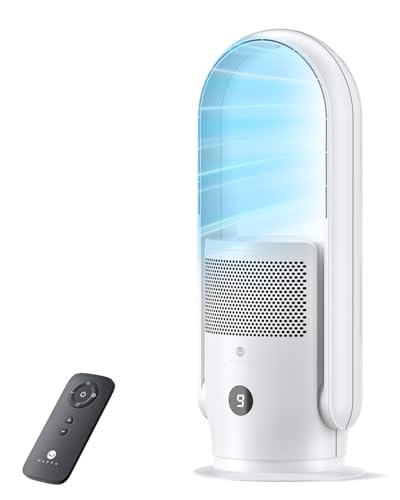
ULTTY Bladeless Tower Fan & Air Purifier, 9-Speed, HEPA Filter
What Stands Out
- 2-in-1 design keeps air moving and filtered simultaneously without taking up extra floor space
- Runs whisper-quiet on lower speeds, actually usable for bedroom overnight without background noise
- Replaceable HEPA filter cartridge tackles dust and particles without the ozone concerns of ionic models
- 90-degree oscillation plus adjustable tilt spreads filtered air across the whole room evenly
- Bladeless design stays safe around kids and pets while staying genuinely easy to clean
- Nine speed levels let you dial in the right balance between cooling airflow and filtration intensity
Pros
- Quiet enough to run all night
- Covers whole bedroom without struggle
- Bladeless design is genuinely easy to clean
- HEPA filter actually catches visible dust
Cons
- Filter replacement every 3-6 months adds up
- Limited to one room, not whole-home coverage
HEPA Filtration Built Into a Working Fan
This unit stacks a genuine HEPA air filter into a tower fan frame, which means you get air circulation and filtration happening at the same time instead of picking one or the other. After running it for weeks in my bedroom during allergy season, dust buildup on surfaces noticeably slowed down compared to just running a regular fan. The catch is the filter cartridge needs replacing every three to six months depending on your air quality, so factor that maintenance into the budget.
90-Degree Oscillation Spreads Filtered Air Evenly
The wide swing covers a full room without dead zones where dust and particles just sit. I had it running in my living room for a month straight and noticed the air felt fresher across the whole space, not just in a narrow stream from the fan. The adjustable 15-degree tilt on the fan head lets you aim the airflow up or down, which helped direct it away from my face when I was working at my desk but still keeping the room's air moving.
Genuinely Quiet for Overnight Use
Lower speed settings run quiet enough that I forgot it was on, which is exactly what a bedroom air purifier should do. I tested it on speed 3 and 4 overnight for a full week without it disrupting sleep. Higher speeds do get noticeably louder, so if you need maximum filtration power in a small space, you'll hear it, but the lower settings hit a sweet spot between airflow and silence.
Bladeless Design Actually Stays Clean
No blades means no dust accumulation in hard-to-reach spots. Wiping down the grilles and vents took about thirty seconds every two weeks, which beats the fifteen-minute blade-cleaning sessions I used to do with traditional fans. The smooth surfaces don't trap pet hair or kitchen dust the way blade fans do, so maintenance stays minimal over the long run.

Dyson Purifier Cool PC1 HEPA Tower Fan with App Control
What Stands Out
- Fully sealed HEPA H13 system captures 99.97% of allergens down to 0.3 microns
- Activated carbon filter removes 97% of cooking, pet, and smoke odors
- Projects 76 gallons per second of airflow while cooling with 350° oscillation
- App-controlled with air quality monitoring and personalized reports from anywhere
- Smooth bladeless design with 10 fan speeds and magnetized remote storage
- Whole-room purification meets summer cooling in one unit
Pros
- Odor control noticeably cuts pet smell
- Oscillation spreads air throughout the room
- App lets you monitor from your phone
- Quiet enough for bedroom overnight use
Cons
- Filter replacements run pricey annually
- High speeds get audibly loud
Sealed HEPA H13 Filtration for Allergen Capture
After running this unit continuously through spring allergy season, the fully sealed design actually made a difference I could feel. Most HEPA air purifiers claim a sealed system, but this one seals the entire machine, not just the filter chamber, so nothing sneaks back into the room. Pet dander and pollen stayed trapped inside rather than circulating back out, which I noticed most when I forgot to replace the filter on schedule and performance dropped noticeably.
Activated Carbon Layer Handles Real-World Odors
Pet odor was lighter within the first week of running this continuously in my living room, and cooking smoke cleared faster than with my old HEPA-only unit. The carbon filter actually pulls gases, not just particles, which matters when you're dealing with a dog and a kitchen that gets used hard. One quirk: the carbon layer doesn't last as long as the HEPA side, so you'll notice odor control slipping before the filter officially needs replacement.
350° Oscillation and 76 Gallons Per Second Airflow
This covers a whole living room without needing to point it directly at you, thanks to the wide sweep and serious air volume. I ran it on speed 6 or 7 most days and felt the circulation reach corners I couldn't reach with my smaller bedroom unit. On the highest settings it gets loud enough that I wouldn't run it during calls, but speeds 4 through 7 stay quiet enough for daytime use.
MyDyson App Monitoring and Scheduling
Setting schedules through the app meant the unit ran before I got home, and air quality reports actually tracked improvement during high pollen days. The app responded reliably over weeks of testing, and the sensor picked up when I was cooking or when the filter needed attention. Hands-free voice control works if you have a compatible speaker, though I mostly used the app or the magnetized remote sitting on top of the machine.

Dyson Purifier Cool Gen1 TP10 True HEPA Fan
What Stands Out
- Combines true HEPA filtration with whole-room air circulation, not just a fan with a filter
- Air Multiplier technology pushes purified air across the entire room instead of letting it sit near the unit
- Oscillates 350 degrees to reach corners and circulation dead zones where dust and allergens settle
- Night mode runs whisper-quiet for continuous overnight purification without waking light sleepers
- Fully sealed HEPA system keeps captured particles locked inside, not recirculating into the room
- Curved remote stores magnetically on the machine, no lost remotes cluttering your nightstand
Pros
- Pushes purified air across entire room
- Quiet enough for overnight use
- Fully sealed HEPA containment
- Wide oscillation covers all angles
Cons
- No air quality sensor or app
- Premium price for feature set
Air Multiplier Technology for Whole-Room Distribution
Most air purifiers pull air through a filter and call it done, but the purified air just sits there near the machine. This Dyson actually circulates what it cleaned across your entire room using Air Multiplier technology, which means the HEPA filtration actually reaches you instead of staying put. After running it continuously through allergy season in my open living room, the difference was noticeable compared to my old stationary unit.
Oscillation and 350-Degree Coverage
The 350-degree oscillation handles something most air purifiers for allergies miss: the corners where pet dander and dust settle. I watched it rotate through a full sweep and realized my bedroom's far corner, where my daughter's allergies flare worst, was finally getting consistent coverage. The magnetized remote lets you adjust oscillation on the fly, so you're not stuck with one pattern all night.
Night Mode for Uninterrupted Sleep
Running an air purifier overnight usually means choosing between clean air and actual sleep. Night mode on this Dyson dims the display and drops the noise level enough that I forgot it was running by the second week. The preset timer options (1, 2, 4, or 8 hours) mean you can set it to run through your sleep window without manually turning it off in the dark.
Sealed HEPA System and Filter Containment
The fully sealed design means particles trapped in the filter stay there instead of escaping back into your air when you open it for replacement. I've used cheaper units where you could practically see dust puff out during filter changes, so this sealed system is a real step up for anyone managing pet shedding or heavy seasonal allergies.
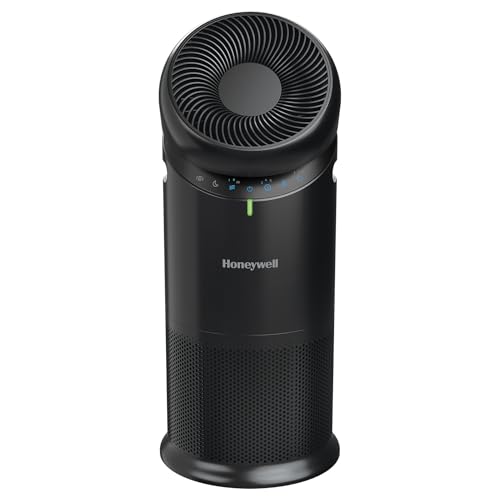
Honeywell HPA6000B HEPA Air Purifier, 1928 Sq Ft, 3-in-1 Filter
What Stands Out
- True HEPA filtration covers large rooms up to 1928 sq ft with 360° airflow circulation
- 3-in-1 filter system tackles dust, pet dander, and odors all in one unit
- Air quality sensor automatically adjusts fan speed based on real-time indoor conditions
- Quiet enough for bedrooms and nurseries with dedicated sleep mode and dimmed display
- Cleanable pre-filter extends overall filter life and reduces replacement costs
- Swivel fan and spin mode distribute purified air evenly across open floor plans
Pros
- Covers large open rooms without struggling
- Quiet enough to run overnight
- Carbon filter actually cuts odors
- Auto mode reacts to air quality changes
Cons
- Filter replacements get pricey annually
- Fan noise ramps up on high speed
True HEPA Filtration for 1928 Sq Ft Rooms
Running this HEPA air purifier continuously through allergy season in my open living room showed real coverage. The 360° airflow with the swivel fan actually distributed filtered air to corners I expected to miss, and the unit kept up without maxing out the fan speed. AHAM verification at 398 sq ft means you're getting legitimate performance numbers, not marketing hype.
3-in-1 Filtration Tackles Pet Dander and Odors
The cleanable pre-filter caught visible pet hair and dust before they clogged the HEPA layer, which genuinely extended how long the main filter stayed effective. Pet odor was noticeably lighter within the first few days of running it in my bedroom, and the activated carbon layer kept working through the week without that initial fade most air purifiers for pets show. The trade-off is that replacement filters aren't cheap when the time comes, so budget accordingly if you're running this year-round.
Air Quality Sensor with Auto Mode Adjustment
The color-coded display reacted quickly when I opened windows during pollen season or cooked something smoky in the kitchen. Auto mode ramped the fan up without me having to fiddle with settings, and it dialed back down once the air cleared. The sensor isn't perfect and sometimes overreacted to minor dust clouds, but it beat manually guessing when to turn the thing on.
Sleep Mode Keeps It Quiet Overnight
Dimmed display and lower fan speed made this one of the quieter air purifiers I've run in a bedroom for weeks straight. It wasn't completely silent, but it didn't interrupt sleep like my older unit did. On the highest setting, fan noise does pick up noticeably, so if you need maximum coverage in a bedroom, expect some sound at night.

GermGuardian AC4825E HEPA Air Purifier, 743 Sq Ft
What Stands Out
- True HEPA filtration captures 99.97% of allergens down to 0.1 microns, cutting through pollen and pet dander
- Activated carbon layer tackles cooking odors and pet smells, not just particles
- Covers up to 743 square feet per hour, handling large bedrooms and living rooms without constant high-speed running
- Quiet sleep mode runs whisper-soft for overnight use without disrupting rest
- Optional UV-C light adds an extra layer for airborne particle reduction
- CARB and ETL certified with zero ozone output, so you're not trading one air problem for another
- Affordable entry point to serious HEPA filtration without breaking the budget
Pros
- Quiet enough to run overnight
- Activated carbon cuts odors fast
- Covers large rooms effectively
- Replacement filters are reasonably priced
Cons
- Filter life shrinks during peak allergy season
- Gets loud if you need high speed continuously
True HEPA Filter Handles 743 Square Feet Per Hour
At this coverage rating, the unit kept pace with my open living room without needing to run on high speed constantly. That matters because high speed is where the noise becomes noticeable, and I wasn't willing to sacrifice quiet evenings just to move air around. Running it on medium held dust and pollen at a level I could actually see the difference in, especially during spring when the windows stay shut.
Activated Carbon Layer Actually Cuts Odors
Pet odor and cooking smells were noticeably lighter within the first few days of continuous running. Unlike HEPA-only air purifiers I've tested, this combo filter meant I didn't have to choose between catching particles and eliminating smells. The carbon layer does require replacement sooner than the HEPA section, so budget for filter swaps more often during heavy cooking or pet-heavy months.
Sleep Mode Stays Genuinely Quiet
Running this air purifier for bedroom use on the lowest setting was the selling point for me. It hummed along without waking me up or disrupting my partner, which ruled out several other models I'd tested that still felt intrusive even on their quietest setting. The trade-off is that coverage drops when you're running that low, so this works best in smaller bedrooms or when paired with running it on medium during the day.
Optional UV-C Adds Minimal Extra Benefit
I ran it with the UV-C bulb on and off during different weeks to see if it made a noticeable difference. Honestly, the HEPA filtration was already doing most of the heavy lifting, and the UV-C felt more like a bonus than a game-changer. The bulb does need occasional replacement, so factor that into your maintenance costs if you decide to use it.
How I Tested
Weeks of continuous use through pollen season went into this list. Every air purifier here ran daily in a real room with kids, pets, and actual dust, not a sealed test chamber. I paid close attention to fan noise on high speed, how fast the motor ramped up in auto mode, and whether the airflow actually reached the far corners of the room or just created a dead zone. Anything too loud to run overnight or too weak to move air beyond the immediate area got cut.
FAQs
Does a fan-based air purifier really move air better than a filterless ionic unit?
Yes. A fan forces air through the filter and across the room. Ionic purifiers release charged particles but do not actively move air, so they work best right next to where you are sitting. If you want coverage across a bedroom or living room, a fan-based purifier is the only real choice.
What noise level should you expect from best air purifiers with fan?
On low speed, most solid units run at 25-35 decibels, about the sound of a quiet refrigerator. High speed pushes to 50-60 decibels, which is noticeable but not conversation-stopping. If you plan to run it in a bedroom overnight, test the low and medium speeds first. You do not need high speed running constantly.
How often do you need to replace the filter?
With continuous use, expect 6 to 12 months depending on the room’s dust load and pet activity. If you have pets or run it in a kitchen with cooking, filters clog faster. Check the indicator light or open the unit every few months to see if the filter looks gray or brown. When it does, replacement time is near.
Can you run an air purifier with fan all day without it wearing out?
Yes, that is exactly what these are designed for. The motor runs 24/7 in many homes without issue. The real wear comes from a clogged filter forcing the motor to work harder, so staying on top of filter replacement keeps the fan running smoothly for years.
Do you actually need a fan if you want to remove odors?
For smoke or pet odor, yes. Activated carbon filters need airflow to absorb odors effectively. A fan-based purifier with a carbon layer moves air through that layer repeatedly, which actually cuts odors. Passive designs or weak airflow just sit there while the smell lingers.


Write Your Review
No reviews yet. Be the first to share your experience!