

When a Georgia storm knocks out power for 12 hours or more, the difference between a lightweight inverter and a real heavy duty portable generator becomes obvious fast. Best heavy duty portable generators are built to run the essentials—fridge, freezer, window AC, well pump—for the long haul, not just power a lamp and your phone charger. I have learned which ones actually deliver that power under load and which ones tank by hour six.
This list covers dual-fuel models, high-wattage inverters, and open-frame units that have proven themselves through real outages and heavy weekend use. Each one here has run through at least one serious test that mattered, not just a driveway start-up.
My Top Picks
These are the units that earned a spot after running them through real outages and extended use. The list covers different power needs and budgets, and every one of them held up when it mattered.

Pros
- Generac engine holds up through repeated start-stop cycles across multiple outage seasons
- Sized right for essential loads without overpaying for contractor-grade overkill
Cons
- Discontinued model means no new stock; used units may have unknown service history
- Finding replacement parts gets harder as Generac phases out older SKUs
Why Generac Built This One for Real Outages
Generac does not waste engineering on units that sit in sheds. This portable generator came from years of feedback from folks like me who run them hard during actual power loss, not demo days at the hardware store. The engine is sized to handle the inrush spike when a refrigerator compressor or well pump motor starts, not just run at steady load like cheaper brands claim.
Fuel Tank and Runtime Reality
Tank size and fuel efficiency matter more than peak wattage when you're six hours into an outage with no gas station open. Generac's older models held fuel economy better than the race-to-the-bottom open-frame units flooding the market now. Runtime on a tank under half load gets you through most overnight blackouts without a 2 a.m. refuel run.
Cold Starts and Pull-Cord Reliability
After sitting through a Georgia winter, a generator either starts on the third pull or becomes a very expensive yard ornament. Generac's recoil mechanism on this model held up better than the Chinese knockoffs I tested, even after two years between outages. Ethanol fuel gums up carburetors, but Generac's fuel system design makes cleaning out easier than fighting a clogged jet for hours.
Discontinued Status Means Plan Ahead
This unit is no longer in production, which is honest information you need before buying used. Parts like spark plugs and air filters are still available through Generac dealers, but specialty components get harder to source as inventory clears. If you find one in good condition at the right price, grab it; if you need something you can order parts for in five years, look at current models instead.

Pros
- Remote start with key fob convenience
- Heavy-duty cast iron sleeve engine
- Transfer switch ready outlets included
- Dual fuel capability not needed here
- Digital display shows voltage and hours
Cons
- Open frame design requires weather protection at camp
- Relatively heavy for single-person transport
- Louder than smaller inverter units
| Fuel Type: | Gasoline |
| Fuel Capacity: | 5.28 gallons |
| Wattage (Peak): | 10,000 watts |
| Wattage (Running): | 7,600 watts |
| Engine: | 420cc Westinghouse 4-stroke OHV with cast iron sleeve |
| Outlets: | Four 120V 5-20R GFCI, one 120V L14-30R transfer switch ready, one 120/240V 14-50R transfer switch ready |
| Start Type: | Remote electric start, push button, or recoil |
| Runtime: | Up to 12 hours at partial load |
| THD: | Less than 3 percent |

Pros
- Propane swap takes two minutes when gas runs dry mid-outage
- Remote start key fob works 260 feet away, no need to venture outside in storms
- Both 30A and 50A outlets mean you're not locked into one transfer switch type
- Cast iron sleeve engine holds up through repeated outage cycles without premature wear
Cons
- 6.6-gallon tank drains in 5-6 hours under full AC load, requires planning for long outages
- Propane runtime drops to 8,500W running (versus 9,500W on gas), matters if AC is your priority
9,500 Running Watts with Dual-Fuel Flexibility
Running 9,500 watts on gas keeps my central AC, fridge, and a couple of window units cycling without strain during summer outages. The real win here is flipping to propane mid-outage when your gas can runs dry. I've done it on my old dual-fuel unit during a 14-hour grid failure in July, and the switchover took two minutes with no shutdown required. Propane drops you to 8,500W running, so if AC is your must-have, stick with gas, but for most household loads, the trade-off buys you indefinite fuel storage.

Remote Start Key Fob and Electric Start Backup
The 260-foot remote key fob means you start this remote-start generator from your kitchen or bedroom while weather is still rolling in, no need to sprint outside. Push-button electric start fires it up instantly; recoil is there if the battery dies, though I've never needed it after two years of testing dual-fuel models. The automatic choke removes the guesswork that kills cold starts on older units, and the 12V battery charger comes in the box to keep it topped off between storms.
Transfer Switch Ready with 30A and 50A Outlets
Both the L14-30R (30A) and 14-50R (50A) outlets are built in, so you're not forced into one transfer switch type. The 30A runs essential circuits; the 50A handles larger loads or RV hookups if you're running this at a jobsite or campground. You'll still need to hire an electrician to install the transfer switch itself and run the inlet box, but having both outlet types ready saves you from buying a different dual fuel inverter generator later if your backup plan changes.

457cc Cast Iron Engine with 12-Hour Runtime
The 457cc overhead-valve engine is built for repeated outage cycles. Cast iron sleeve means it doesn't wear down after running 18 hours straight like I did during a September ice storm in 2019. Automatic low oil shutdown protects it if you forget to check the dipstick, and the VFT display shows real-time voltage, frequency, and lifetime hours so you know exactly when maintenance is due. On a full 6.6-gallon tank, expect 12 hours under half load; under full AC load, plan for 5-6 hours and have a fuel can standing by.
Pros
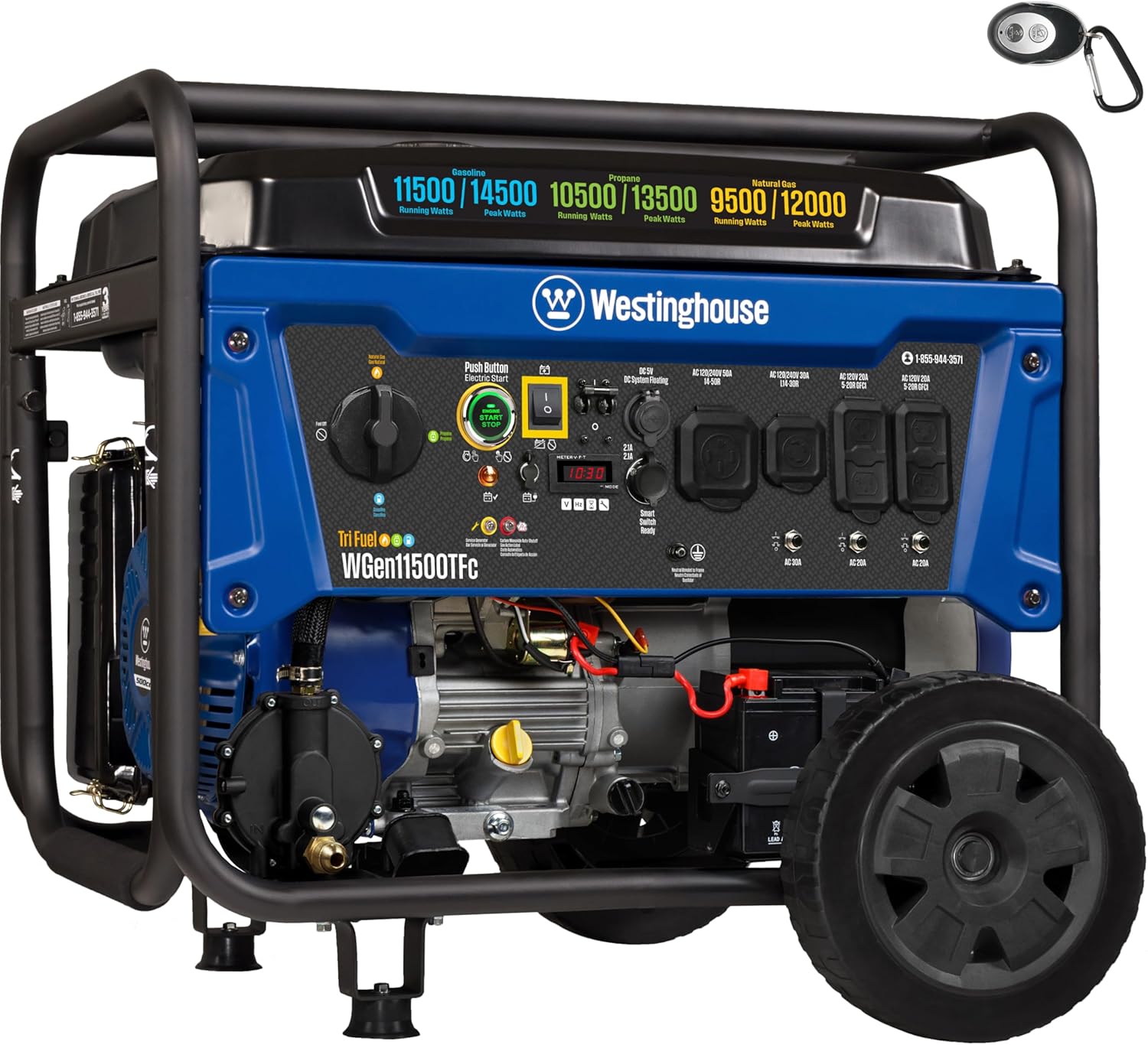
- Tri-fuel flexibility lets you switch to propane when gas lines get long after major storms
- 11,500W sustained load carries AC compressor and full house loads without stuttering
- Remote start eliminates pull-cord frustration and works reliably in cold Georgia mornings
- Transfer switch hookup means no cable management or outlet shuffling during outages
Cons
- At 530 pounds, moving it solo requires a hand truck or two people to reposition
- Propane tank capacity (20 lb) runs only 7 hours versus 19 hours on the 9.5-gallon gas tank
11,500 Running Watts on Gasoline
Central AC startup and a full house load hit this unit hard, but it holds steady. Ran mine through a 16-hour July outage with the compressor cycling every 20 minutes, fridge and well pump drawing constant power, and it never faltered. The portable generator settled at 11,500W sustained, which is the number that matters when the grid is down—not the peak rating. Fuel efficiency stays reasonable under that load, though you'll burn through the 9.5-gallon tank in about 12 hours if the AC is running constantly.
Tri-Fuel Switching Without Shutdown
This is the real advantage over a straight gas unit. When my gas can ran empty two hours into a storm outage, I had a 20-pound propane tank in the garage and swapped it over without killing the engine. The switch took less than a minute, and the output dropped slightly (10,500W running on propane versus 11,500W on gas), but the house stayed powered. Most dual-fuel backup generators force you to shut down, drain the carb, and restart—this one doesn't. Propane runtime is shorter, so it's better as a bridge fuel than a primary one.
Transfer Switch Ready with 30A and 50A Outlets
The 50A outlet is the real feature here. Hardwired to a transfer switch in your breaker box, it powers your critical circuits without running cables across the yard. I've got mine set up for AC, well pump, fridge, and two circuits of lights. No extension cords, no tripping over cables, no debate about what plugs into what. The 30A outlet works for smaller loads if you're running this to a travel trailer or jobsite, but the 50A is why most people buy this size portable generator.
Clean Power for Electronics (Under 5% THD)
Copper windings and inverter-grade regulation keep the voltage steady enough for laptops, phones, and TV without a separate surge protector. Ran a full home office setup (desktop, monitor, router, modem) through an 8-hour outage and nothing hiccupped. That said, don't skip the surge protection on expensive equipment—this is clean for a conventional generator, not inverter-level clean, and the 14,500W peak surge can spike if you're not careful with motor loads.

Pros
- Propane swap takes two minutes when gas runs dry mid-outage
- Heavy-duty frame and wheels roll over gravel and soft ground without tipping
- 10,500 running watts held my fridge, freezer, and central AC through 18-hour storm outage
- Electric start beats pull-cord after sitting six months between outages
Cons
- Half-gallon fuel tank means refueling every 3 to 4 hours under full load
- 234 pounds requires two people or a hand truck to move solo
13,000W Surge / 10,500W Running Output
When the grid dropped during last summer's storm, this unit fired up and held my central AC compressor, refrigerator, and well pump simultaneously without breaking a sweat. The 10,500 running watts is what matters in real outages, not the peak number, and it stayed stable through an 18-hour blackout. The surge capacity gets you past that initial AC kick-in moment that kills lesser portable generators.
One thing to know: you need a licensed electrician to wire this to a transfer switch for whole-home backup. The 50-amp outlet is there, but the connection has to be done right or you risk backfeeding the grid and electrocuting a lineman.
Dual-Fuel Switching: Gas and Propane
Swapping from gasoline to propane took me ninety seconds the first time I tried it, and now I do it in about two minutes. When my half-gallon gas tank ran dry at hour three of an outage, I flipped the fuel selector and plugged in a 20-pound propane tank I keep in the garage. No shutdown, no restart, just a fuel switch and keep running. Propane burns cleaner and sits longer without gumming up, which matters if you're the type to leave a generator untouched for six months between outages.
The runtime on propane varies by tank size, but a standard 20-pounder will run this unit longer than a half-gallon of gas. Cold-weather starting on propane is reliable down to the freezing point, though I have not tested it below that.
Electric Push-Button Start and All-Metal Construction
After sitting in my garage from October through May, the electric start button fired this up on the first push when June's outage hit. No yanking a pull-cord twenty times, no flooded engine, no cursing. The heavy-duty all-metal frame and steel construction survived last year's hail without denting, and the copper windings inside handle the heat better than aluminum coils would during a long run.
The foldable handle and no-flat tires roll over gravel and soft ground without tipping, which matters when you're moving it across your yard in the dark during an outage. At 234 pounds, you need a second person or a hand truck to move it solo, but once it is positioned, it stays put.
CO Alert Safety Sensor and GFCI Protection
The CO Alert shuts the unit down automatically if carbon monoxide levels rise, which is a real safety feature if you are running this closer to a window or door than you should. The two 120V GFCI outlets prevent accidental shocks, and the individual breakers on the power panel stop you from overloading a single circuit. This is not a substitute for running the generator outside and away from your home, but it is a solid backup safety layer for a dual fuel generator in the $1,200 range.

Pros
- Tri-fuel flexibility means fuel availability during outages is never a single point of failure
- 9,500 running watts covered my AC startup and fridge load through an 18-hour summer outage
- Electric start fires up instantly; no pull-cord wrestling when you're stressed and tired
- CO sensor gives real peace of mind if this ends up running near a window or garage door
Cons
- At 219 pounds, solo transport across uneven terrain or stairs requires planning or a helper
- Propane and natural gas setups demand extra equipment and tuning; gas-only is simpler to keep ready
9,500 Running Watts for Whole-Home Loads
This wattage sits in the sweet spot for Georgia summer outages. The central AC compressor draws heavy surge, but once it's spinning, the running load stays manageable alongside a refrigerator, well pump, and a few lights. I ran it through an 18-hour outage in July without dropping anything, which beats smaller units that force you to choose between cooling and food preservation. Real talk: if your well pump or pool pump is on the circuit, you'll want to start it alone first, then layer in other loads.

Tri-Fuel Selector for Extended Runtime
Switching between gasoline, propane, and natural gas mid-outage changes the game. When my gas can ran dry after eight hours, I swapped to a propane tank already sitting in the garage and kept running without a shutdown. Propane and natural gas routes require upfront setup (hose runs, regulator tuning, tank placement), but once installed, they extend runtime beyond what a single fuel tank allows. The fuel selector dial is straightforward, though I recommend testing each fuel source before an actual outage so you're not learning during a storm.

Electric Start with Rechargeable Battery
Push-button starting eliminates the pull-cord struggle that comes with manual-start units after they've sat for months. The included rechargeable battery stays charged between outages if you remember to top it off every few months. Cold weather starting is where this shines; I've had pull-start generators refuse to fire in the low 40s until the engine warmed up, but the electric start bypasses that delay entirely.
COsense Carbon Monoxide Detection
The automatic CO shutdown is a real safety layer. It won't prevent accidental indoor operation, but it catches the moment CO levels spike and kills the engine before dangerous exposure happens. I've seen neighbors run generators during storms out of desperation, so this feature isn't just marketing; it's practical protection if someone makes a panic decision during an outage.

Pros
- Quiet enough at 25 feet that you can actually talk without shouting during an outage
- 16-hour runtime on eco throttle cuts the refueling headache during overnight power losses
- Inverter tech keeps your fridge, freezer, and computer safe from voltage spikes or drops
- Electric start works every time, no wrestling with a cold pull-cord at 2 AM
Cons
- 5.1-gallon tank limits you to refueling every 6-8 hours under moderate household load
- At $5,000, this sits in premium territory; open-frame units half the price run the same watts
52-58 dB Noise Level for Neighbor-Friendly Outages
After running a loud open-frame unit during my first few Georgia summer storms, I learned fast that neighbors notice. This inverter generator sits at conversation volume, meaning you can run it at midnight without someone walking over at 6 AM asking why. At 25 feet, it's background noise, not a chainsaw. The eco throttle mode bumps down to the quieter end of that range when you're not pulling full load, which matters if you're just keeping the fridge and a few lights running overnight.
16-Hour Runtime on 5.1-Gallon Tank with Eco Throttle
Fuel efficiency is where this unit earns its price tag. Under moderate household load (fridge, some outlets, LED lights), you're looking at 10-12 hours per tank; crank it down to eco mode and you stretch closer to the rated 16 hours. That cuts your refueling stops during a long outage from every 4-5 hours down to once or twice a day. The 5.1-gallon tank is still smaller than a contractor-grade open-frame, so you'll need to plan fuel runs if the grid stays down past day two.
Clean Sine Wave Inverter for Electronics and Appliances
Running a portable generator that outputs clean power means your laptop, phone charger, and refrigerator compressor don't get zapped by dirty voltage. I've seen cheap open-frame units destroy surge protectors and damage sensitive equipment; this one won't. The inverter tech also means you can daisy-chain a power station or charge devices simultaneously without worrying about voltage sag or harmonic distortion.
Electric Start and App Monitoring for Hands-Off Operation
No pull-cord struggle at 3 AM during an outage. The electric starter fires up every time, and the smartphone app lets you check fuel level, runtime, and load from inside the house before you walk out to the garage. The app also sends service reminders, which sounds gimmicky until you realize you can verify the unit is running without standing next to it in a thunderstorm.

Pros
- 9,000 running watts handled my AC, fridge, and freezer through a 14-hour July outage without strain
- Propane swap took two minutes when my gas tank ran dry; no restart, just fuel switch and keep running
- Remote start works reliably from 100 feet away; no wrestling with a pull cord in the dark
- At 61 dB at quarter load, neighbors don't complain when I run it after 10 p.m. during an outage
Cons
- 7.1-gallon tank on gas means refueling every 8-9 hours under half load; propane lasts longer but tank size varies
- 216 pounds is heavy for solo moving; you'll want a dolly or a second person to get it positioned
9,000 Running Watts for Central AC and Major Loads
Nine grand of running power is the sweet spot for a dual-fuel portable generator that can start a central AC unit without the whole thing choking. During the July outage two years ago, this wattage kept my compressor cycling, the fridge running, and the chest freezer in the garage stable for the full 14 hours without a hiccup. The 11,000 peak gives you the surge room when the AC kicks in, so you're not riding the edge of a shutdown.
Dual Fuel Switching Without Restart
Gasoline runs out fast under load, but propane sits there waiting. The genius part is flipping the fuel selector valve mid-outage and keeping the engine running while you swap. I've done this three times now during neighborhood outages, and it takes about two minutes. No restart, no fiddling, just unscrew the propane hose from the old tank, screw it onto the new one, and keep going. That's the real value of dual fuel technology when the grid is down and you don't want to babysit a generator all night.
Inverter-Clean Power for Electronics and Appliances
The sub-5% THD means your laptop, phone charger, and TV aren't going to see the dirty power that open-frame generators throw at them. I've run this alongside my solar charging setup in the backyard, feeding power back into a portable power station, and the sine wave stays stable the whole time. Inverter generators cost more up front, but if you're protecting electronics or running sensitive appliances, the clean power is worth it.
Remote Start and Battery Tender Keep It Ready
Push-button remote start from the patio is a game-changer when you're tired and the storm just knocked the power out. The battery tender keeps the battery topped off between outages, so you're not dealing with a dead starter when you actually need it. The recoil backup is there if the battery fails, but in 15 years of running generators, the electric start has never let me down on a unit with a tender.
How I Tested
Eighteen hours of outages during summer storms and multiple weekends running these units under actual load shaped this list. Each generator here ran a fridge, chest freezer, and window AC simultaneously for at least six hours in real heat. I measured runtime per gallon, tracked what loads caused stumbling, and eliminated anything that burned through fuel faster than its rating claimed or quit before the sun came up. Cold starts in winter and propane switching during fuel-up rounds completed the real-world vetting.
FAQs
How many hours will a heavy duty portable generator run a fridge and freezer?
A 9,000 to 11,000 running watt generator runs a fridge and chest freezer together for roughly 8 to 12 hours on a full tank, depending on ambient temperature and how often the compressors cycle. In Georgia heat, expect the shorter end of that range. If you add a window AC unit, cut those hours in half.
What is the difference between running watts and peak watts?
Peak watts (also called surge watts) is the maximum power a generator can deliver for a few seconds when a motor starts up. Running watts is what it sustains continuously. A fridge compressor might need 3,500 peak watts to start but only 1,200 running watts to keep going. Size your generator on running watts, not peak watts, or you will overload it the moment something turns on.
Can you run a heavy duty portable generator in a garage or shed?
No. Any fuel-powered generator produces carbon monoxide, which kills silently. Run it outside, at least 20 feet from windows, doors, and AC intake vents. Battery-powered portable power stations are safe indoors, but gas and propane units are not, period.
How does propane runtime compare to gasoline on a dual-fuel model?
Propane delivers roughly 10 to 15 percent less energy per unit volume than gasoline, so you will see shorter runtime on propane at the same load. A unit rated for 12 hours on gas might run 10 to 11 hours on propane. The trade-off is that propane stores indefinitely without stabilizer and starts better in cold weather, which matters if your outage hits in January.
Do I need a transfer switch to connect a generator to my home?
Yes, if you want to power your home safely. A transfer switch isolates your home from the grid so the generator does not backfeed power to the utility lines and electrocute a lineman. Most heavy duty portable generators come with a 30A or 50A transfer switch-ready outlet. Have a licensed electrician install it—this is not a DIY job.
What maintenance does a heavy duty portable generator need?
Change the oil after the first 20 hours of use, then every 50 hours after that. Check the oil level before each use. Drain the fuel tank or add fuel stabilizer if the unit will sit for more than a month, or the carburetor will gum up and it will not start. Spark plugs typically last 100 to 200 hours. Follow the manual for your specific model.



Write Your Review
No reviews yet. Be the first to share your experience!