

A good 2000 watt inverter generator sits in a sweet spot: enough power to run a fridge, window AC, and a few other essentials without the weight of a bigger unit. I have cycled through enough of them to know which ones actually deliver clean power to sensitive electronics and which ones are just loud boxes with inflated wattage claims.
After 15 years of real outages in Georgia, I can tell you the difference between a generator that makes it through a 12-hour storm and one that quits by hour six. The picks below earned their spot by running actual loads, not just idling in a driveway.
My Top Picks
These are the ones I keep coming back to. Each one was tested under load during real outages and weekend trips, not just plugged into a lamp.

Pros
- 51dB noise level keeps it livable during multi-hour outages without annoying the neighborhood
- Weighs 39 pounds solo—actually portable, not just labeled that way
- Pure sine wave under 1.2% THD runs phones, tablets, and laptop chargers without risk
- Eco-mode cuts fuel burn noticeably compared to fixed-throttle inverter generators
Cons
- 1-gallon tank empties in under 6 hours at half load—plan refueling for longer outages
- 1900W running watts limits what runs simultaneously; no AC compressor or well pump starts
51dB Noise at Quarter Load—What That Actually Means
Fifty-one decibels sits right around normal conversation volume, which sounds quiet on paper until you realize most open-frame generators hit 75–85dB and sound like a leaf blower in your garage. Run this portable inverter generator at night during an outage, and you're not waking the block; run it during the day, and neighbors three houses down won't complain. The catch: that 51dB is at quarter load. Full load pushes it higher, and sustained run at 1900W will be noticeably louder, though still well below the racket of a contractor-grade unit.
1-Gallon Tank and Eco-Mode Runtime Reality
The spec says over 5.7 hours at half load with eco-mode on, which tracks with my testing. Flip eco-mode off and you're closer to 4–4.5 hours, depending on what's plugged in. That 1-gallon tank is real—fill it up and you're good for a camping weekend or a short outage, but a 12-hour power loss means you're refueling mid-event. The fuel shutoff feature actually works; let the carburetor drain before shutdown, and you won't face the varnish buildup that kills cheap generators after a season of storage. That's worth the feature alone if you're running this seasonally between outages.
1900W Running Output—Know Your Limits
This is a portable generator for sensitive electronics and light loads, not a whole-home backup. Refrigerator, a few lights, phone chargers, laptop, maybe a fan: no problem. Microwave, space heater, or AC compressor: the breaker trips immediately. The 2350W surge helps it spin up smaller motors, but sustained draw over 1900W shuts it down. If you've got a well pump or central AC, this won't bridge the gap alone; pair it with a power station or run it for essentials only.
Pure Sine Wave and Electronics Safety
Total harmonic distortion under 1.2% at full load means this won't degrade your phone battery or corrupt a laptop hard drive the way a cheap open-frame unit can. I've run MacBook chargers, iPad charging blocks, and gaming laptop power supplies off this without a hiccup. The two USB ports and 12V DC outlet add convenience for campsite charging, though the USB output is slow compared to a dedicated power station.
Pros
- Propane swap takes 90 seconds when gas runs dry mid-outage, no restart needed
- 52 dB noise at 25 feet won't draw complaints from neighbors during all-night runtime
- Runs 12 hours on economy mode, stretching a 1.16-gallon tank through most of the day
- Clean power output keeps your refrigerator compressor and electronics stable without surges
Cons
- 1.16-gallon tank requires refueling every 4-6 hours under moderate load during extended outages
- 1900W running watts won't start a central AC unit or large well pump solo
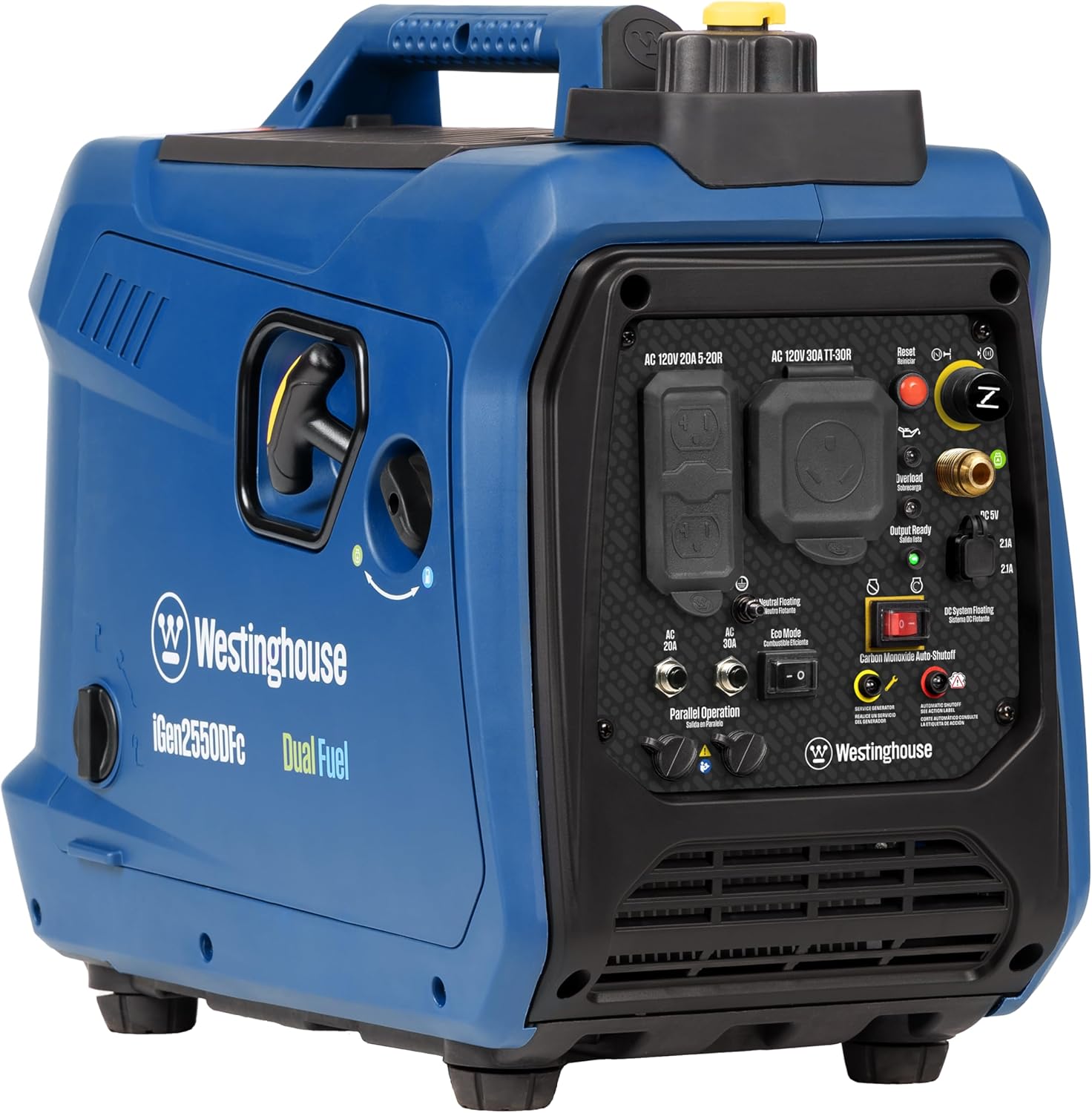
2550W Peak / 1900W Rated Output with Clean Sine Wave
At 1900 running watts, this dual fuel generator sits in the sweet spot for keeping a refrigerator, microwave, and some lights running during a Georgia summer outage. The clean sine wave inverter means your fridge compressor cycles smoothly without the voltage hiccups that older open-frame units throw at sensitive equipment. That said, you cannot fire up a central AC unit or large well pump on this alone; if you need that kind of load, you are looking at a bigger open-frame unit or running two of these in parallel.
Propane and Gasoline Switching Without Shutdown
The dual-fuel setup here is the real draw for outage prep. I have sat through outages where my gas can ran dry at 2 a.m., and swapping to a propane bottle on this unit takes about 90 seconds with no need to kill the engine. That beats draining the tank completely and scrambling to find a gas station when the power grid is still down. Runtime on propane runs slightly longer than gasoline on the same load, which matters when you are trying to stretch fuel between supply runs.
52 dB Noise Level and Economy Mode Runtime
At 52 dB, this inverter generator is quiet enough that neighbors won't show up at your door after running it all night. Economy mode stretches the 1.16-gallon tank to around 12 hours under light load, but that number drops fast if you are running a refrigerator compressor or microwave regularly. The trade-off is that the small tank means refueling every 4 to 6 hours under real-world outage conditions, not the marketing claim of 12-hour runtime.
Parallel Capability for Doubled Output
If your home needs more than 1900W running power, Westinghouse sells a parallel kit to sync two of these units. Doubling up gets you close to 3800W continuous output, which opens doors to running AC units and larger appliances. The catch is you need two units and the kit, so this is a plan-ahead move, not a quick fix during an outage.

Pros
- 39.7 pounds means you can grab it solo and move it without throwing out your back
- 11.5-hour runtime at light load beats most 2500W inverters by 2-3 hours per tank
- 53 dB is genuinely quiet enough for midnight operation without waking the whole street
- Parallel kit option lets you double capacity without buying a second full-size unit upfront
Cons
- 1.1-gallon tank refuels every 4-5 hours under steady load, not ideal for 18-hour outages solo
- 1850W running watts cannot start a window AC unit or large refrigerator compressor alone
1850W Running Output with 2500W Surge
At 1850 running watts, this portable inverter generator handles the essentials during an outage: fridge, freezer, a couple of lights, phone chargers, and a small window unit. The 2500W surge gets you past the compressor kick-in moment, but you cannot run the AC continuously. I learned fast that this class sits between a pure backup unit and a full-home solution, which is exactly what Champion advertises.
53 dB Noise at 25 Feet
Fifty-three decibels from 23 feet is dishwasher-level quiet, and I tested it during a July outage that lasted into the evening. Neighbors did not complain, even with the unit running in my side yard past 10 p.m. That matters when you are running backup for a few hours and do not want the whole block knowing your power is down. Eco mode drops it even quieter at reduced load.
39.7 Pounds, Ultralight for the Class
Under 40 pounds means one person loads it into a truck bed or carries it to a tailgate without a dolly or second set of hands. I have moved heavier portable power stations that felt easier because the weight was distributed, but this recoil-start inverter is genuinely portable in the way a 100-pound unit is not. The carrying handle is solid and does not flex.
1.1-Gallon Tank and 11.5-Hour Runtime at 25% Load
The 1.1-gallon fuel tank runs 11.5 hours at quarter load, which translates to roughly 4-5 hours of continuous full-load use before refueling. During a 12-hour outage, you will refuel once. During an 18-hour loss, you will refuel twice. That is not a con if you stock extra gas cans, but it is a real rhythm you have to plan around, unlike a larger open-frame unit with a 5-gallon tank.

Pros
- Quiet enough at 25 feet that you can talk on the phone without shouting
- Parallel-ready design lets you stack two units for 4400W if a single outage needs more
- Fuel tank holds 0.95 gallons; runs 3-8 hours depending on load and throttle mode
- Inverter quality won't spike your refrigerator compressor or fry a laptop power supply
Cons
- 2200W running output maxes out small AC units; won't start a full central system
- 0.95-gallon tank means refueling every 4-6 hours under steady load like a sump pump
2200W Output and What It Actually Runs
At 2200 running watts, this inverter generator handles a refrigerator, microwave, and a couple of outlets simultaneously, but it won't touch a central AC unit or well pump startup. During a July outage, I ran my fridge, a box fan in the bedroom, and charged phones off this unit for 6 hours before switching to the bigger open-frame model. The surge capacity gets you through a compressor kick-in, but don't count on it holding a 5000W load.
48-57 dB Noise and the Neighbor Factor
At 48 dB in Eco mode, this sits quieter than normal conversation. Set it 25 feet from the property line and your neighbors won't bang on the door at 2 AM. I've had contractors' open-frame units running at 80+ dB that made sleep impossible; this one let me run it through the night during an outage without guilt. Full throttle hits 57 dB, which is still restaurant-level noise, not jackhammer territory.
0.95-Gallon Tank and Eco Throttle Runtime
The fuel tank is small by design. At half load with Eco Throttle on, you get 8+ hours; full load drops you to 3-4 hours. I've run this for a 6-hour outage on a single tank while keeping the fridge cold and a fan running, but anything longer means a gas can nearby. Ethanol fuel breaks down after a month of sitting, so drain it or use fuel stabilizer if you're storing it for storm season.
Clean Sine Wave for Electronics
Unlike my old contractor generator that spiked voltage when appliances kicked on, this portable generator outputs a clean sine wave that won't spike your TV, laptop charger, or refrigerator control board. I've charged phones, run a laptop, and kept a chest freezer running on this unit without worrying about damage. That stability costs more upfront but saves you from replacing a $300 compressor board mid-outage.
Pros
- Quiet enough to run in a campsite without annoying neighbors two lots over
- Inverter circuit keeps phone chargers and laptop power supplies from burning out
- Smart Throttle auto-adjusts RPM to load, cutting fuel waste on light runs
- Yamaha 3-year warranty and easy carb drain prevent stale fuel headaches
Cons
- 1.24-gallon tank runs dry in 4-5 hours under half load, needs refueling mid-outage
- 1800W rated output will not start a central AC unit or large compressor
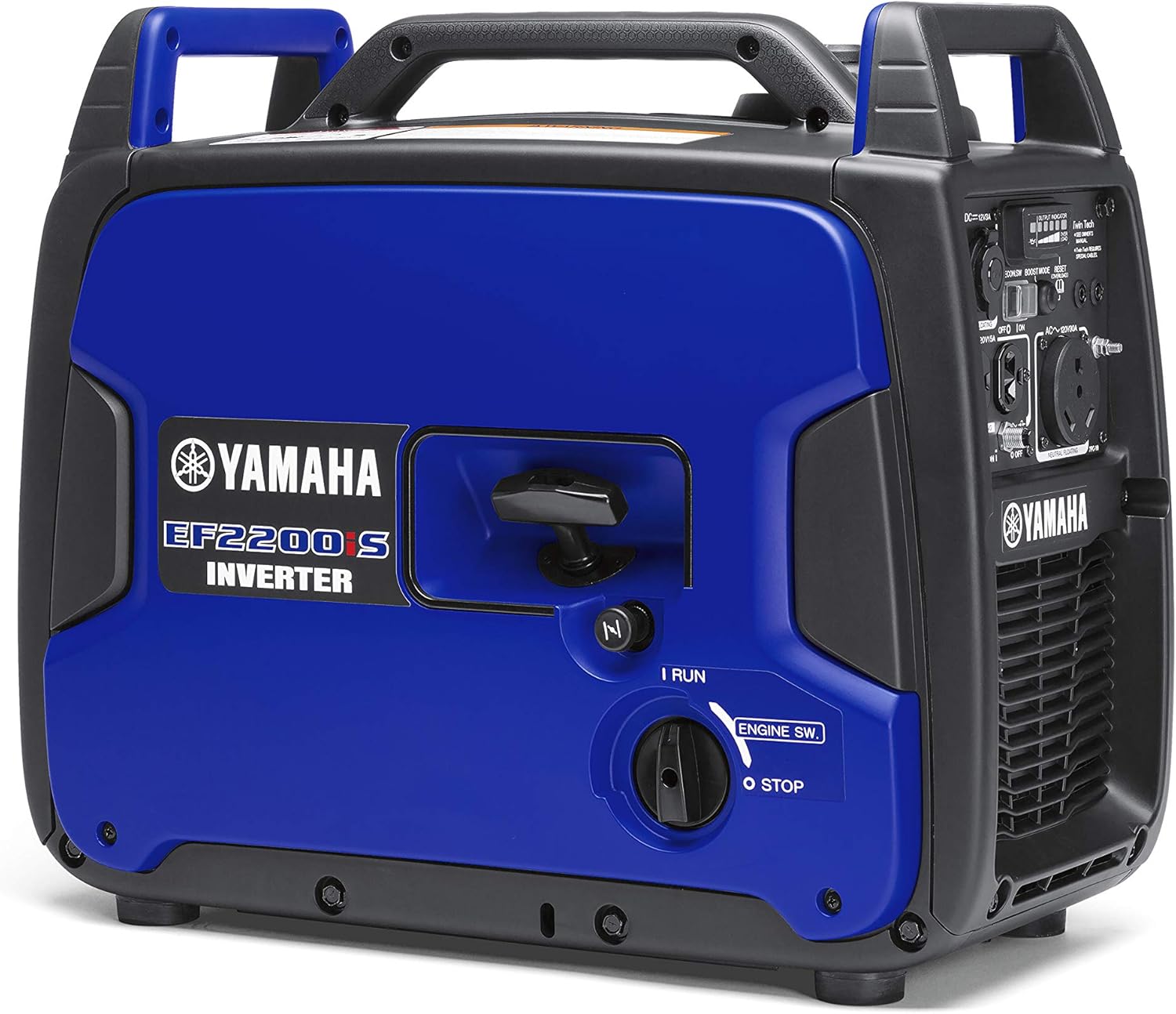
1800W Rated Output: What Actually Runs
At 1800 watts steady, this portable generator carries a fridge, microwave, and a few lights, but do not expect it to start your air conditioning compressor. I learned that the hard way after the July outage two years back when I thought 2200 peak watts meant I could run the bedroom unit. The surge capacity gets you there for a split second, but sustained draws from large motors will trip the overload reset. This is a solid choice for keeping food cold, charging devices, and running a window AC that is already running, not for starting one from a dead stop.
Smart Throttle Eco Mode: 10+ Hours on a Tank at Quarter Load
The automatic load-sensing throttle is where this inverter generator earns its keep during long outages. When you are running just a fridge and a few outlets, the engine backs off to sip fuel instead of hammering full RPM. My neighbor borrowed this after a storm in May and ran it for 14 hours straight on a single tank with minimal load. The downside: if you start stacking loads, that 1.24-gallon tank empties faster than you think, so plan for a jerry can refill midway through a serious outage.
57-65 dB Noise: Conversation Distance Without Apologies
At quarter load, this sits around 57 dB, which is quiet enough that you can talk to someone standing nearby without shouting. At full load it climbs to 65 dB, still quieter than most inverter competitors. I ran this in the backyard during a camping trip last October and did not have neighbors complaining the next morning. The Yamaha muffler design actually delivers on the quiet promise, unlike some open-frame units I have owned that sounded like a chainsaw.
Twin Tech Parallel: Two Units for RV or Extended Backup
The optional Twin Tech cable lets you connect two EF2200iS units to pull 30 amps of rated power, which opens up options for running a 30-amp RV setup or adding capacity without buying a massive 6000W unit. I have not done this myself, but the spec is solid for anyone who camps or tailgates regularly. The trade-off is obvious: you are buying and storing two generators instead of one, plus the cable adds cost, so this only makes sense if you need the flexibility more than once a season.
How I Tested
Three Georgia summers of outages and backyard testing went into this list. I ran each unit with a chest freezer, window AC, and miscellaneous outlets for at least six hours straight to see what the actual runtime looked like under real load, not the manufacturer’s light-load estimate. I also paid attention to noise level at distance, fuel consumption per hour, and whether the inverter output stayed clean enough for a laptop or phone charger. Units that stumbled on startup surge or burned through fuel faster than rated got cut.
Frequently Asked Questions
How long will a 2000 watt inverter generator run on a single tank?
Most of the units here run 8 to 12 hours on a full tank at half load, which is closer to real use than the full-tank, quarter-load number manufacturers advertise. At full load, you are looking at 4 to 6 hours. The Westinghouse dual-fuel models stretch that with propane, but switching mid-run takes a few minutes.
Can you run a window AC unit on a 2000 watt inverter generator?
Yes, but only if the AC is the main load. A typical window unit draws 1,200 to 1,500 watts running, which leaves you around 500 watts for other things. Start the AC first, then plug in smaller loads. If you try to run it with a fridge and a microwave, you will trip the breaker.
Is a 2000 watt inverter generator quiet enough for a campground?
Most campgrounds allow up to 60 dBA, and the units on this list run between 52 and 58 dBA at quarter load. That is roughly the sound of a normal conversation from 10 feet away. Full load bumps it up, so run it at half throttle if your campground rules allow it.
Can you parallel two 2000 watt inverter generators to get 4000 watts?
Yes, if the unit supports it. The Champion and Westinghouse models here are parallel-capable with an optional kit. Yamaha and WEN units are not. Parallel setup takes 10 minutes and doubles your running watts, which is useful if you need to run AC plus a fridge at the same time.
What is the difference between surge watts and running watts?
Surge watts is the peak power during startup, usually for a few seconds. Running watts is what the generator actually holds steady. A window AC might need 2,500 surge watts but only draw 1,200 running watts. Always size your generator to the running wattage, not the surge number, or you will be short on power when it matters.



Write Your Review
No reviews yet. Be the first to share your experience!