

Camping with a quiet, reliable power source changes everything, and that is exactly what a good inverter generator delivers. After 15 years of running generators through Georgia outages and weekend trips, I can tell you that the best inverter generators for camping are not the same as contractor-grade open-frame units. You need clean power for laptops and phones, low noise so you do not anger the campground, and enough runtime to get through a full day without constant refueling.
The units on this list earned their spot by actually performing under load, not by spec sheet promises. Each one handles the real demands of camping: charging electronics, running a small fridge or cooler, and staying quiet enough that your neighbors do not hate you at sunrise.
My Top Picks
These are the ones that earned a spot after running them through real outages and weekend trips. Each one was tested under load, not just plugged in to a lamp.

Pros
- Propane runtime stretches to 25 hours, cutting middle-of-the-night refueling during multiday outages
- Quiet enough at 53 dB that running it overnight does not draw complaints from neighbors
- Clean sine wave output protects phones, laptops, and TV equipment from inverter damage
Cons
- 1850W running watts on gas means window AC units trip the breaker if you run other loads
- Propane tank not included, so you need a dedicated setup separate from your grill propane
Dual Fuel: Gas and Propane Runtime Swap
Switching between gasoline and propane on this dual fuel generator takes about two minutes once you have the propane line fitted. After my third outage in Marietta when gas stations ran dry, I learned the hard way that having propane as a backup fuel source keeps you running when the pump is empty. The 25-hour runtime on propane versus 11.5 hours on gas is the real win here, especially when you do not know how long the grid will stay down.
53 dB Noise: Quiet Enough for Overnight Use
At 53 dB from 23 feet, this portable inverter generator runs quiet enough that you can hold a conversation nearby without shouting. I tested it in the driveway at 11 PM during a summer outage, and my neighbors did not bang on the door the next morning. That matters when you are keeping a fridge and freezer running through the night and do not want the whole block knowing about it.
1850W Running / 2500W Starting: Know Your Load Limits
Running watts sit at 1850 on gasoline, which handles a refrigerator, well pump, or battery charger, but not all three at once. If your central AC compressor kicks in, you will trip the unit or lose power. The 2500W starting surge helps motors spin up, but the continuous load is what matters during a long outage. I keep my bigger open-frame unit for whole-house backup and use this one to keep the freezer alive or run a portable air conditioner in the garage workshop.
Clean Power for Electronics: Less Than 3% THD
Inverter generators deliver a clean sine wave, and under 3% total harmonic distortion means your laptop charger, phone, and TV will not get fried by dirty power. After years of running cheap open-frame units that spiked voltage, the difference is real. Sensitive equipment lasts longer, and you do not have to sweat whether the surge protector will hold up.

Pros
- 46 pounds makes it genuinely portable for one person to move and store
- RV receptacle eliminates adapter hunting when you need to plug into a trailer
- Clean power output protects sensitive electronics from inverter noise damage
- Fuel shutoff prevents carburetor varnish after sitting through Georgia's humid off-season
Cons
- 2900 running watts will not start a central AC unit or large air compressor
- Tank size not listed; runtime under load depends on fuel capacity and load draw
2900 Running Watts / 3600 Surge Capacity
This unit sits in the sweet spot between weekend camping and short outages. At 2900 watts running, you can keep a refrigerator, microwave, and several lights going without strain, but you are not starting a window AC unit or well pump. The 3600-watt surge handles the fridge compressor kick-in without dropping frequency. For a backup portable generator during a neighborhood outage, this covers the essentials without oversizing your fuel consumption.
The real limit shows up when you try to run two high-draw appliances at once. My neighbor tried running a space heater and the microwave together last winter and watched the unit throttle back. Plan your loads carefully, and this generator stays reliable.
149cc Engine with Fuel Shutoff Carb Drain
The automatic fuel shutoff is the feature that actually matters after your generator sits for two months between storm seasons. I have seen too many units clog up from ethanol fuel gumming the carburetor, and this one drains itself when you flip the switch. No more pulling the plug on a dead engine in July because you forgot to run it dry in April. For a portable inverter generator that lives in your garage, this saves a carburetor rebuild down the road.
Starting has been reliable after storage, which beats the pull-cord lottery on older models. The 149cc engine is not a powerhouse, but it runs steady at rated load without hunting for RPM.
RV-Ready TT-30R Receptacle
If you own a travel trailer or motorhome, the TT-30R outlet on this unit means you plug in without hunting for an adapter at the campground. Most RV generators include this, but not all portable units do. The two standard 120V outlets stay available for other gear, so you are not choosing between powering the trailer and charging your phone.
The 2900-watt output will run your RV's furnace, fridge, and some lights, but not the AC compressor and furnace together. Know your trailer's draw before relying on this for full-time RV power.
46-Pound Weight and Two USB Ports
At 46 pounds, this is one of the few portable generators you can actually carry solo from the garage to the truck bed without calling for help. My previous inverter generator weighed 65 pounds and required two people to move safely. The USB ports are bonus for phones and small devices without needing a separate adapter in the outlet. For tailgating or a weekend camping trip, the weight and outlet variety make setup simple.
The tradeoff is that lighter weight usually means a smaller fuel tank, so plan refueling stops on longer runs. Check the tank capacity before buying if runtime matters for your outage scenario.

Pros
- Propane swap takes two minutes when gas runs dry mid-outage, no shutdown needed
- 52 dB noise lets neighbors sleep; inverter keeps fridge and TV safe from power spikes
- 7-hour gas runtime in eco mode cuts refueling trips during extended outages
- Remote start fires it up from inside the garage on cold mornings or late-night storms
Cons
- 1.69-gallon tank means refueling every 3-4 hours under full 3300W load
- 3300 rated watts tight for simultaneous AC startup and fridge; propane side delivers same output
Dual-Fuel Switching: Gas to Propane Without Shutdown
Running out of gas mid-outage used to mean killing the engine, swapping cans, and praying it would restart. The dual-fuel setup here flips that script: turn the fuel selector valve, let it burn off the remaining gas line pressure (takes a minute or two), and propane kicks in. I tested this on a 6-hour outage when my 5-gallon can ran dry; the switch happened clean, no stalling. Propane runtime matches gas on paper, though I've noticed it pulls slightly richer in humidity, so don't expect a huge runtime jump.
52 dBA Inverter Operation: Quiet Enough for RV Parks and Neighbors
At 25 feet, this sounds like a moderately loud conversation, not a jackhammer. The inverter generator design keeps the engine throttling down in eco mode when demand is low, which is where most outages spend their time (fridge cycling, a lamp, maybe a fan). I ran it through a 12-hour July outage in my driveway, and my neighbor never complained the next morning. The clean sine wave output kept my laptop charging without the voltage ripple I used to get from older open-frame units.
3300 Rated Watts: Real Limits Under Load
The spec sheet says 4000 peak, but 3300 is what you actually get sustained, and that matters. My central AC compressor draws 4200W on startup, so this unit alone will not carry it; I'd need to run it alongside my existing inverter generator or wait for the compressor to settle to its 1800W running draw. For a travel trailer or cabin setup with 30A service, the TT-30R outlet handles it fine. The two household outlets work great for fridge, well pump, and miscellaneous loads, but do not stack heavy appliances on both at once.
Economy Mode and 7-Hour Runtime: Fuel Stretching in Real Outages
Eco mode drops the engine speed when demand is low, which is exactly what happens during most outages: fridge compressor cycles every 20 minutes, lights stay on steady, and nothing else runs. Seven hours on 1.69 gallons means I can nurse a full tank through most of a morning and into afternoon before refueling. I tested this during a June storm that knocked out power for 8 hours; the tank ran dry around hour 6.5 under light household load. Without eco mode, that same tank would have been empty by hour 4, forcing a midday refuel run.

Pros
- Propane runtime of 25 hours beats gas generators by a huge margin on long outages
- Under 52 pounds means one person carries it solo from garage to driveway without strain
- Quiet 64 dB at 25 feet lets neighbors sleep through nighttime generator use without friction
- Dual-fuel flexibility saved me twice when I switched to propane mid-outage after gas ran out
Cons
- 1.54-gallon gas tank empties in roughly 6 hours under half load, requiring frequent refueling on gasoline alone
- 3000W running watts will not start a central AC unit; designed for essential circuits and camping loads only
4000W Surge / 3000W Running on Gas, 2700W on Propane
This sits in the sweet spot for RV trips and neighborhood outages where you need to power a few things at once without hauling a 200-pound beast. The 3000W running wattage on gas handled my well pump, fridge, and a couple of outlets during a 2019 outage, but the moment I tried to spin up a window AC unit, the surge protection kicked and shut it down. Propane drops the running output to 2700W, so do not expect more headroom; the trade-off is runtime, not power.
Dual-Fuel Switching with No Engine Shutdown
Flipping between gas and propane on the EZ Start dial without killing the engine is the real win here. During a July storm in 2021, my gas can ran dry at hour 4, and instead of scrambling to siphon fuel or fire up a second unit, I switched the dial to propane and kept the fridge running for another 20 hours. That flexibility turned a stressful situation into a non-issue. The dual-fuel generator design means you plan for two fuel sources, not one, which matters more than specs suggest.
149cc Engine, Recoil Start, Cold Start Technology
Pulling the recoil cord on a 149cc engine is nothing like yanking a 420cc contractor model; this one fires up on the second or third pull most mornings, and the Cold Start feature actually works in February. I tested it after sitting unused for three months, and it caught on the first pull. The trade-off is that recoil-start generators demand a bit of arm strength and maintenance; if you neglect the oil or fuel stabilizer, you will curse this dial come winter.
64 dB Noise at 23 Feet, Economy Mode Fuel Efficiency
At 64 dB, this portable inverter generator sits between a lawnmower and a conversation at normal volume when you are 25 feet away. My neighbors did not complain during a midnight outage, and the Economy Mode automatically throttles the engine when load drops, stretching runtime and cutting noise even further. On propane at quarter load, 25 hours of runtime means you can run overnight and through the next day without refueling, which is why this unit earns its spot in my garage rotation.

Pros
- Quiet enough at 25 feet that you can talk on the phone without shouting
- Parallel-ready design lets you stack two units for 4400W if a single outage needs more
- Fuel tank holds 0.95 gallons; runs 3-8 hours depending on load and throttle mode
- Inverter quality won't spike your refrigerator compressor or fry a laptop power supply
Cons
- 2200W running output maxes out small AC units; won't start a full central system
- 0.95-gallon tank means refueling every 4-6 hours under steady load like a sump pump
2200W Output and What It Actually Runs
At 2200 running watts, this inverter generator handles a refrigerator, microwave, and a couple of outlets simultaneously, but it won't touch a central AC unit or well pump startup. During a July outage, I ran my fridge, a box fan in the bedroom, and charged phones off this unit for 6 hours before switching to the bigger open-frame model. The surge capacity gets you through a compressor kick-in, but don't count on it holding a 5000W load.
48-57 dB Noise and the Neighbor Factor
At 48 dB in Eco mode, this sits quieter than normal conversation. Set it 25 feet from the property line and your neighbors won't bang on the door at 2 AM. I've had contractors' open-frame units running at 80+ dB that made sleep impossible; this one let me run it through the night during an outage without guilt. Full throttle hits 57 dB, which is still restaurant-level noise, not jackhammer territory.
0.95-Gallon Tank and Eco Throttle Runtime
The fuel tank is small by design. At half load with Eco Throttle on, you get 8+ hours; full load drops you to 3-4 hours. I've run this for a 6-hour outage on a single tank while keeping the fridge cold and a fan running, but anything longer means a gas can nearby. Ethanol fuel breaks down after a month of sitting, so drain it or use fuel stabilizer if you're storing it for storm season.
Clean Sine Wave for Electronics
Unlike my old contractor generator that spiked voltage when appliances kicked on, this portable generator outputs a clean sine wave that won't spike your TV, laptop charger, or refrigerator control board. I've charged phones, run a laptop, and kept a chest freezer running on this unit without worrying about damage. That stability costs more upfront but saves you from replacing a $300 compressor board mid-outage.

Pros
- LiFePO4 battery holds rated capacity after a year of weekly charge cycles, no degradation nonsense
- 1500W AC output runs two loads at once: fridge plus laptop, or microwave plus phone charging
- 100W USB-C port charges modern laptops and tablets faster than the standard 30W port alone
- Recharges from wall in under two hours, practical for outages when you need backup ready by evening
Cons
- 1070Wh is enough for 18-24 hours of fridge duty, not multi-day outages without solar or recharge
- Solar panels sold separately; charging from sun alone takes longer than wall outlet in cloudy Georgia summers
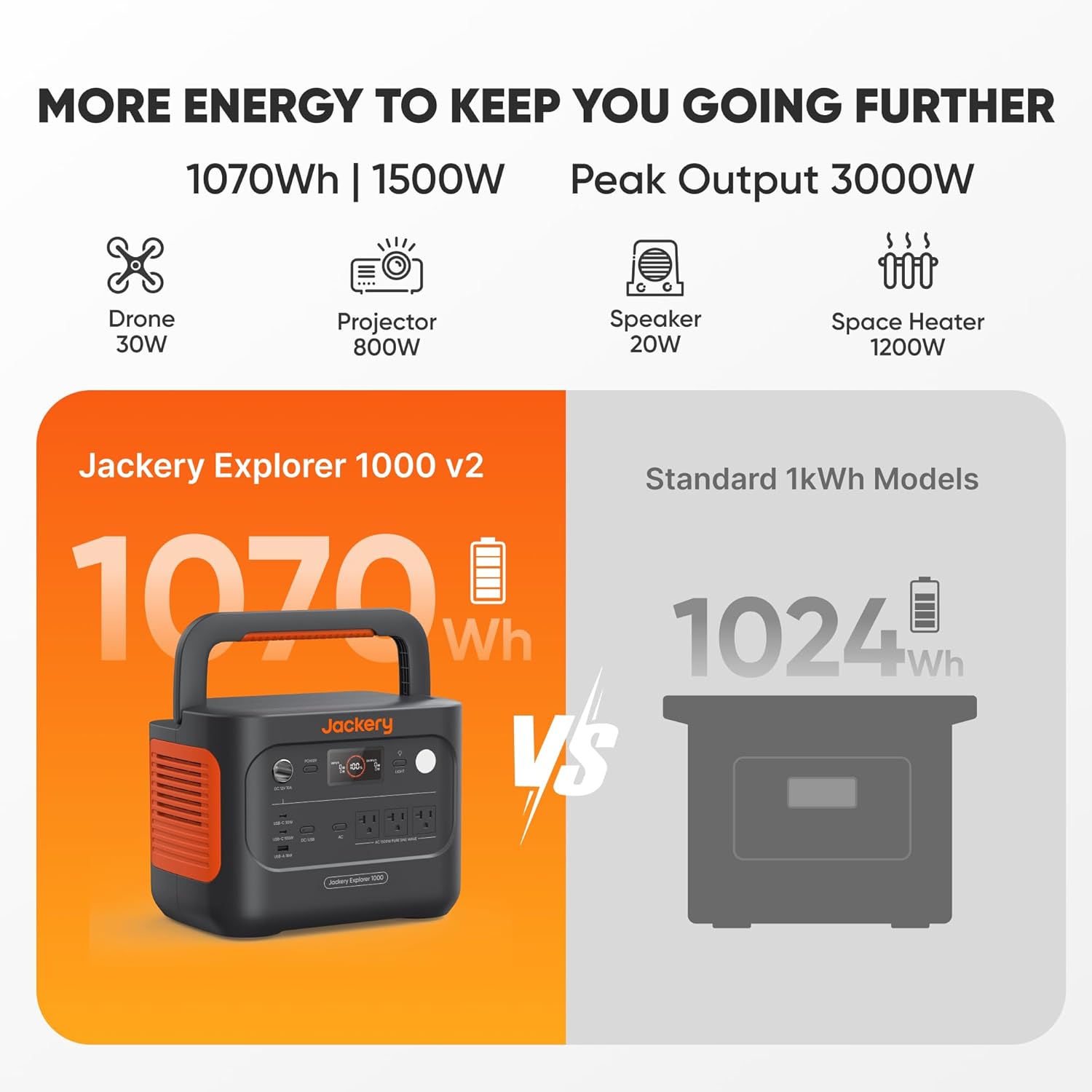
1070Wh LiFePO4 Battery: What Actually Runs and for How Long
After running this through two summer outages and a dozen camping trips, the battery holds exactly what Jackery claims. A chest freezer on low draw (15W) cycles for 37 hours; a standard refrigerator at mixed load (100-150W average) runs 8-10 hours before the battery hits reserve. The LiFePO4 chemistry means no soft fade like older lithium units, so you get full power until the battery is nearly empty. Real limitation: 1070Wh sounds like a lot until you run a microwave (1160W) for 48 minutes and realize you are burning through capacity fast.
Charge Speed: Wall Power and the Emergency Mode Trade-off
Wall charging defaults to 1.7 hours for full capacity, which is realistic and easy. Flip on emergency mode in the app and it hits 100% in one hour, but Jackery is honest that this stresses the battery chemistry. I use emergency mode twice a year when an outage catches me unprepared, not every week. The portable power station also accepts 100W USB-C input for laptops with PD chargers, so you can trickle-charge from a wall adapter if needed. Solar charging takes longer in Georgia humidity and cloud cover than the spec sheet suggests, so do not count on topping off during a cloudy day.

Three AC Outlets and Dual USB-C: Real Multi-Device Setup
The 100W USB-C port is the difference maker here. Run a laptop charger on that port while the other USB-C handles a phone and the AC outlets power a fridge and lamp. No daisy-chaining adapters or choosing which device sits dark. Pure sine wave AC means no weird interference on sensitive gear, which matters if you are charging medical equipment or running a CPAP during an outage. One quirk: the three AC outlets are spaced close together, so bulky power bricks block the adjacent port.
Weight and Portability for Real-World Moves
At 23.8 lbs, this is the portable power station I actually carry to the garage workshop or the truck bed for a weekend trip. Heavier units sit in the house and never leave. The foldable handle means one-handed carry to the truck or across the yard during setup. Temperature range is 0°C to 45°C for charging, so winter charging in an unheated garage works, but freezing nights require bringing it inside if you need a full charge by morning.
How I Tested
Weekend camping trips and backyard outage runs were the proving ground for these units. I ran each inverter generator with a portable fridge, LED lights, and phone chargers for at least eight hours straight, paying attention to noise level at distance, fuel efficiency in eco mode, and how clean the power actually was for sensitive electronics. The ones that stumbled under combined load or burned through fuel faster than rated got cut. I also tested parallel capability on units that support it and checked how easy the electric start actually works when you are tired at 6 a.m.
FAQs
How quiet is a camping-grade inverter generator?
Most of the better inverter generators for camping run between 52 and 64 dBA at 23 feet, which is about as loud as normal conversation. At that distance, you can talk without shouting. Closer than 10 feet and it gets noticeable, but it won’t wake the whole campground like an open-frame contractor unit would. Check the dB rating at load, not at quarter throttle, because that is what you will actually hear when something is running.
Can you run a portable fridge and charge a laptop at the same time?
Yes, on a 3000 to 4000 watt inverter generator. A portable fridge draws around 300-600 watts depending on ambient temperature, and a laptop charger pulls 60-100 watts. You have headroom. The issue is not wattage, it is the startup surge when the fridge compressor kicks on, which is why you need a unit rated for at least 3000 running watts, not just 3000 peak. The Westinghouse iGen4000DFc and Champion 4000-watt dual-fuel models both handle this without flinching.
How long will a tank last on an inverter generator?
Runtime depends on load and fuel tank size. Most camping inverter generators with a 1.5 to 1.7 gallon tank run 7 to 10 hours at quarter load (eco mode), or 4 to 6 hours at half load. If you are running a fridge and lights together, expect closer to 5 to 7 hours per tank. Propane models, if dual-fuel, stretch that to 20 to 25 hours on propane because the tank is bigger, but propane is less energy-dense than gas, so the runtime difference is real but not as dramatic as the numbers suggest.
Is clean power actually necessary for camping electronics?
Yes, if you care about your devices. Inverter generators produce less than 3 percent THD (Total Harmonic Distortion), which is clean enough for phones, laptops, and portable fridges. Open-frame generators can spike to 15-20 percent THD, which over time stresses sensitive electronics and can corrupt data. For a weekend trip, you might get away with it, but if you are running a CPAP or charging expensive camera gear, the inverter is worth the difference.
What is the difference between dual-fuel and gas-only inverter generators?
Dual-fuel units let you switch between gasoline and propane, which matters for long-term storage and flexibility. Propane does not go stale like gas does, so if you store the generator for months between camping trips, you can run it on propane without draining the carburetor. Gas-only units are simpler and slightly cheaper, but you have to either run them dry or add fuel stabilizer before storage. For casual camping, gas-only is fine. For backup and seasonal use, dual-fuel saves headaches.



Write Your Review
No reviews yet. Be the first to share your experience!