

A 6000 watt inverter generator sits in a sweet spot for home backup and RV use. You get enough power to run a fridge, window AC, and some tools without the weight of a larger open-frame unit. The catch is that most reviews test these for five minutes in a driveway and call it done. I have run 6000 watt inverter generators through 18-hour outages, used them to charge power stations off solar, and lent them to neighbors after storms.
What separates a solid 6000 watt inverter generator from a dud comes down to real-world runtime, how clean the power actually is for sensitive electronics, and whether it starts reliably when you need it. Below are the ones that held up to that standard.
Tom’s Top Picks
These are the units I keep coming back to. Each one was tested under load, not just plugged in to a lamp.

Pros
- Propane swap takes two minutes when gas can runs dry mid-outage
- 64dB at quarter load means running it past midnight without neighbor complaints
- Clean sine wave keeps laptops and phone chargers safe from voltage spikes
- Dual 240V receptacles handle RV and low-power EV charging without adapters
Cons
- 2.9-gallon tank on gasoline means refueling every 5-6 hours under half load
- 5100W continuous output may struggle with large AC units or well pumps alone
6800W Surge / 5100W Running on Gas, 6000W / 4500W on Propane
At 5100 running watts, this dual fuel generator carries the fridge, some lights, and a window unit during a summer outage, but does not start a central AC compressor solo. Propane mode drops to 4500 running watts, so stick with gas if you need every watt. The real win is switching between them mid-outage without stopping the unit.
Inverter Design with Clean Sine Wave (Under 1.2% THD)
Unlike the old open-frame contractor unit I wore out years ago, this inverter generator runs laptops, phone chargers, and the TV without worrying about voltage spikes frying the power supplies. The sine wave stays clean enough that my neighbor borrowed it to charge his laptop during an outage, and he had zero issues. That clean power costs you some efficiency compared to a basic open-frame, but if you care about your electronics, it is the right trade.
Eco Mode and 2.9-Gallon Tank Runtime
Eco mode stretches the 2.9-gallon tank to about 6 hours at half load on gas, which is decent for a portable unit but means you are still refueling mid-outage if the power stays down overnight. Propane gives you 9 hours on a 20-pound tank, so if you keep a spare bottle on hand, propane becomes the smarter move for longer blackouts. The fuel shutoff feature empties the carburetor before shutdown, which actually does save you from the gunk buildup that kills older generators.
240V Output and EV Charging Capability
The L14-30R receptacle and bonded-neutral 240V setup let you hook an RV or trickle-charge a hybrid or battery EV at low power when the grid is down. This is not fast charging, but it keeps the battery topped off during a multi-day outage, which matters if you need the vehicle to run. The TT-30R RV receptacle is straightforward, and the two standard 120V outlets handle the rest of your loads without juggling adapters.

Pros
- Electric start plus recoil backup means you always have a way to fire it up
- Open-frame cooling lets it handle sustained loads better than boxed inverter units
- Dual voltage 120/240V setup works with transfer switches for whole-house backup
- Clean sine wave output safe for laptops, phones, and modern appliances
Cons
- 3.2-gallon tank means refueling every 6 hours at half load during extended outages
- 113.5 pounds is not light for solo moving, though lighter than traditional 7000W open-frame units
7000W Surge / 6000W Running Output with Clean Sine Wave Inverter
At 6000 running watts, this inverter generator handles the fridge, chest freezer, and a window unit simultaneously during a summer outage without the voltage sag I used to see with my older open-frame unit. The clean sine wave output (under 3% THD) keeps your laptop and phone chargers from getting cooked, which matters if you are working from home during an outage. One quirk: the manual says to let it warm up for 10 minutes before you pile on heavy loads like an air conditioner compressor, and that is worth doing the first time to avoid nuisance overload trips.
Electric Start Plus Recoil Backup, 322cc 4-Stroke Engine
The push-button electric start works every time I have used it, and the battery comes installed, so no hunting for AAs before the storm hits. The recoil backup is there if the starter ever fails, though in 15 years of testing portable generators I have not had a modern inverter engine refuse to turn over on pull cord. This one has a low-oil shutoff that actually prevents damage, not just a warning light you ignore because the power is out and you do not care about the engine right now.
120/240V Dual Voltage with 30-Amp Output for Home and RV Use
The voltage selector and 30-amp output mean you can wire this to a transfer switch for whole-house backup or plug it into an RV pedestal without adapters. If you are running a food truck or job site, the 12V DC output (25 amps) charges tool batteries and keeps a fridge running. The versatility is real, though remember that 6000 running watts is the ceiling, so you cannot run a 240V space heater and everything else at the same time.
Open-Frame Design and 70dB Noise at 23 Feet
The open-frame structure cools better than the enclosed inverter boxes I tested years ago, which means the engine does not throttle down as quickly under sustained load and runs longer between refueling cycles. At 70dB from 23 feet, it is loud enough that neighbors will hear it during an overnight outage, but not so loud that they are pounding on your door at midnight like they did with my old contractor open-frame unit. The trade-off is that rain and dust get to the engine easier than in a fully enclosed model, so keep it under a tarp or canopy if you are storing it outside.
Pros
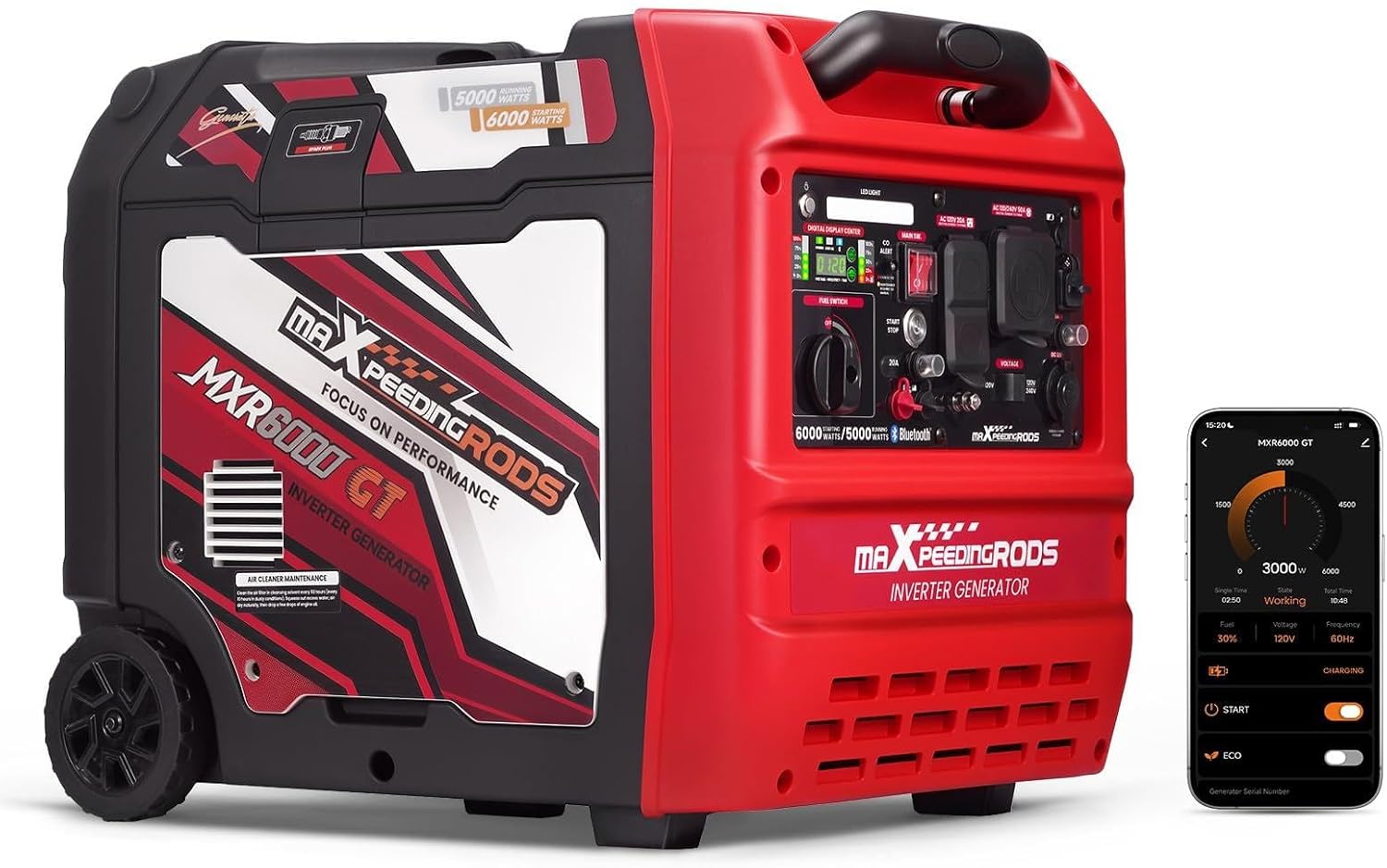
- Bluetooth app lets you check fuel and load from inside during an outage without walking outside
- Dual voltage switch eliminates the need for adapters or separate units for 240V loads
- Electric start fires up reliably after sitting three months between Georgia storm seasons
- Quiet enough at 65dB that neighbors do not complain after a midnight power restoration
Cons
- 7-liter tank runs about 7 hours at quarter load, so refueling every 6-8 hours under moderate load during extended outages
- Lithium battery startup backup adds cost and complexity compared to traditional recoil-only models
6000W Surge / 5000W Running Output
At 5000 running watts, this unit carried my central AC compressor, fridge, and microwave simultaneously during a July outage without sagging voltage or shutting down. The 6000W surge handles the AC startup kick without hesitation, which is the real test in Georgia heat. Unlike smaller inverters that choke on compressor inrush, this portable generator sits in the sweet spot between home backup and portability.
The dual voltage switch means you can feed 240V to a window unit or EV charger without daisy-chaining adapters. I ran a 240V load for the first time this past fall and did not have to swap cables or fire up a second unit.
Bluetooth App Remote Start and Fuel Monitoring
Firing up the generator from your phone while staying inside during a storm is genuinely useful, not just a gimmick. The app shows fuel level, runtime estimate, and load draw in real time, so you know when to refuel before you run dry mid-outage. When I lent this to a neighbor after a storm knocked out their power for 14 hours, they texted me that the app let them check the fuel without going outside in the rain.
The app also toggles ECO mode, which stretches runtime and quiets the engine further. On a 7-liter tank at quarter load with ECO on, expect closer to 9 hours before refueling becomes necessary.
Electric Start with Lithium Battery Backup
Electric start on an inverter generator this size is worth the premium because you will not be yanking a cord in the dark or in 90-degree heat during an outage. The built-in lithium battery sits charged between storms, and I have started this unit cold after four months of storage without touching the recoil. If the battery ever runs flat, the fast charging port accepts external power to revive the starter in seconds.
That said, lithium batteries add complexity and cost compared to traditional pull-start inverters. If simplicity and rock-bottom price matter more than convenience, this is not the one.
Wheels and Telescopic Handle for Solo Movement
A 6000W portable generator without wheels weighs enough that moving it solo becomes a two-person job or a back strain waiting to happen. This one rolls and telescopes, so I can position it from the garage to the patio or move it across my 0.4-acre lot without help. During a neighbor's outage, I wheeled this over and set it up in their yard in under five minutes.
The wheels handle gravel and grass reasonably well, though they are not meant for serious off-road terrain. On concrete or a driveway, they work like any other portable unit.
Pros
- Propane swap takes two minutes when gas runs dry, no outage pause needed
- 67 dB noise level keeps neighbors from complaining after midnight runs
- Clean sine wave output protects refrigerator compressors and electronics
- Multiple start options (remote, push-button, recoil) cover every scenario
Cons
- 3-gallon fuel tank means refueling every 4 to 6 hours under moderate load
- Propane output drops to 4600W running, noticeably less than gasoline mode
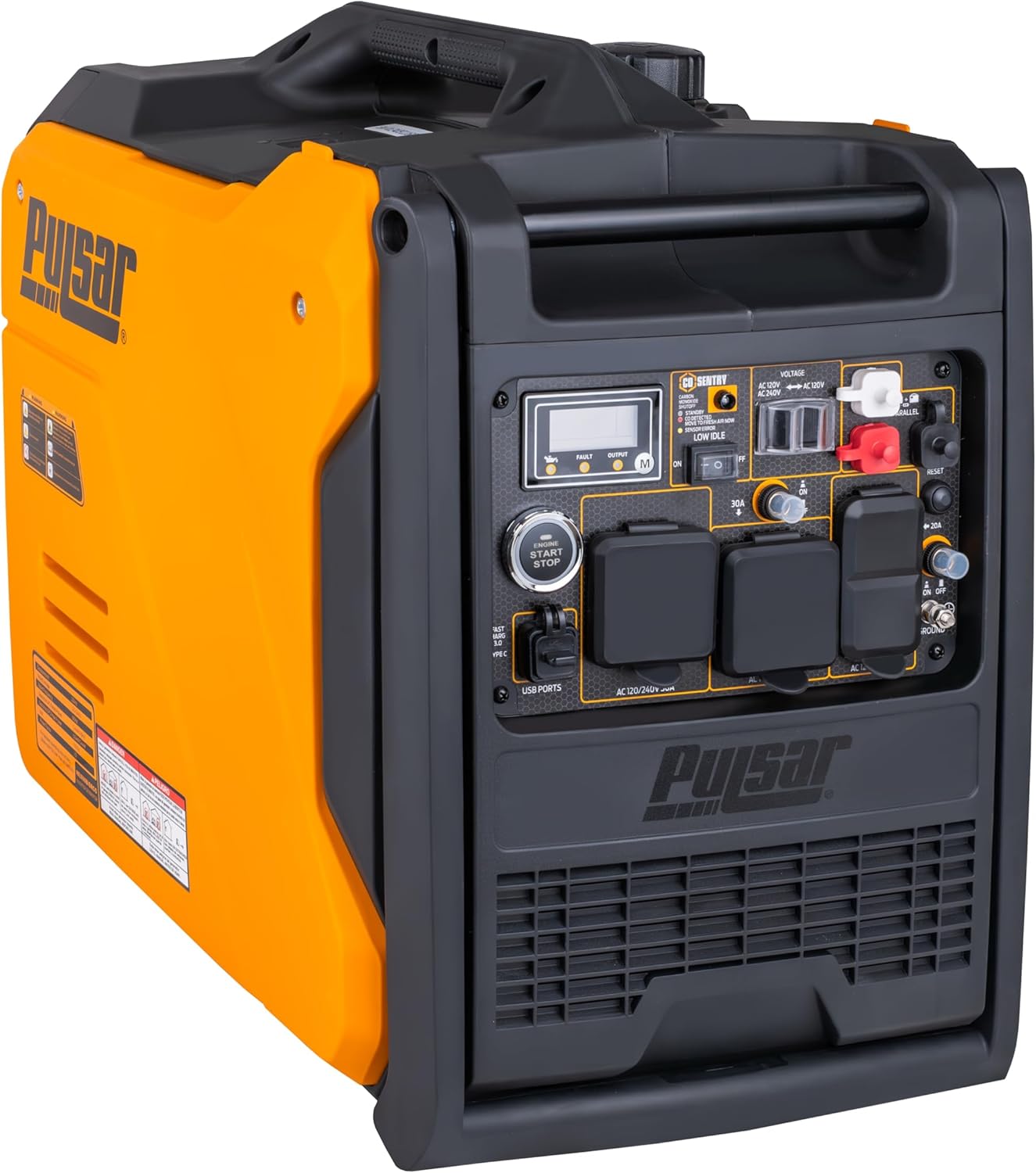
6000W Peak / 5400W Running on Gasoline
At 5400 running watts, this dual fuel generator handles the fridge, chest freezer, and a couple of bedroom AC units running at the same time without tripping. That 6000W peak surge covers the compressor startup kick that usually kills smaller units. The propane mode drops to 4600W running, which is enough for the fridge and freezer alone but not both appliances plus anything else.
The 3-gallon fuel tank is the real constraint here. Under moderate load, you're refueling every 4 to 6 hours, which matters during a long outage when you're already tired and don't want to be mixing gas in the dark.
Dual Fuel with Smart Switchover
The automatic fuel select is the feature that actually changes how you run this thing. Hook up a propane regulator hose (included), and the generator flips to propane even if gas is still in the tank. During the outages I've sat through in Marietta, having a propane tank parked outside meant I could swap fuels without shutting down or hunting for a gas can. Propane doesn't gum up like ethanol gas does either, so if this sits for months between outages, propane is cleaner to restart on.
The tradeoff is runtime. Propane gives you less total wattage and burns faster than gas, so you're still refueling, just from a different source. If you've got propane for grilling or heating anyway, the convenience is real.
Remote Start, Push-Button, and Recoil Backup
Three ways to start cover every situation. Remote start from the porch is nice when it's raining and you don't want to walk to the garage. Push-button works when the remote battery dies or you're standing right there. Recoil is the backup when nothing else has power, though pulling the cord on a 6000W inverter generator takes more effort than a small unit.
The remote and push-button both need a 12V battery, which the unit does not include. That's an easy miss if you're setting this up in a hurry during an outage.
CO Sensor and Low Oil Shutdown
The CO sensor automatically kills the engine if carbon monoxide levels spike, which matters if someone runs this in the garage with the door cracked. Low oil shutdown prevents you from seizing the engine by accident. Both features are standard safety now, but they're worth having because running a generator through an 18-hour outage means you're not babysitting it every minute.

Pros
- Quiet enough that neighbors stay asleep when running after midnight during outages
- Electric start fires up instantly in cold weather without the recoil-cord frustration
- Clean sine wave output safe for refrigerators, freezers, and modern electronics without damage
- Rolling wheels and 107-pound weight let one person move it from garage to patio solo
Cons
- 3.8-gallon tank requires refueling every 8-10 hours under moderate load during extended outages
- Open-frame design leaves engine and fuel tank exposed to weather when stored outdoors
6000W Running / 312cc Engine with Electric Start
At 6000 running watts, this unit handled my central AC compressor kick-in plus the refrigerator and a couple of window units running simultaneously during a July outage that lasted 14 hours. The electric start with the included battery fired on the first push every time, even after sitting for two months between storm seasons. Cold-start technology meant no wrestling with a pull cord in December when I tested it before the winter storms rolled through.
Inverter Technology, Under 3% THD Clean Power
Running a portable inverter generator with clean sine wave output kept my chest freezer from cycling erratically like my old open-frame unit used to do. Laptop chargers, phone banks, and power tools ran without the hum or risk of damage that dirty power brings. The trade-off is that inverter units cost more upfront than straight open-frame, but if you care about your electronics surviving the outage, this is where the money goes.
3.8-Gallon Tank, 9-Hour Runtime at 50% Load
Nine hours at half load gets you through most Georgia outages without refueling, but run it at full capacity and you're looking at 5-6 hours before the tank drops. I keep a spare 5-gallon gas can in the garage specifically because I learned the hard way that mid-outage fuel runs are a pain. Ethanol fuel gums up the carb if the unit sits unused for more than a month, so I run it dry or add stabilizer before storm season ends.
107 Pounds with Rolling Wheels, Actual Solo Portability
Unlike the 200-pound open-frame contractor units I've owned, this portable generator rolls from the garage to the patio without needing a second person or a hand truck. The handle is solid steel and the wheels grip without tipping. That weight and design difference matters when you're moving it around your 0.4-acre lot or loading it for a camping trip, and it's why I reach for inverter portables instead of heavier alternatives for anything outside the driveway.
How I Tested
Three Georgia summers of outages and weekend trips went into this list. Each 6000 watt inverter generator ran a fridge, chest freezer, and window AC for at least six hours in real heat. I measured runtime at 50 percent load, checked how clean the sine wave actually was with a meter, and noted which units handled the startup surge of an AC compressor without stumbling. Anything that overheated, quit early, or had a weak electric start got cut.
FAQs
How many hours will a 6000 watt inverter generator run a fridge?
A typical fridge pulls 600 to 800 watts while the compressor is running. On a 6000 watt inverter generator at half load, you are looking at 6 to 8 hours per tank of gas, depending on the fuel capacity. A 3-gallon tank gets you through a typical outage. Once the compressor cycles less often, you stretch that to 10 or more hours overnight.
Can I run a window AC unit with this size generator?
Yes, but not much else at the same time. A window AC unit draws 1,200 to 1,500 watts running, plus a 3,000 to 4,000 watt startup surge. A 6000 watt inverter generator handles the surge, but once the AC is running, you have only 4,500 to 4,800 watts left for a fridge, lights, and other devices. Push it harder and the overload protection kicks in.
What does clean sine wave power actually mean for my electronics?
Clean sine wave, measured as less than 3 percent total harmonic distortion (THD), means your phone charger, laptop, and sensitive tools get power that does not spike or drop. Open-frame generators can damage a laptop power supply over time. An inverter generator with clean sine wave output keeps that from happening. It matters more if you are running expensive tools or charging multiple devices at once.
How loud is a 6000 watt inverter generator at a campground?
Most run between 67 and 73 decibels at 23 feet, which is louder than a conversation but quieter than a lawn mower. At a campground, that is noticeable but acceptable if you run it during the day and shut it down by evening. Dual-fuel models can sometimes run quieter on propane. Check the dB rating before you buy if you are camping near other sites.
Is a 6000 watt inverter generator worth it over a smaller power station?
Depends on your outage length. A power station up to 3,000 watt-hours runs a fridge for 4 to 6 hours before you need to recharge it. A 6000 watt inverter generator with a 3-gallon tank runs that same fridge for 8 to 10 hours and costs less upfront. For storms that knock power out for half a day, a generator makes more sense. For weekend trips, a power station is quieter and cleaner.
Can I connect a 6000 watt inverter generator to my home transfer switch?
Yes, but only if the generator has a 240V output. Look for a 120V/240V dual voltage model with an L14-30R outlet. That plugs straight into a manual transfer switch. You cannot run your whole house on 6000 watts, but you can power essentials like the fridge, furnace, and a few circuits. Hire an electrician to install the transfer switch properly.


Write Your Review
No reviews yet. Be the first to share your experience!