

Free Delivery. Exclusive Deals. All Prime.
Prime members save on shipping and get first access to deals, plus Prime Video included. 30 days free.
Dragging an armload of loose rods, an auger, and a tackle box across a frozen lake usually ends with an icy spill and bruised shins. Dedicated ice fishing sleds eliminate that misery by turning heavy winter hauls into a smooth pull across snow and hard-packed ice. After comparing 6 models, the Pelican Ice Fishing Sled is our top pick thanks to its durable polyethylene build that absorbs impact and holds up to 130 pounds across its 45.5-inch hull. For anglers needing even more cargo room, the Beavertail Ice Fishing Sled provides a deep 64-inch polyethylene build that carries bulkier loads.

Pros
- Carries up to 130 lb with 71L volume
- Heavy duty RAM-X construction
- Built-in HDPE runners aid tracking
- Includes pull rope for transport
- 6 lb weight for easier handling
Cons
- 8-inch height may limit taller gear
- 130 lb capacity may not suit heavier loads
- Only black color listed

Pros
- All-season polyethylene construction
- Measures 64 inches long by 29 inches wide by 11 inches high
- Comes with an included tow rope
- Features a Marsh Brown color
Cons
- Product data lists conflicting weights of 17 lbs and 13 pounds
- Only available in a single Marsh Brown color option

Pros
- Measures 18 x 6 x 38 inches for transporting outdoor gear
- Designed to haul supplies across frozen terrain and snow
- Complements portable ice fishing shelters
Cons
- Weighs 36 pounds before loading gear
- Shallow 6-inch depth limits vertical cargo space

Pros
- Features 5/8 inch thick high density plastic runners
- Bolts into Roto-Molded sled pockets
- Designed to add durability for long hauls
- Weighs 6 pounds
Cons
- Only compatible with Otter sled Roto-Molded pockets
- Limited to Small size sleds
- Comes only in blue

Pros
- 5.5 ft sled fits up to 3 riders
- Supports about 300 lb combined weight
- HDPE plastic build is made in the USA
- Built-in heavy-duty tow rope
- Also hauls gear, firewood, or supplies
Cons
- 66 x 20 x 6 in size may be bulky to store
- Waxing the flat bottom is suggested for more speed
- 7 lb weight may be awkward for some to carry
Pros
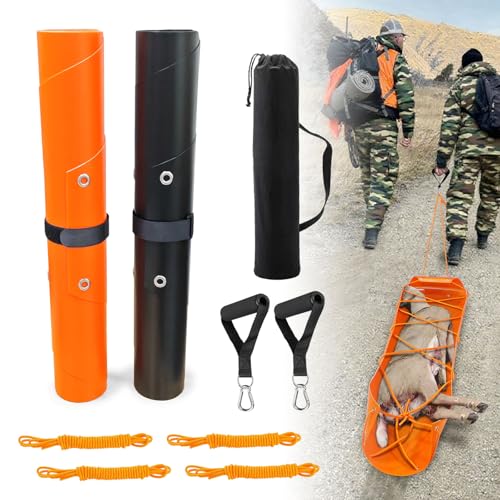
- Includes two tear-resistant 600D PVC mats supporting up to 500 lbs each
- Unfolds to 73 inches by 22.8 inches for hauling gear or game
- Rolls to a compact 5.5 inches by 22.8 inches for transport
- Waterproof, smooth surface rinses clean quickly with water
Cons
- Flat mat design lacks raised sidewalls to keep loose gear contained
- Requires manual rolling and securing for storage
What to Look for in Winter Utility Sleds
Winter conditions demand equipment that will not crack in freezing temperatures or roll over on rough drifts. Choosing the right design depends heavily on your gear profile and travel distance.
- Setup and takedown time: Rigid hulls require zero assembly at the tailgate, letting you tie a quick tow knot and head onto the ice within 60 seconds. Flexible roll-up models such as the Firegowin Ice Fishing Sled unroll quickly from a 5.5-inch diameter cylinder to a 73 by 22.8-inch mat, requiring only a minute to lace up ropes and strap down loose items. Across our picks, deploying gear takes anywhere from instantaneous loading on molded tubs to roughly 3 minutes for strap-assisted wraps.
- Insulation and wind resistance: Heavy molded hulls create a rigid windbreak on the ice and prevent slush from seeping through to your tackle boxes. The thick high-density polyethylene build of the Pelican Ice Fishing Sled shields cargo against abrasive snow crusts and keeps 71 liters of sensitive winter supplies off freezing ice. Four of our six selections use thick, impermeable plastic walls to stop freezing water from soaking gear bases.
- Interior space and capacity: Sled footprints among our picks range from 45.5 inches in length up to 73 inches for long hauls. Deep-walled models like the Flexible Flyer Ice Fishing Sled measure 5.5 feet in length, providing ample floor space to transport up to 300 pounds of shelters and power augers without spilling over the side rails. Smaller utility hulls provide between 8 and 11 inches of sidewall depth to keep standard five-gallon buckets upright.
- Weight and portability: Empty sled weights among our rigid picks span from 6 pounds up to 17 pounds, directly affecting how much effort you spend trudging through deep snowdrifts. Roll-up mats offer the lightest profile by packing down into tight rolls that fit inside a backpack, while rigid tubs fit inside standard 6-foot truck beds or midsize SUV trunks.
- Ventilation and safety: When using sleds to carry portable shelters and heaters, airflow is critical once you start fishing. The U.S. Consumer Product Safety Commission warns that carbon monoxide is a colorless, odorless gas produced by burning fuel in heaters, stoves, and lanterns. The agency instructs that you should never run a fuel-burning heater inside an ice fishing shelter or tent without proper ventilation, as symptoms of carbon monoxide poisoning include headache, dizziness, weakness, nausea, and confusion.
We excluded handheld terminal tackle, baits, and line because those belong in specific gear guides. Motorized transport such as snowmobiles and four-wheelers was also set aside, along with unvented fuel heaters that create hazardous conditions inside enclosed fishing shelters.
Other Ice Fishing Sleds Worth Considering
These are other ice fishing sleds we looked at but did not put on our main list.
If you prefer a classic tub from a dedicated shelter manufacturer, the Eskimo Ice Fishing Sled offers a rugged polyethylene build. It provides a different size and feature mix than our 45.5-inch top pick, focusing on broad gear organization rather than compact nested storage.
Shoppers looking for a lighter, narrower profile might examine the moonoom Ice Fishing Sled instead. Measuring 47 by 0.9 inches, this flat transport design offers a different size and feature mix compared to the deep 11-inch sidewalls found on our alternative pick.
Anglers seeking a casual-use carrier can look at the Retrospec Ice Fishing Sled. It uses a lightweight molded plastic build instead of the dense polyethylene build found on our top pick, which lowers total weight but provides less impact resistance on rough terrain.
And if flexible storage remains your absolute priority, the Tikscience Ice Fishing Sled delivers a rollable option. It features an oxford build that is water resistant instead of the heavy molded polyethylene build on our rigid picks, giving you a rollable design for tight trunks.
FAQs
How much ice thickness is required before pulling gear onto a lake?
According to the National Weather Service, new, clear ice is stronger than old, cloudy, or snow-covered ice. The agency notes that no ice should ever be considered completely safe because ice thickness can vary significantly across the same body of water. You should always check local conditions and ice reports before heading out, and never go out on the ice alone.
What weight capacity should an ice gear hauler support?
Capacities on standard utility haulers generally span from 130 pounds on compact tubs to 500 pounds on flat hauling mats. A baseline capacity of roughly 130 to 300 pounds easily accommodates a power auger, a shelter, tackle bags, and five-gallon buckets without overloading the structure.
Why are molded polyethylene hulls common for frozen lakes?
Molded polyethylene hulls retain flexibility below zero degrees and feature pre-formed bottom grooves that track straight behind the user. Rigid designs with wall heights between 8 and 11 inches also prevent slush and freezing water from flooding your gear when crossing wet pressure ridges.
Sources
- Ice Safety, National Weather Service. NWS guidance on safe ice thickness for activities on frozen water.
- Carbon Monoxide Questions and Answers, U.S. Consumer Product Safety Commission. CPSC guidance on carbon monoxide hazards from fuel-burning devices.




Write Your Review
No reviews yet. Be the first to share your experience!