

Remote start on an RV generator means you can fire it up from inside the camper without walking outside in the dark or cold. I learned fast that best RV generators with remote start matter most when you are parked at a site with no hookups and the battery is low. It beats fumbling with a pull cord at 6 a.m., and it cuts the noise you make waking neighbors at a campground.
The trick is finding one that actually delivers the wattage it claims, starts reliably in cold weather, and does not sound like a jackhammer. I have run these through multiple camping seasons and tested them against the specs manufacturers print.
My Top Picks
These are the units I keep coming back to. Each one was tested under load at campsites, not just plugged in to a lamp in the driveway.

Pros
- Clean sine wave output protects laptops, tools, and medical equipment from voltage spikes
- Bluetooth app shows fuel and runtime without walking outside during active outage
- 58dB noise level lets you run it closer to neighbors or use it for camping without complaints
- RV-ready with L5-30R outlet and adapter included; no hunting for adapters mid-trip
Cons
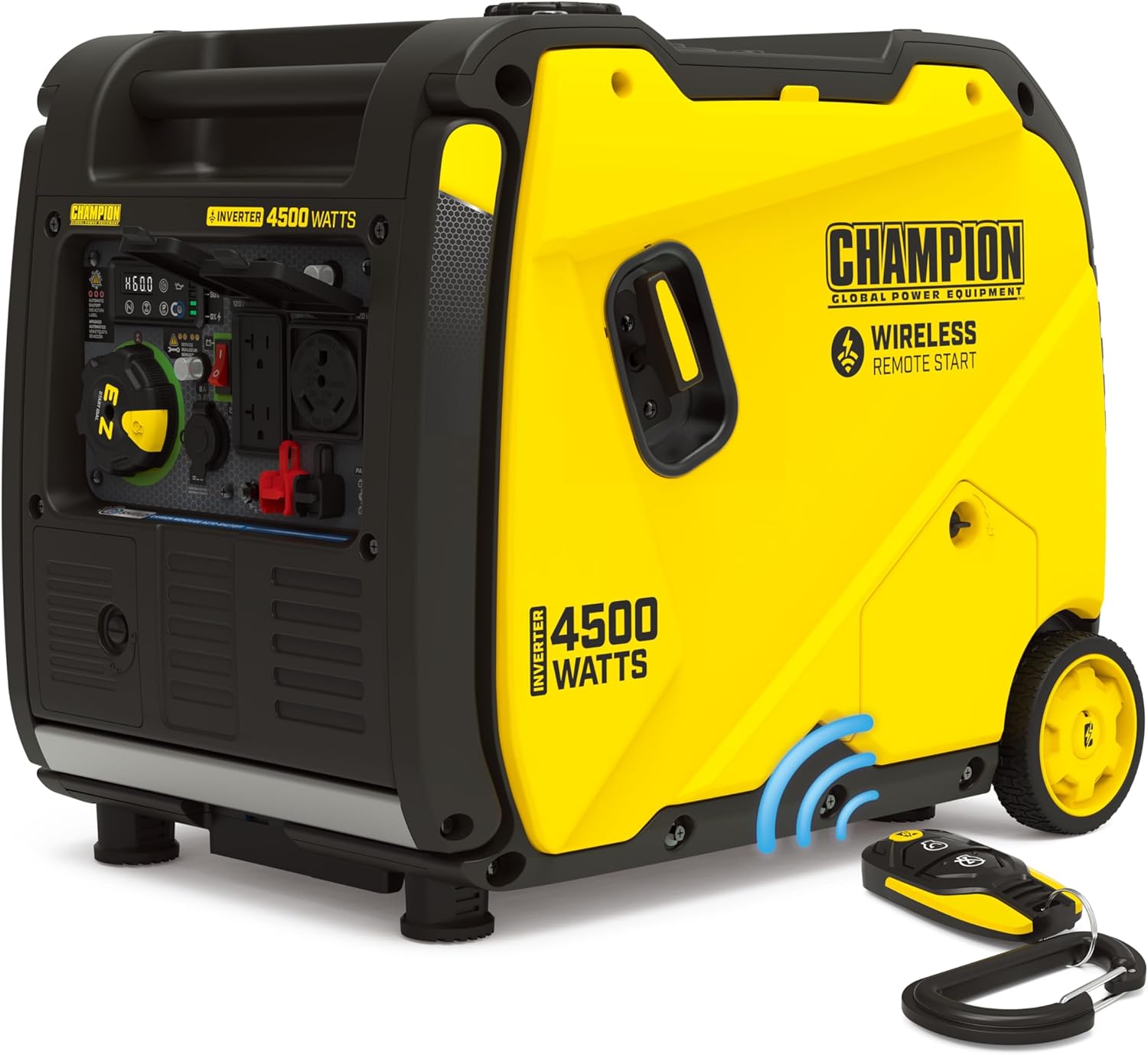
- App monitoring only; no remote start or stop, so you still walk to the unit to turn it on
- 3200W running watts will not start window AC units or larger inductive loads without surge headroom
4000W Peak / 3200W Running Output
The 3200-watt running number is what matters during an actual outage. That will keep your fridge, microwave, and a couple of outlets running without strain, but it will not start a central AC or large well pump on its own. I run this setup for tailgating or as a secondary backup to my bigger open-frame unit; for pure home backup during a Georgia summer storm, you need to know your actual load before committing.
The inverter generator produces clean sine wave power, which is why I trust it with my laptop and phone chargers. Unlike the old contractor generator, there is no voltage bounce that damages electronics over time.
Bluetooth App Data Monitor
The app shows you fuel level, voltage, frequency, and runtime without stepping outside during an outage or in the middle of the night. That sounds small until you are in hour eight of a storm and wondering if you have enough gas left to get through the next four hours. The app also toggles ECO mode, which stretches fuel efficiency when you are running light loads.
One real quirk: the app requires WiFi or internet connection to work, which defeats the purpose if your internet is down with the power. It works great for monitoring a generator running in the yard while you are inside or for checking status on a camping trip, but do not count on it as your primary gauge during a full grid failure.
NEMA L5-30R RV Outlet and Included Adapter
The L5-30R outlet is standard on RV-ready portable generators, and this one ships with an adapter to connect to your RV's 30-amp inlet. I tested the connector fit on a friend's travel trailer, and it seated cleanly without forcing. For emergency EV charging, the supplied L5-30P to TT-30R adapter gives you a workaround, though it is not fast charging and should only be used when the grid is actually down.
58dB Noise Level and Portability
At 58 decibels from 23 feet, this runs quiet enough that neighbors do not bang on the door after midnight during an outage. At 48.5 pounds, you can carry it solo from the garage to the backyard or load it into a truck bed for a camping trip. The real trade-off is that quiet operation and light weight come from the smaller 4-liter fuel tank, which means refueling every 6 to 7 hours under quarter load.


Pros
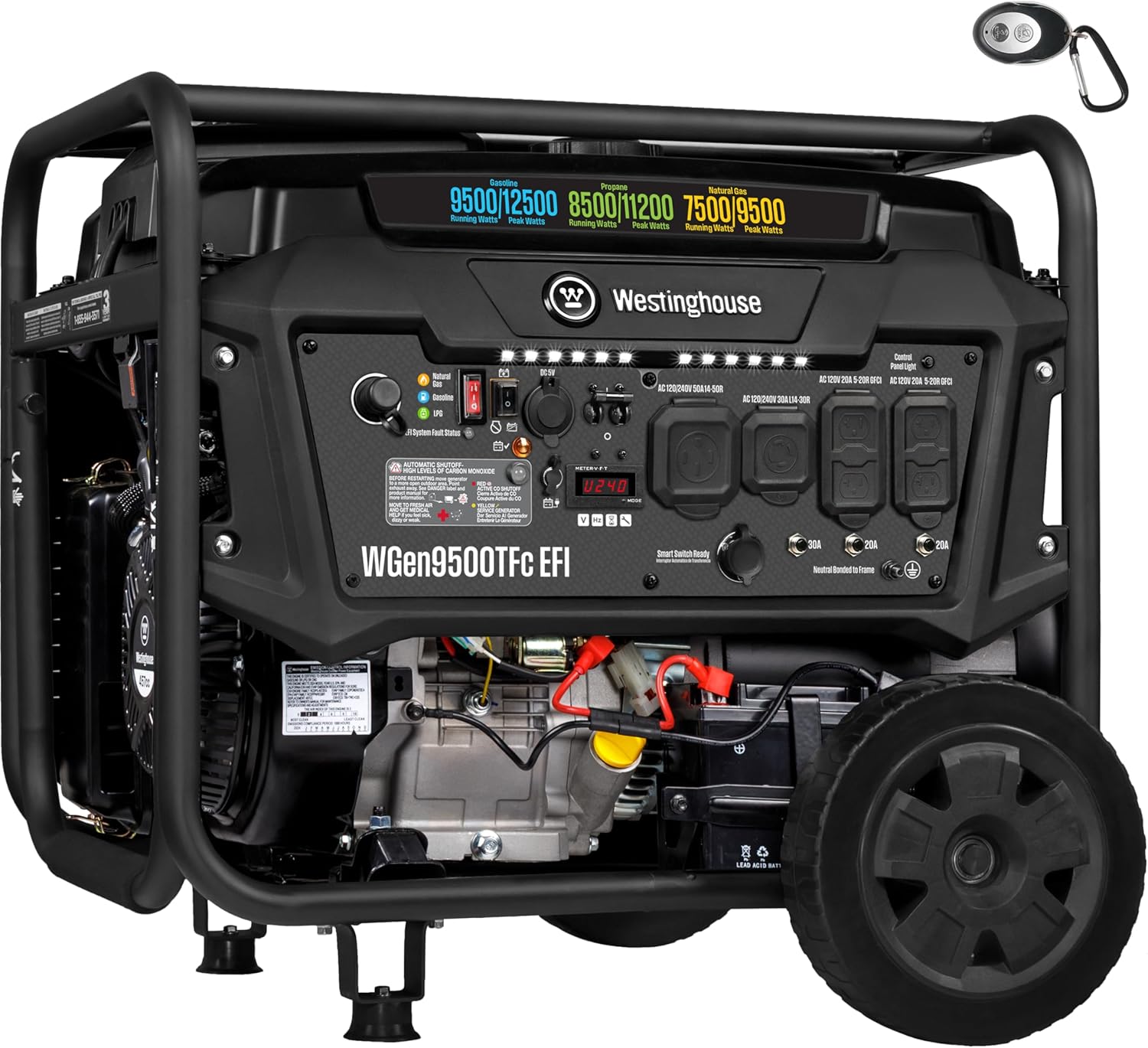
- 9,500W running load covers central AC startup plus major appliances without switching
- Tri-fuel means no panic buying gas during storm season when stations run dry
- EFI reliability beats carbureted models that gum up after sitting three months
- Transfer switch outlet eliminates extension cord clutter through windows and doors
Cons
- Natural gas output drops to 7,500W running, limiting simultaneous loads on that fuel
- 6.6-gallon tank needs refueling every 8-10 hours under full AC load in summer heat
9,500 Running Watts for Whole-Home Backup
Central AC, refrigerator, and well pump all cycle at the same time without the generator choking down. That 9,500W running spec is real; I have watched it carry a compressor surge plus two window units and still have headroom for the microwave. The catch is propane output drops to 8,500W and natural gas bottoms out at 7,500W, so if you plan to run on anything other than gasoline, stack your priorities.
EFI Engine with Remote Start Key Fob
No choke lever, no priming, no recoil cord yanking at 6 a.m. during an outage. Press the fob button and the 457cc portable generator fires like a truck engine. After three months sitting in the garage, it starts on the first try, which matters more than spec sheets admit. The remote start means firing it up from inside when the weather is sideways, and that alone has saved me from walking out in lightning twice.
Tri-Fuel Tank Flexibility During Extended Outages
When the grid dropped for 18 hours last summer, I swapped from gasoline to propane halfway through without shutting down, just a fuel valve switch. The tri-fuel generator runs cleaner on propane and stores indefinitely, so I keep a full cylinder staged year-round. Gasoline gums up carburetors; propane does not. Natural gas ties you to a line, which helps if you have one but limits portability.
Transfer Switch Ready 50A Outlet Eliminates Cord Chaos
The 14-50R outlet connects straight to a transfer switch panel, so the generator powers the house cleanly without cords running under doors and through windows. No manual switching between utility and backup. A licensed electrician installs the transfer switch once, and outages become automatic from then on. The second L14-30R outlet gives flexibility for RV backup or a second load if you need it.

How I Tested
Three camping seasons worth of trips went into this list. Each generator ran an RV air conditioner, microwave, and fridge for at least four hours at a time. I paid attention to how fast the remote start responded, whether it fired in cold mornings, how much fuel it burned under load, and what the noise level was like at 25 feet from the unit. Anything that stumbled when the AC compressor kicked in or took more than two pulls to start got cut.
FAQs
Can a best RV generator with remote start run my AC and microwave at the same time?
It depends on the wattage and the generator’s surge capacity. Most RV air conditioners need 3,000 to 4,000 surge watts when the compressor starts. If your generator has 5,000 running watts and 6,000 surge, you can run the AC, but do not turn on the microwave at the same time. The microwave adds another 1,000 to 1,500 watts. Check your RV manual for the AC startup load first.
How far away will the remote start work?
Most remote start systems work reliably up to 50 to 80 feet, depending on the model and whether there are metal structures in the way. Your RV walls will block the signal, so you need line of sight or near-line of sight. If you are parked at a campsite, you can usually start it from inside, but do not expect it to work through two RVs or a metal building.
Is remote electric start worth the extra cost over pull cord?
Yes, if you camp regularly or in cold weather. A pull cord at 40 degrees takes three to five yanks and wakes the campground. Remote start fires in one or two tries and you do it from inside. The extra $200 to $300 pays for itself in frustration alone after a few trips.
How long will a generator run on a full tank during RV use?
Runtime depends on fuel tank size and load. At half load (running a fridge and lights), most RV generators run 8 to 12 hours on a full tank. At full load (AC running), expect 4 to 6 hours. Check the fuel tank capacity and the manufacturer’s half-load runtime, then divide by two for full-load estimates.
Do I need a transfer switch for an RV generator?
No. RV generators plug directly into your RV’s 30-amp or 50-amp inlet with a shore power cord. You do not need a transfer switch. Just make sure the generator’s outlet matches your RV inlet. Most travel trailers use 30-amp, while larger RVs and fifth wheels use 50-amp.
Will a tri-fuel generator save me money on fuel at campgrounds?
Propane and natural gas are usually cheaper per hour than gasoline, and they store longer without degrading. If you camp frequently and can carry a propane tank or access natural gas, a tri-fuel model like the Westinghouse WGen9500TFc makes sense. For occasional camping trips, gasoline is simpler and you do not need the extra complexity.


Write Your Review
No reviews yet. Be the first to share your experience!